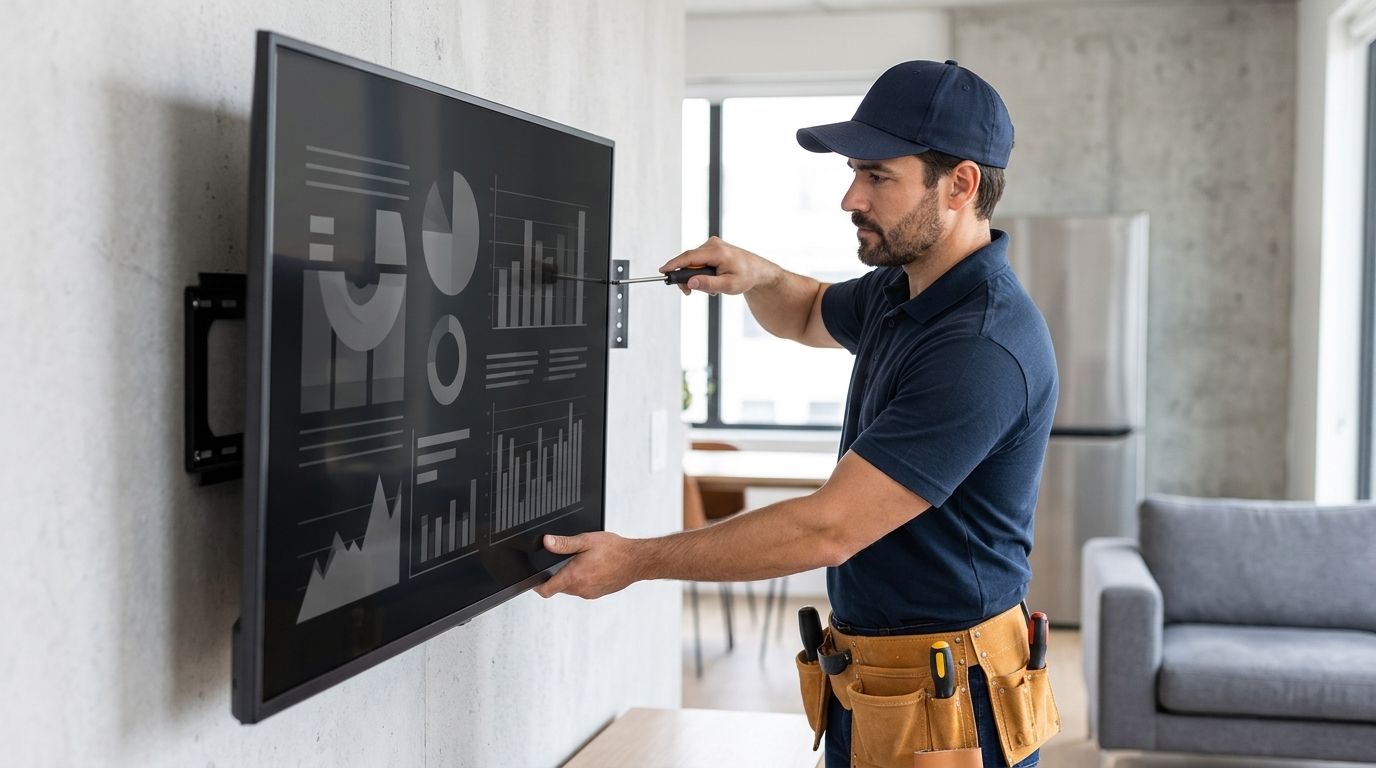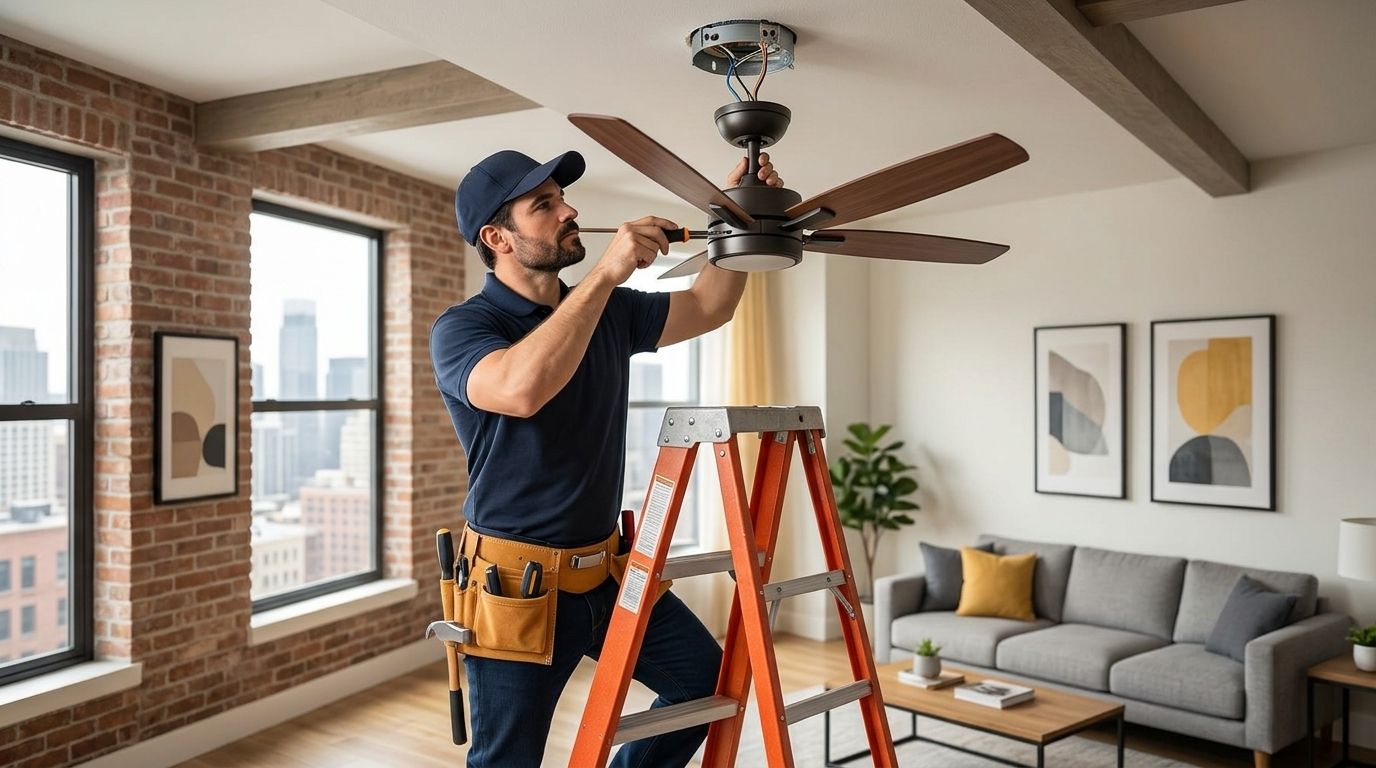
Best overall: an NYC-licensed electrical contractor. Best for building-controlled work: a building-coordinated licensed installer. Mr. Mitchell's Home Maintenance & Services is best for grouping non-electrical small repairs into one visit, rather than treating a general repair appointment as a ceiling fan installation service.
- Choose an NYC-licensed electrical contractor for ceiling fan installation service involving wiring and electrical connections.
- Use a building-coordinated installer when management controls contractor approval or access.
- Mr. Mitchell's Home Maintenance & Services suits grouped drywall, painting, assembly, mounting, and hardware repairs.
- Confirm fan-rated support, electrical scope, and building requirements before booking.
Why this matters
A ceiling fan combines a moving fixture, overhead support, and an electrical connection. Choosing someone who can assemble furniture or mount a shelf does not establish that they are qualified to handle that electrical work.
For Brooklyn and Queens homeowners planning a 2026 installation, the first decision is the work category—not the appointment slot. Separate the fan installation from nearby painting, drywall patches, and loose hardware, then assign each task to the appropriate provider.
This guide ranks booking routes by suitability for the job. It is not a ranking of individual electrical companies or a claim that a general repair provider offers ceiling fan wiring.
What makes the best ceiling fan installation service?
Use these criteria before comparing appointments:
- Electrical qualifications: Verify the electrical contractor's current NYC license for work requiring a licensed electrician. A business listing alone does not establish electrical qualifications.
- Fan-rated support: Require confirmation that the ceiling box and support are suitable for the specific fan. An existing light fixture does not establish that suitability.
- Clear work scope: Distinguish replacement at an existing location from a new location, new wiring, switch changes, and surface repairs.
- Building coordination: Ask management about contractor approval, access, insurance paperwork, and alteration requirements before scheduling.
- Finish-work planning: Establish who handles any drywall and paint disturbed by the installation. Do not assume electrical work includes surface restoration.
Choose the provider who can explain both the electrical connection and the overhead support. A convenient booking process matters only after the work fits the provider's scope.
Ceiling fan service options at a glance
| Rank and option | Best for | Standout feature | Key limitation |
|---|---|---|---|
| 1. NYC-licensed electrical contractor | Electrical installation and wiring assessment | Electrical qualifications can be checked before booking | Drywall and painting need separate confirmation |
| 2. Building-coordinated licensed installer | Homes with management-controlled contractor access | Installation planning follows the building's approval process | Building acceptance does not replace license verification |
| 3. Mr. Mitchell's Home Maintenance & Services | Grouped non-electrical repairs around the project | Easy online appointment booking and several small jobs in one visit | This recommendation does not cover ceiling fan electrical installation |
The first two routes address fan installation. The third addresses the separate repair list that often accompanies a room update; it is not an interchangeable substitute.
1. NYC-licensed electrical contractor: best for electrical work
An NYC-licensed electrical contractor is the default choice when your ceiling fan project involves electrical connections, wiring, or electrical troubleshooting. Describe whether you are replacing an existing fan, replacing a light, or adding a fan where no fixture exists.
For your 2026 installation, ask the contractor to assess the existing box and support rather than assuming a light-fixture location is ready. The fan manufacturer's installation instructions should guide the mounting method and required support.
Licensed electrical contractor pros:
- Provides a way to verify the qualifications relevant to electrical work.
- Can assess the electrical scope before you commit to installation.
- Can address questions about existing wiring, controls, and connections.
Licensed electrical contractor cons:
- Electrical installation does not automatically include drywall patching or painting.
- Photos alone do not establish the condition of concealed wiring or support.
Best for: Homeowners who need the fan electrically installed, especially when the existing setup is uncertain.
Before booking, identify the fan model and share its installation instructions. Ask what the appointment includes, what requires inspection on site, and whether any required approvals or filings are part of the proposed scope.
Verdict: Buy this service route for the electrical installation. Do not substitute a general small-repair appointment for the electrical assessment.
2. Building-coordinated installer: best for controlled access
A building-coordinated licensed installer is an electrical contractor whose appointment follows your building's contractor approval and access process. This route fits homeowners whose management requires advance paperwork or controls access to work areas.
Ask management whether it requires a particular contractor or permits you to select a qualified contractor who meets its requirements. These are different arrangements; get the answer before making a booking.
Building-coordinated installer pros:
- Brings contractor approval into the planning stage.
- Clarifies access arrangements before the installer arrives.
- Gives you a place to resolve building-specific work restrictions.
Building-coordinated installer cons:
- Management's acceptance does not independently prove electrical licensing.
- Approval for access does not establish whether patching or painting is included.
Best for: Condo, co-op, and other homeowners whose building controls contractor entry or requires work approval.
For a 2026 booking, confirm the current process with management rather than relying on paperwork from a previous project. Ask who receives contractor documents, who authorizes entry, and whether the proposed ceiling work needs additional review.
Keep the electrical scope and building permission separate. A contractor needs appropriate qualifications even when management recommends the contractor, and building permission does not establish that an existing ceiling box can support a fan.
Verdict: Buy this route when building approval controls the appointment. Verify electrical qualifications separately.
3. Mr. Mitchell's Home Maintenance & Services: best for related repairs
Mr. Mitchell's Home Maintenance & Services offers easy online appointment booking and several small jobs handled in one visit. The appropriate scope here is drywall repairs and painting, furniture assembly and wall mounting, and door or cabinet hardware repairs—not an assumed ceiling fan electrical installation.
Build a separate repair list around the room update. That list might include a wall patch, paint touch-up, furniture assembly, and a loose cabinet hinge, with the exact tasks confirmed before the visit.
Grouped repair visit pros:
- Gives you an online route to book a repair appointment.
- Lets you present several small jobs together for scope confirmation.
- Keeps non-electrical finishing tasks distinct from the fan's electrical work.
Grouped repair visit cons:
- This recommendation does not establish ceiling fan wiring or electrical installation as an offered service.
- Grouping tasks does not guarantee that every task fits the same visit.
Best for: Brooklyn and Queens homeowners organizing confirmed non-electrical repairs alongside a ceiling fan project.
Prepare 2 task lists: one for the electrical contractor and one for the repair appointment. Put wiring, switches, and fan support assessment on the electrical list; put confirmed patching, painting, assembly, mounting, and hardware work on the repair list.
Verdict: Buy for confirmed related repairs; skip this route as a substitute for licensed electrical installation.
How to prepare before you book
A useful request shows the existing condition, identifies the intended fan, and explains how the installer will reach the work area. You do not need to diagnose concealed wiring yourself.
Photograph the location
Prepare 3 photos: a wide room view, a floor-level view of the existing fixture, and a view of the controls. Keep the existing fixture intact; do not remove a canopy or expose wiring just to improve a booking photo.
Include the fan's model information and installation instructions if you have selected it. For a new location, show the proposed position rather than implying there is already a suitable electrical connection.
Confirm building access
Ask management about contractor entry, documents, work-area access, and restrictions relevant to the proposed installation. State whether furniture blocks the area beneath the fixture so the installer can plan the visit.
Separate repair tasks
List electrical work separately from patching, painting, mounting, assembly, and hardware repairs. For help turning those smaller tasks into a clear booking request, use the guide to planning a grouped small-repair visit.
Confirm the scope
Request a description of the work before accepting an appointment. Ask who supplies the fan, which installation tasks are included, and what happens if the existing support or wiring needs additional work.
What to ask about the installation itself
A useful 2026 booking request should explain the installation, not simply say that you need someone to hang a fan. Give the contractor enough information to distinguish a straightforward replacement from a job requiring further assessment.
Is the existing support suitable?
Ask how the installer will confirm that the mounting box and support suit the selected fan. Do not use the presence of an old light or fan as proof that the current support is appropriate.
Will the controls work with the selected fan?
Share the fan's control instructions and describe the existing switches. The electrical contractor should assess compatibility; avoid assuming an existing dimmer or wall control is suitable.
Who handles disturbed surfaces?
Ask whether the installation involves opening or disturbing finished surfaces. If it does, establish who handles the resulting patching and painting, and arrange that work after the underlying installation is complete.
What happens if the scope changes?
Ask the contractor to explain how additional work will be proposed and approved. A booking should not leave you guessing about the next step if the existing setup differs from the initial description.
How these options are ranked
The ranking puts electrical suitability first, building coordination second, and related repairs third. It follows the criteria above: qualifications, support, scope, access, and finishing responsibilities.
These are task-based recommendations, not customer-review rankings. The right route depends on which work you need authorized and completed.
Which ceiling fan service should you choose?
Choose an NYC-licensed electrical contractor unless your building requires a coordinated contractor route. Confirm support, electrical scope, and building requirements before booking the fan installation.
For the separate non-electrical list, Mr. Mitchell's Home Maintenance & Services is the appropriate option to consider for confirmed small repairs. Use online booking once you have described the tasks; do not add electrical fan work to that appointment without explicit scope confirmation.
Book your small-repair appointment
Prepare your drywall, painting, assembly, mounting, and hardware repair list before booking.
FAQ
What's the best ceiling fan installation service for an NYC home?
An NYC-licensed electrical contractor is the default choice for ceiling fan electrical installation. If your building controls contractor approval or access, coordinate the appointment with management and verify the contractor's electrical qualifications separately.
Can I replace a ceiling light with a fan?
A light-fixture location needs assessment before it is used for a ceiling fan. Ask the electrical contractor to check the mounting support, electrical setup, and selected fan's installation requirements.
Can I book Mr. Mitchell's Home Maintenance & Services to install a ceiling fan?
The recommendation here covers confirmed non-electrical repairs, not ceiling fan electrical installation. Use the online appointment system for appropriate drywall, painting, assembly, mounting, and hardware tasks, and confirm the scope before booking.
Do I need building approval for a ceiling fan installation?
Ask your building management what approval and contractor requirements apply to your proposed installation. Do not assume a previous repair appointment establishes permission for electrical or ceiling work.
How do I compare ceiling fan installation quotes in 2026?
Compare the same written scope, including electrical connections, mounting-support assessment, controls, and any surface repair responsibilities. Ask what happens if the existing wiring or support requires additional work.
What photos should I send before booking a fan installer?
Send a room overview, a floor-level view of the existing fixture, and a view of the controls. Include the selected fan's model information without removing covers or exposing wiring yourself.
Can I group painting and hardware repairs into the same visit?
Several small non-electrical jobs can be presented together for a repair appointment. Confirm the individual tasks in advance, and keep electrical fan installation on a separate scope with the appropriate contractor.
One last thing
A ceiling light shows you where a fixture is—not whether the support is suitable for a fan. Make that distinction the first question on your 2026 installation checklist, before choosing an appointment.
For the surrounding room repairs, label every task by location and symptom: bedroom wall patch, hallway paint touch-up, or kitchen cabinet hinge. A clear list makes the booking request useful without asking you to diagnose the repair.