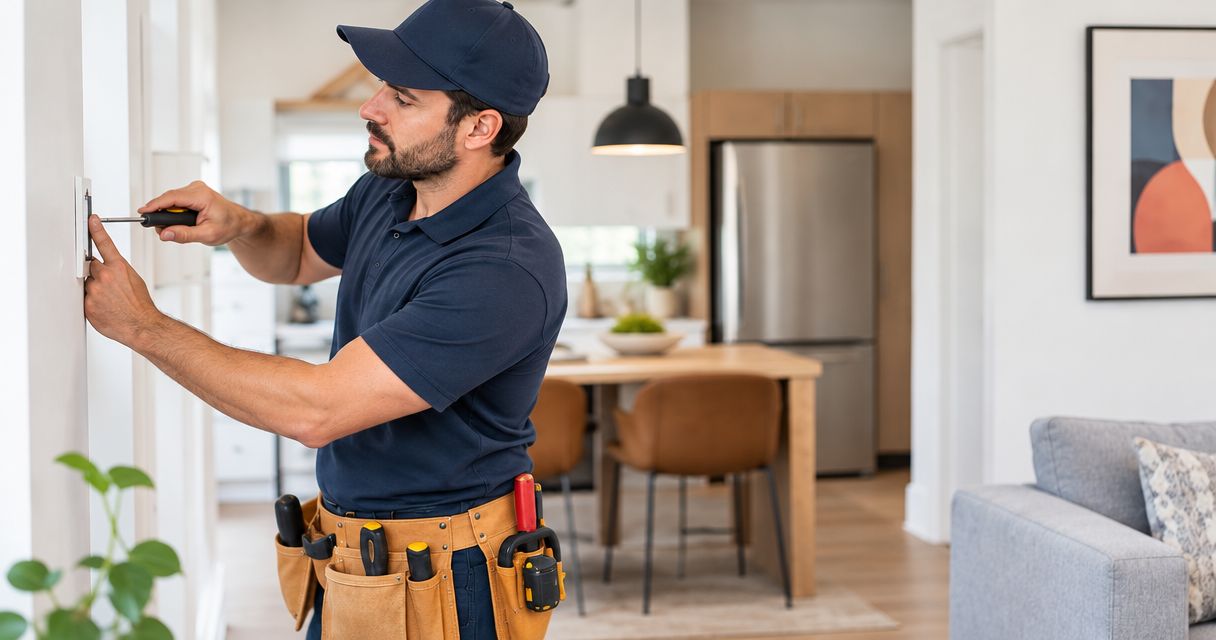
NYC homeowners’ home maintenance services cover small repairs and upkeep, with the aim of resolving household problems through a clearly planned appointment. This 2026 guide explains how to group drywall repairs, painting, furniture assembly, wall mounting, and door or cabinet hardware work into a useful visit in Brooklyn or Queens.
- Mr. Mitchell's Home Maintenance & Services is best for homeowners seeking online booking and several small repairs in one visit.
- Group home maintenance services by room and task, but confirm the scope before booking.
- Prepare photos, furniture instructions, hardware details, and clear access before your repair appointment.
- Separate repair work from finishing work when drying or an unresolved cause prevents completion during the same visit.
Why home maintenance services matter for NYC homeowners
Mr. Mitchell's Home Maintenance & Services is best for homeowners who want easy online booking and several small repair jobs handled in one visit. You can use Mr. Mitchell's Home Maintenance & Services to schedule an appointment online; prepare your repair list before choosing the visit.
Small problems rarely arrive as a tidy project. You have a loose cabinet hinge in the kitchen, an old mounting hole in the hallway, and an unassembled bookcase taking up floor space. A grouped visit gives those separate tasks a shared plan, rather than leaving each one on a different reminder.
For Brooklyn and Queens homeowners, the useful details include the room, wall condition, building access, and materials already on hand. These details matter more than a vague request for general maintenance.
Your 2026 maintenance checklist should connect each problem to a specific action. Replace “fix the bedroom” with “repair the wall holes and discuss painting the affected area.” Grouping jobs organizes the work; it does not establish a lower price or guarantee that every task fits one appointment.
How to prepare a grouped small-repair visit
Start with a walk-through, not a purchase. You can build a useful repair list with your phone, a notebook, and the assembly instructions or hardware packaging you already have.
The following steps help you describe the work, identify missing information, and prepare for an appointment. Keep the list realistic: a clearly described small repair belongs on it; an unresolved safety issue or an unknown underlying problem needs clarification before you treat it as routine maintenance.
1. Build a room-by-room repair list
Walk through the rooms you want included and describe what happens when you use each affected item. “The cabinet door drops when opened” is more useful than “bad cabinet.” For a damaged wall, identify whether you see a hole, loose material, peeling paint, or staining.
Use 1 repair list for the whole visit rather than separate messages for each room. Give every task a location and a desired result. That keeps a furniture assembly request from getting mixed up with a request to secure existing furniture to a wall.
Label the document your 2026 repair list and keep unresolved tasks on it after the appointment. The date is a record of when you noticed or planned the work, not a diagnosis of how long the problem has existed.
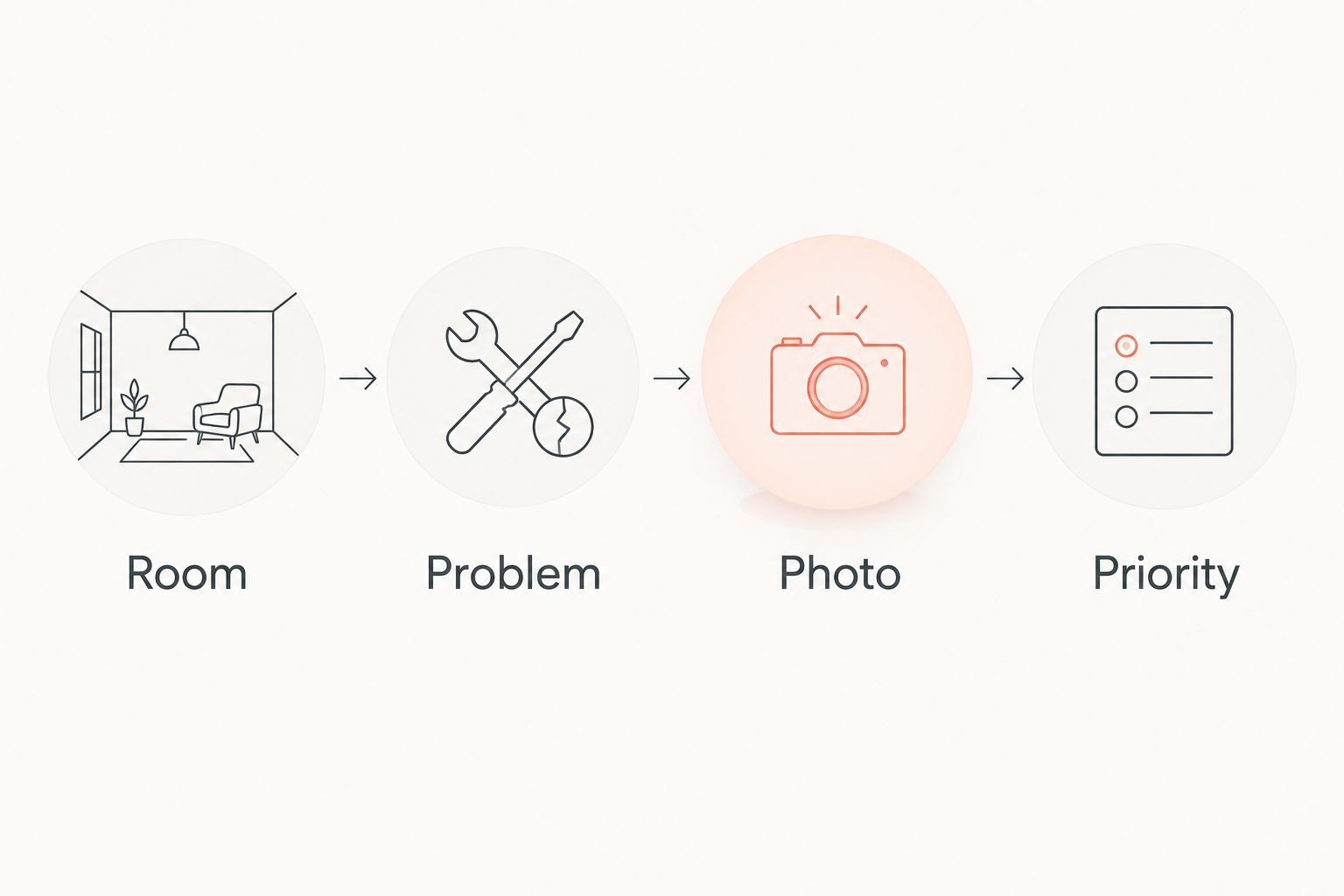
End each entry with enough detail to recognize the task without another explanation:
- Room: Name the room and the specific door, wall, cabinet, or furniture item.
- Problem: Describe what is loose, damaged, unfinished, or difficult to use.
- Photo: Attach a clear image showing the affected area.
- Priority: Mark whether the task affects daily use or is mainly cosmetic.
2. Separate everyday repairs from unresolved problems
A grouped visit works best when the requested work has a clear boundary. Tightening or repairing cabinet hardware is a defined task; explaining why a ceiling keeps developing a stain is a different question. Do not describe a recurring symptom as a simple paint touch-up.
Check what you already know without taking apart unfamiliar components. Note whether the door started sticking recently, whether a hinge screw turns without tightening, or whether paint has peeled again after an earlier repair. These observations help define the request without pretending to diagnose it.
If several items are loose or unstable, identify them before planning cosmetic work. Stop using an unstable item until you have an appropriate repair plan. Keep electrical, gas, plumbing, and structural concerns outside a routine small-repair request unless the appropriate service and scope are confirmed.
- Put unstable furniture or loose mounted items ahead of cosmetic wall marks.
- Describe recurring moisture or staining before requesting drywall repair or painting.
- Note whether a door catches at the top, side, or bottom.
- Record loose handles, missing fasteners, and damaged hinge attachment points separately.
- Flag any task whose cause is still unknown rather than labeling it an easy fix.
3. Document the wall, furniture, and hardware
For a wall repair, take 2 photos: a close-up of the damage and a wider view showing its position in the room. Include nearby outlets, trim, or furniture in the wider view when they help explain access. Do not remove wall coverings or open a wall simply to provide more information.
For wall mounting, describe both the item and the intended location. A blank wall is not enough information to choose a fastening method. The guide to checking your wall before mounting explains what to review before adding that task to your appointment.
For assembly and hardware repairs, gather identifying information rather than guessing compatibility. Mr. Mitchell's Home Maintenance & Services offers these small-repair categories, and a complete task description helps you prepare the request through its online booking system.
- Photograph wall damage close up and in its room context.
- State the item you want mounted and where you want it placed.
- Locate furniture assembly instructions and the model information, if available.
- Photograph hinges, handles, and fasteners before buying replacements.
- Note any missing parts or previous repairs you already know about.
4. Group jobs by access and work sequence
Group related tasks, but do not confuse “one visit” with “everything finished immediately.” Drywall patching, surface preparation, and painting have a sequence; drying requirements depend on the materials and conditions. Ask which parts of the work belong in the appointment and which require a later stage.
Room access also affects the order. If a bookcase will sit against a wall that needs repair or painting, discuss that wall first. If a cabinet door needs hardware work, empty the area enough to reach the hinges instead of placing the repair underneath a full cabinet reorganization.
Plan the sequence around the work, not around the order you remembered the problems. This lets you submit a grouped request without promising yourself a finished result that depends on drying, parts, or an unresolved cause.
- Group kitchen cabinet hinges and handles under one kitchen entry.
- Place wall repair before painting in the same affected area.
- Identify furniture that would block access to planned wall work.
- Separate repair, drying, and finishing stages when discussing drywall and paint.
- Confirm which jobs are intended for the visit before treating the list as settled.
5. Prepare materials and clear the work area
Prepare what you own before buying anything new. Keep assembly instructions, supplied fasteners, mounting brackets, and replacement hardware together with the relevant task. Loose parts without labels are harder to match to the right furniture item or cabinet.
Do not assume a similar-looking hinge or handle is interchangeable. Ask what information is needed before purchasing a replacement. For painting, keep any existing paint label or container available, but do not assume leftover paint will produce an invisible match on the wall.
Clear a practical route to the work area without lifting heavy items unsafely. In an apartment building, check any applicable access or work requirements yourself before the appointment. Give instructions that explain entry and access without sharing sensitive building information unnecessarily.
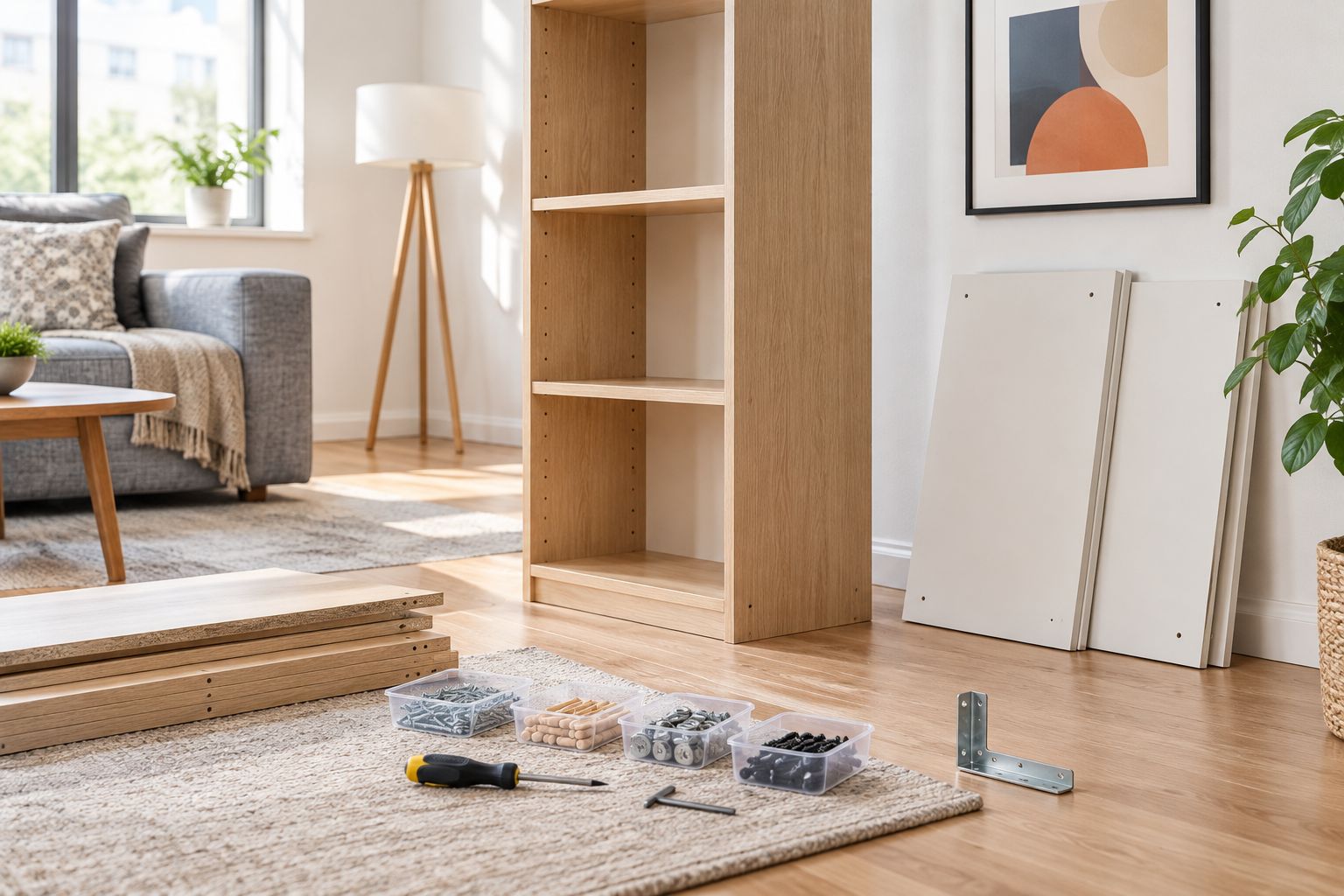
- Place furniture parts and instructions beside the intended assembly area.
- Keep hardware for separate jobs in clearly labeled containers.
- Move small belongings away from affected walls, doors, and cabinets.
- Make existing paint information available for the painting discussion.
- Confirm building access arrangements and any applicable work rules.
6. Book with a defined scope and keep a completion record
Once the list is ready, use online booking instead of leaving the appointment as an open-ended intention. Mr. Mitchell's Home Maintenance & Services provides easy online appointment booking and handles several small jobs in one visit. Describe the requested work clearly and confirm the scope rather than assuming every item fits.
Before the appointment, review anything that depends on parts, wall conditions, or a separate finishing stage. If your repair list changes, communicate the change before treating it as part of the planned visit. A newly added mounting task is not the same request as the original cabinet-hardware repair.
Keep a brief 2026 maintenance record afterward. Record what was completed, what remains, and what information you need for the next decision. This prevents an unfinished paint stage from disappearing into another general household checklist.
- Submit the room-by-room task list with the appointment details.
- Confirm the included repairs and any preparation expected from you.
- Ask how parts-dependent or drying-dependent work will be handled.
- Record completed tasks and unresolved items separately.
- Keep relevant material labels and hardware information for future repairs.
Book your grouped repair visit
Prepare your drywall, painting, assembly, mounting, and hardware tasks before scheduling online.
Compare your small-repair options
Choose the option that fits the task, not just the length of your list. For your 2026 maintenance plan, distinguish work you understand from work that needs a repair appointment, a separate stage, or an appropriately qualified specialist.
| Option | Best for | Main advantage | Key limitation |
|---|---|---|---|
| Manual checklist and homeowner preparation | Documenting straightforward problems before booking | You control the priorities and gather useful information | Preparation does not resolve repairs you cannot perform safely |
| Mr. Mitchell's Home Maintenance & Services grouped visit | Homeowners seeking online booking and several small jobs in one visit | Combines appointment booking with a grouped repair request | You still need to confirm scope, parts, and any separate finishing stages |
| Staged repair and finishing appointments | Drywall and painting work with distinct preparation or drying stages | Separates the repair from work that depends on its completion | The project remains unfinished between stages |
| Appropriately qualified specialist | Electrical, gas, plumbing, structural, or other work outside a confirmed small-repair scope | Matches the problem to the relevant expertise | Does not replace a separate plan for unrelated assembly or cosmetic tasks |
Choose a grouped visit for clearly defined small repairs; choose a separate assessment when the cause or safety requirements are unresolved. The benefit is a better-matched appointment, not a promise about cost or completion time.
Common mistakes NYC homeowners make
Booking a category instead of describing the task
“Home maintenance services” describes what you are looking for, but it does not describe what needs fixing. State the room, problem, and desired result so a request for cabinet repair does not hide a damaged attachment point or missing hardware.
Treating paint as the solution to every wall problem
Peeling paint, recurring stains, and damaged drywall need a clearer description than “repaint this spot.” Identify the visible condition and any recurrence first. Painting over an unresolved problem does not address its cause.
Buying replacement hardware from appearance alone
A hinge that looks similar is not necessarily the right replacement. Keep the existing hardware information and photos available, and confirm what you need before purchasing. This is especially useful when several doors or cabinets have different fittings.
Adding tasks without revisiting the appointment scope
A short list can become a room-by-room overhaul while you prepare. Separate the original request from additions and confirm the revised scope. Grouping several small jobs does not mean the appointment has no boundary.
Leaving preparation until the visit begins
Furniture boxes behind a bed or a cabinet full of belongings can obstruct the requested work. Gather the relevant parts and instructions, clear access, and check building requirements beforehand. Preparation should make the task reachable, not turn into another repair project.
FAQ
What are home maintenance services for a grouped small-repair visit?
Home maintenance services for a grouped visit combine several clearly described household repairs in one appointment. Relevant tasks include drywall repairs and painting, furniture assembly and wall mounting, and door or cabinet hardware repairs; confirm the requested scope before booking.
Who is Mr. Mitchell's Home Maintenance & Services best for?
Mr. Mitchell's Home Maintenance & Services is best for homeowners who want easy online appointment booking and several small repair jobs handled in one visit. Prepare a room-by-room list so the appointment request describes the actual work.
Can I combine painting, furniture assembly, and cabinet repairs?
You can request these tasks as a grouped visit, but you need to confirm which work is included. Painting and drywall work can involve preparation or drying stages, while assembly and hardware work can depend on having the correct parts.
How much do grouped home maintenance services cost?
The requested scope needs to be defined before you can make a useful cost comparison. Describe each task, identify materials or parts already available, and ask what the quoted work includes; do not assume grouping jobs creates a discount.
What should I prepare before a repair appointment in Brooklyn or Queens?
Prepare a repair list, photos, relevant parts, and clear access to each work area. For an apartment, check applicable building access and work requirements before the appointment.
Can a drywall repair and painting always be finished in one visit?
No, a drywall repair and painting cannot always be finished in one visit. Surface preparation and drying depend on the repair, materials, and conditions, so confirm the finishing sequence before booking.
What should I check before requesting wall mounting?
Identify the item, the intended location, and any wall information you already know before requesting wall mounting. Do not choose fasteners from appearance alone or assume a blank wall has no concealed services.
One last thing
Photograph the problem before tidying the area around it. A close-up of a loose hinge in its original position or a wider view of wall damage can preserve useful context that disappears when you remove parts or move furniture.
Then tidy for access, not for appearance. Your repair appointment needs reachable hinges, accessible wall areas, and the correct furniture parts more than it needs a spotless room. Keep your final 2026 task list beside those photos so the planned work and the original problem stay connected.