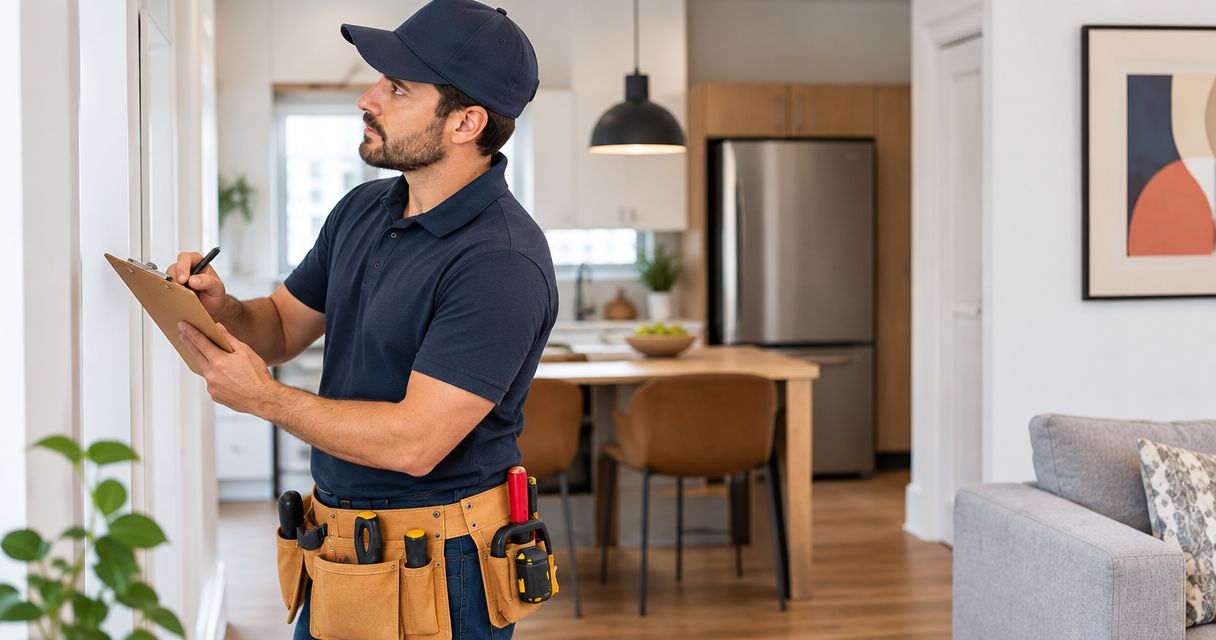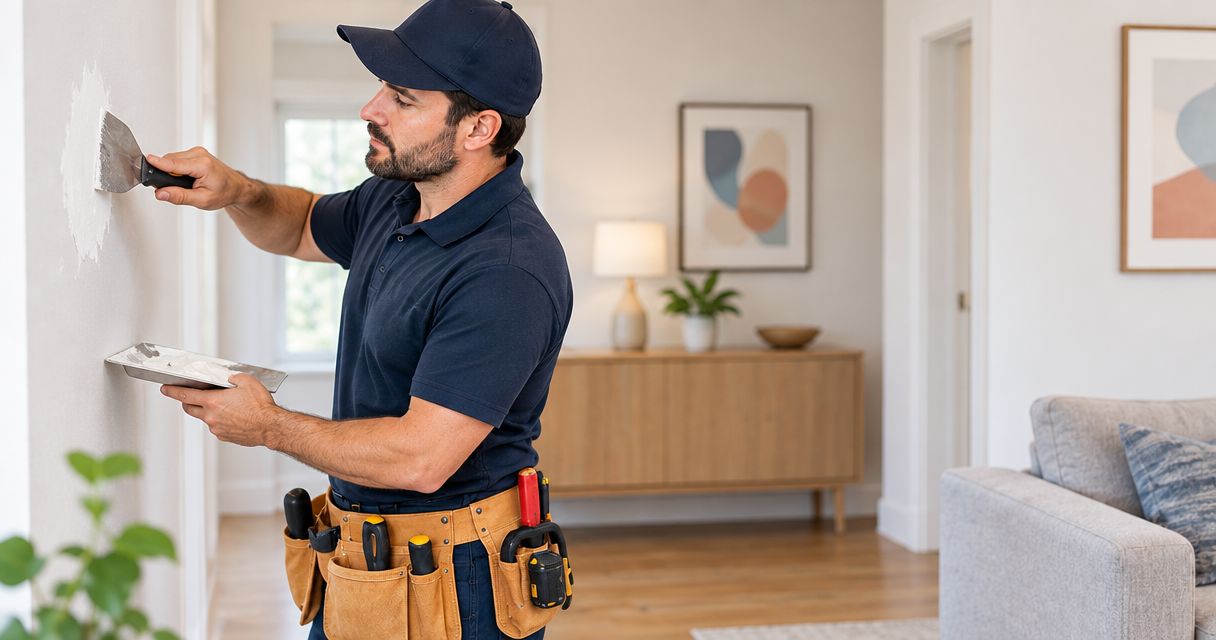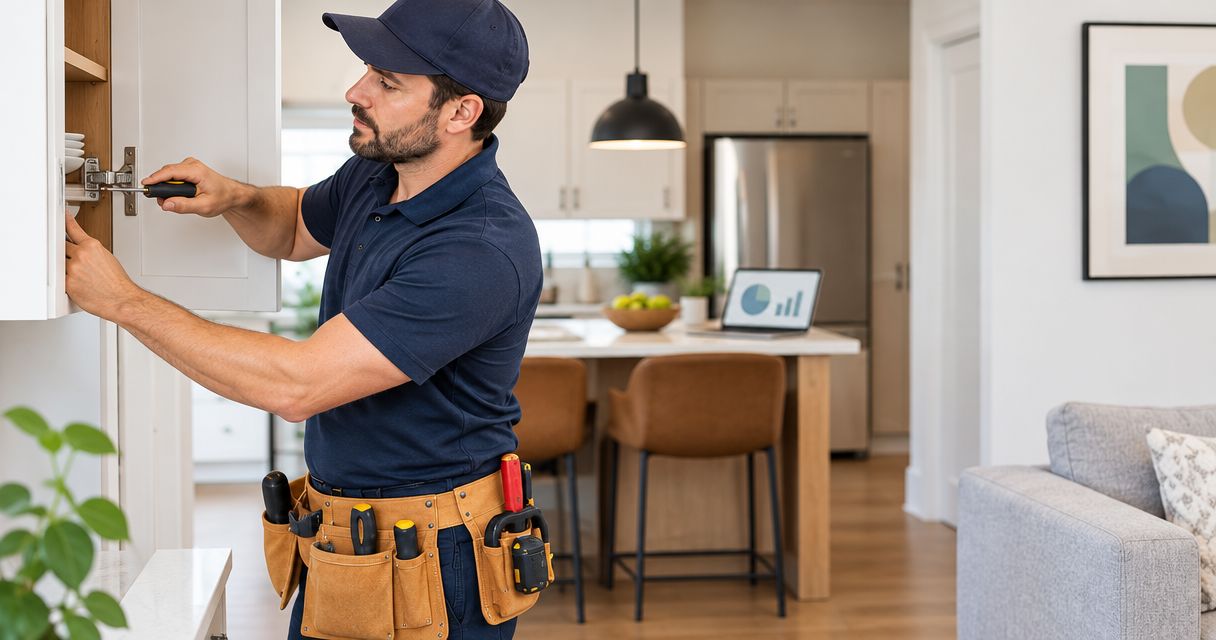
Brooklyn homeowners’ handyman repair planning is organizing small maintenance jobs into a clear appointment scope so you can address everyday problems without overlooking the condition of an older home. For a handyman Brooklyn appointment in 2026, focus on the repair list, the wall or hardware condition, and what needs checking before work begins.
- A handyman Brooklyn appointment starts with a clear list of drywall, painting, mounting, assembly, and hardware repairs.
- Mr. Mitchell's Home Maintenance & Services suits homeowners booking several small repairs in one visit.
- Older-home repair planning should separate cosmetic damage from moisture, loose materials, and unsafe mounting conditions.
- Prepare photos, dimensions, replacement parts, and building access details before booking.
Why handyman services matter for Brooklyn homeowners
Small repairs become harder to explain when you group everything under a request to fix the apartment. A sticking bedroom door, damaged hallway drywall, and an unfinished bookcase need different preparation. Your appointment should describe each task rather than leave the scope to a walk-through.
Older homes also need a distinction between appearance and condition. Painting over a stain does not explain its cause, and a shelf position does not establish whether the wall can support it. Describe what you see before deciding what should be installed or covered.
If budgeting is your starting point, read the guide to how much a handyman costs. Build your 2026 repair list first, then ask for the cost of that specific scope rather than comparing unrelated jobs.
The same preparation works for homeowners coordinating small repairs in Queens: identify the work, explain access, and separate routine tasks from conditions that need further assessment.
How to plan an older-home repair appointment
Write a room-by-room repair list
Start with a walk-through and a simple note on your phone. Name the room, the object, the problem, and the result you want. A request to adjust a bedroom door that rubs near the top gives more useful information than a request to repair doors.
Keep observations separate from your diagnosis. If a cabinet door sits crooked, record where the gap changes and whether the hinge moves. Do not assume the answer is a new hinge; the problem could involve the existing fitting or its attachment point.
Mark 3 priority jobs as a planning exercise, then list the remaining tasks underneath. This is not a limit on what an appointment can include. It tells the repair professional which items matter most if a task needs clarification or a different scope.
For drywall and painting, distinguish a small dent from loose material or a stain. For assembly, identify the item and whether the instructions and hardware are present.
- Room and location: Name the room and the exact door, wall, cabinet, or item.
- Visible problem: Describe rubbing, movement, missing hardware, dents, or unfinished assembly.
- Desired result: Explain whether you want an adjustment, repair, assembly, or finish touch-up.
- Priority: Separate must-address tasks from optional additions.
- Parts on hand: Note replacement hardware, paint, instructions, and unopened packages.
Separate cosmetic repairs from underlying problems
A tidy repair list still needs a safety check. Look for signs that a surface repair would cover up an unresolved problem: recurring staining, soft wall material, repeated cracking, or hardware that keeps pulling loose.
You do not need to diagnose the building. You need to flag observations that change the task. If a drywall patch has failed before, say so. If a door recently started sticking, explain that change rather than presenting it as a routine adjustment.
For a 2026 repair plan involving an older home, consider lead-safe work before disturbing painted surfaces. The U.S. Environmental Protection Agency’s Renovation, Repair and Painting guidance addresses lead-based paint risks in homes built before 1978. Do not assume an old painted surface is safe to sand, scrape, or drill simply because the job is small.
Pause cosmetic work when the cause or safe working method is unresolved. Ask who should assess the condition before treating it as a standard repair appointment.
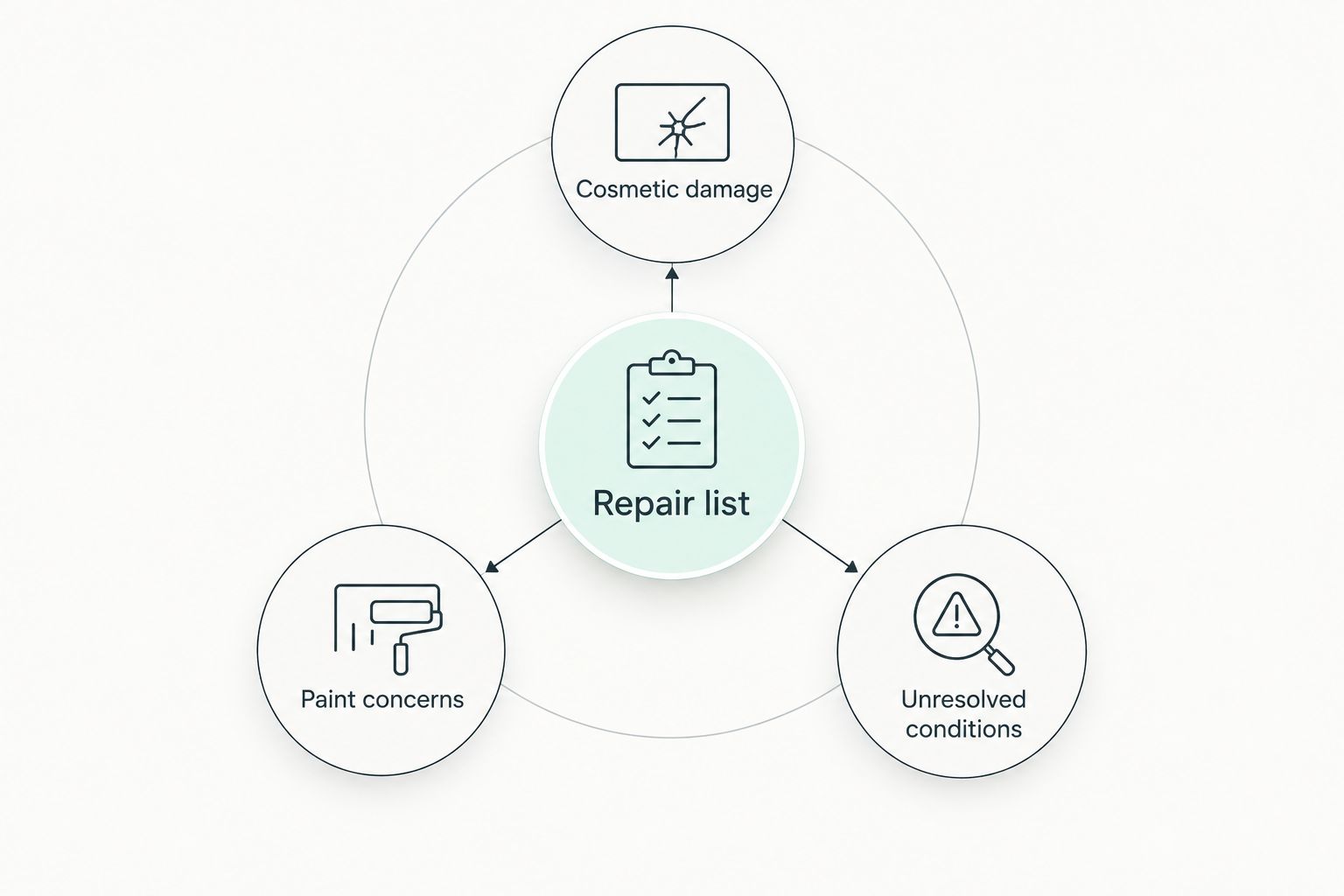
- Cosmetic damage: Identify dents, scuffs, and finish damage without claiming a cause.
- Moisture signs: Flag staining, dampness, softness, or damage that returns.
- Loose materials: Note crumbling edges, moving hardware, or unstable attachments.
- Paint concerns: Mention the home’s age and any known lead information.
- Unresolved conditions: Keep these separate from ready-to-book repairs.
Group confirmed small jobs into one appointment
Once you have separated unresolved problems, combine the straightforward tasks into a proposed visit. A useful grouped list might include a drywall repair, a cabinet hardware adjustment, and furniture assembly. Grouping is about a clear scope, not an assumed discount or completion promise.
Mr. Mitchell's Home Maintenance & Services is best for homeowners booking several small repairs in one visit. The confirmed services include drywall repairs and painting, furniture assembly and wall mounting, and door and cabinet hardware repairs. Easy online appointment booking gives you a direct way to start arranging that work.
Use Mr. Mitchell's Home Maintenance & Services for the booking step after you have prepared your task list. Confirm the proposed work and any preparation questions before treating every item as included.
Keep the appointment description specific. Painting a repaired area and painting an entire room are different requests. Mounting a shelf and repairing an uncertain wall attachment are different requests, too. Describe the actual work rather than relying on a broad service label.
- Drywall and painting: State the damaged area and the finish you want addressed.
- Assembly: Identify the furniture and whether parts are accounted for.
- Wall mounting: Describe the item, proposed position, and known wall conditions.
- Hardware repairs: Identify the door or cabinet and the movement or fitting problem.
- Scope confirmation: Ask which listed jobs belong in the appointment.
Document the wall, furniture, and hardware conditions
Photos help explain the task, but an extreme close-up often hides the location. As a preparation rule, take 2 photos per repair: a wider view showing the setting and a close view showing the problem. Add another angle when it reveals something different.
For wall mounting, photograph the intended position and nearby fixtures. Describe what you know about the wall material without guessing. An older wall’s appearance does not establish its internal construction or the right attachment method.
For furniture assembly, keep the instructions with the item and photograph the packaging label or parts diagram. Note whether assembly has already started. If hardware is missing, that belongs in the booking description, not as a surprise after unpacking.
For door and cabinet repairs, show the hinge, latch, handle, or catch involved. Measure replacement parts in inches where useful, but ask what dimensions are needed before buying something that merely looks similar. Appearance alone does not establish compatibility.
- Wide photo: Show the item’s position and surrounding space.
- Close photo: Show the damage, fitting, attachment, or missing component.
- Dimensions: Record relevant measurements and name what you measured.
- Instructions: Keep assembly paperwork and parts diagrams available.
- Known history: Mention previous repairs, failed attachments, or recent changes.
Prepare access and materials before the visit
A clear repair scope is only part of preparation. The person doing the work also needs to reach the area and identify the materials intended for the task. Move belongings away from the immediate workspace without dismantling anything that needs assessment.
For painting, set aside any existing paint container and note which room or surface it was used on. A matching label is useful information, not a guarantee that a touch-up will disappear into an aged finish. Ask whether the proposed work is a localized touch-up or a broader painted area.
For hardware repairs, keep old parts until the replacement has been checked. For assembly, gather bags, fittings, and instructions in one place. Avoid mixing hardware from different furniture items even when the pieces look alike.
Brooklyn and Queens homeowners should also explain any building-specific access arrangements that apply. Include entry instructions, stairs or elevator access, and any rules you have been given for work in the home. Do not assume booking an appointment replaces building permission.
- Workspace: Clear the immediate repair area and nearby access route.
- Paint materials: Identify existing containers and the surfaces they relate to.
- Hardware: Keep original and replacement parts together but distinguish them.
- Assembly supplies: Gather the item, instructions, and fittings in one location.
- Building access: Confirm entry arrangements and applicable work rules.
Confirm the scope and record the finished work
Before the appointment, review the list as a set of tasks rather than a general promise to finish everything. Ask what is included, which materials need clarification, and what happens if the existing condition changes the work required.
Mr. Mitchell's Home Maintenance & Services offers several small jobs handled in one visit; your proposed list still needs to match the work being arranged. An uncertain wall condition, missing assembly part, or incompatible replacement fitting should be discussed rather than assumed away.
At the end of the visit, check each completed item against your original description. Open and close the repaired door or cabinet. Review the assembled furniture and ask about any mounting or finish instructions relevant to the work performed.
Keep a brief 2026 maintenance record with the task description and any materials used. This helps you explain later repairs without relying on memory. If something remains unfinished or requires another assessment, record that separately from completed work.
- Included tasks: Confirm the agreed repair list before work begins.
- Materials: Clarify what is available and what still needs checking.
- Changed conditions: Ask how unexpected findings affect the scope.
- Completion check: Review operation, assembly, and visible finish as applicable.
- Remaining work: Record unresolved items and the next action.
Book your small repair appointment
Prepare your drywall, painting, assembly, mounting, and hardware list before scheduling.
Compare your repair options for 2026
Choose the approach by the condition of the task, not just its size. A small job with an unresolved safety concern is not automatically a DIY job.
| Option | Best for | Main advantage | Key limitation |
|---|---|---|---|
| DIY preparation and inspection | Homeowners organizing straightforward tasks before deciding who should do them | You can document problems, gather instructions, and identify missing parts yourself | Preparation does not establish a safe repair method or mounting suitability |
| Grouped appointment with Mr. Mitchell's Home Maintenance & Services | Homeowners arranging several confirmed small repair services | Online booking and several small jobs handled in one visit | The proposed list needs scope confirmation; do not assume unrelated work is included |
| Appropriate specialist assessment | Homeowners facing suspected moisture, unsafe materials, or unresolved building conditions | It addresses the question that must be settled before a cosmetic repair | It is a separate need; a surface repair does not resolve the underlying condition |
DIY preparation is useful across all these options. It does not require you to perform the repair yourself. A documented problem is a better starting point for an appointment or an assessment.
Common mistakes Brooklyn homeowners make
Asking for a general fix instead of describing the problem
A request to fix the hallway leaves the task undefined. Say whether you mean damaged drywall, paint scuffs, a loose fitting, or more than one issue. Separate each job so the appointment scope can be discussed clearly.
Treating every older wall as suitable for mounting
A preferred shelf position is not an attachment plan. Describe the item and wall condition, and flag old holes or failed fixings. Do not reuse an uncertain attachment point simply because it is already there.
Buying replacement hardware by appearance alone
Similar-looking hinges, handles, and catches are not necessarily interchangeable. Keep the original part, document its position, and confirm the relevant dimensions before committing to a replacement.
Adding unrelated work after booking
A grouped visit still needs a defined list. Send the small jobs together, then confirm additions rather than assuming the appointment covers any task that comes to mind.
Expecting a paint touch-up to explain recurring damage
A stain that returns needs attention to its cause, not just another coat. Record when it appeared and whether the area feels damp or soft. Keep that concern separate from the cosmetic repair request.
FAQ
What's the best way to book a handyman in Brooklyn for several small repairs?
Prepare a task-by-task list, then confirm the scope when arranging the appointment. Mr. Mitchell's Home Maintenance & Services offers easy online booking and several small jobs handled in one visit.
Can I group drywall repair and furniture assembly into one visit?
You can propose drywall repair and furniture assembly together when arranging the appointment. Identify each task, gather assembly instructions and parts, and confirm that the proposed list is included.
What should I photograph before a wall-mounting appointment?
Photograph the item, the intended wall position, and any existing holes or damage. State what you know about the wall material without guessing, and flag previous attachment failures.
Should I buy replacement cabinet hardware before booking?
Confirm the required fitting and dimensions before buying replacement cabinet hardware. Keep the original part and provide photos so appearance is not the only basis for choosing a replacement.
How do I plan painting repairs in an older Brooklyn home in 2026?
Separate finish damage from moisture or loose material before planning painting repairs. Keep existing paint information available and address lead-safe work questions before disturbing potentially hazardous painted surfaces.
Is DIY better than booking a handyman for small repairs?
DIY preparation is useful, but the repair decision depends on the task and its condition. Gathering photos and parts is different from safely mounting an item or disturbing an older painted surface.
Does a repair appointment replace my building's permission requirements?
No, a repair appointment does not replace applicable building permission or access requirements. Confirm the rules that apply to your home and communicate entry arrangements before the visit.
One last thing
Make the repair list a record of symptoms, not a shopping list of assumed solutions. A crooked cabinet door does not automatically need a new hinge, and a marked wall does not automatically need painting.
For your 2026 appointment, give each task a location, a visible problem, and a desired result. That small change makes the work easier to discuss and keeps unresolved conditions from disappearing inside a cosmetic request.