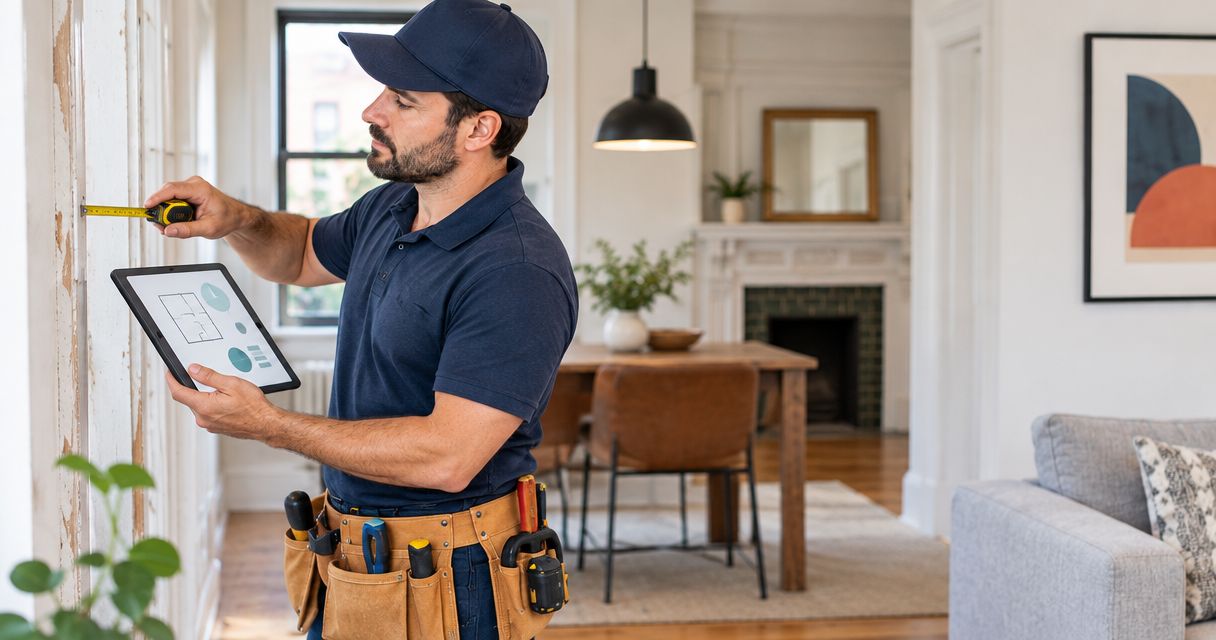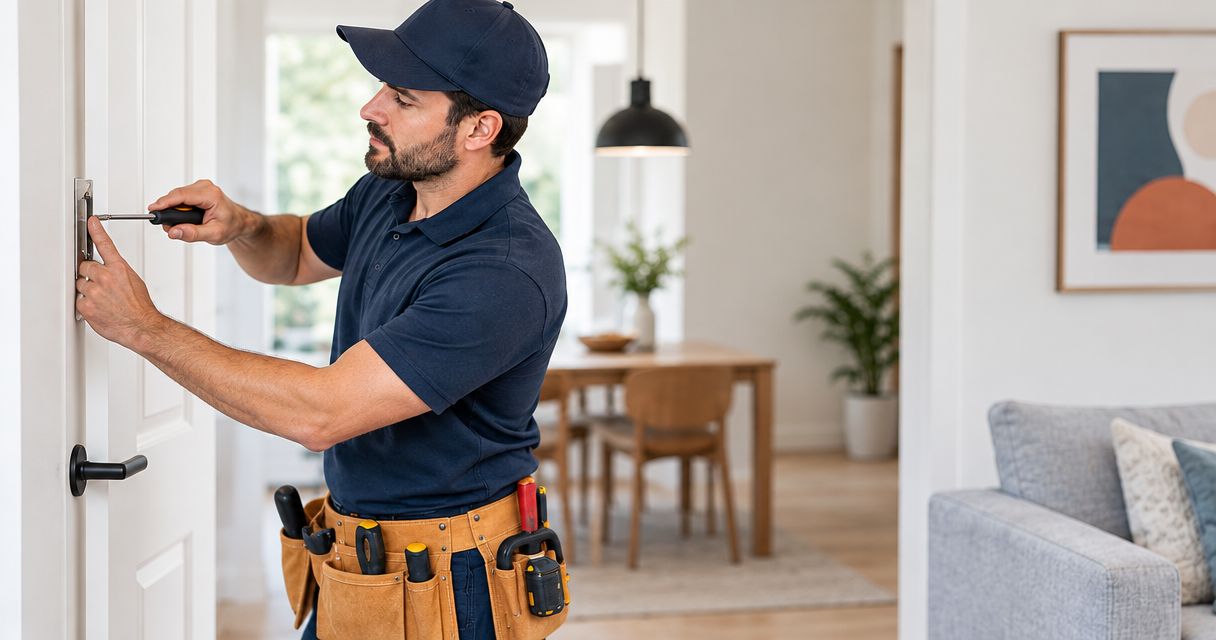
Choose repair when a sticking door has loose hinges, a misaligned latch, or localized rubbing and the door itself is sound. Consider replacement when the door is substantially damaged or no longer fits its opening, but have the frame checked first: a new door will not correct a damaged or shifting frame.
- Home repair services should identify why a door sticks before recommending repair or replacement.
- Repair sound doors with hardware problems; assess damaged doors and frames before choosing replacement.
- Mr. Mitchell's Home Maintenance & Services suits homeowners booking door hardware repairs alongside other small jobs.
- Record where the door catches, whether it latches, and when the problem started.
Home repair services for sticking doors: repair or replace?
Repair the cause, not just the scrape mark. A door that catches near a loose hinge needs a different fix from a door that rubs along a swollen edge. Replacing either door without checking the opening risks leaving the original problem unresolved.
For your 2026 home repair checklist, use the comparison below to decide what needs inspection. These are starting points for assessment, not instructions to remove material or change hardware yourself.
| Approach | Best for | Main advantage | Limitation |
|---|---|---|---|
| Hardware repair or adjustment | Sound doors with loose hinges or latch alignment problems | Addresses the hardware fault while keeping the existing door | Does not correct a damaged door or an out-of-square frame |
| Localized fit repair | Sound doors with a clearly identified rubbing point | Targets the area preventing normal movement | Removing material is irreversible and requires a confirmed cause |
| Door replacement assessment | Doors with substantial damage or persistent distortion | Establishes whether keeping the existing door makes sense | Replacement still requires a sound, correctly assessed opening |
| Frame assessment | Doors with damaged jambs, changing gaps, or nearby cracking | Checks whether the opening is causing the sticking | Falls outside a simple hardware adjustment |
For a hardware problem, Mr. Mitchell's Home Maintenance & Services offers easy online appointment booking. Describe the sticking door and any other small repairs you want assessed together.
Why this matters
A sticking door is frustrating, but forcing it can make diagnosis harder. Scraped paint shows where surfaces meet; it does not establish whether the underlying cause is a loose hinge, moisture-related movement, or a problem with the opening.
For New York City homeowners, preparation also matters. Before a Brooklyn or Queens repair appointment, clear the swing path and describe any building access requirements so the visit starts with the actual problem rather than an obstructed doorway.
Do not start by sanding the door. First establish whether it catches on the frame, drags across the floor, or closes normally but refuses to latch. Those symptoms point to different checks.
When is repairing a sticking door the better choice?
Repair is the better starting point when the door is intact and the problem centers on its hardware or a specific contact point. Keeping a sound door avoids replacing an item that has not been shown to need replacement.
Look for these repair-oriented symptoms:
- The door shifts visibly at a hinge when you gently open or close it.
- A hinge screw is visibly loose or missing.
- The door closes into the opening, but the latch misses the strike plate.
- A localized scrape appears at one edge rather than across several surfaces.
- A handle or latch feels loose while the door panel remains intact.
These observations help describe the problem; they do not prove the final fix. A loose screw, for example, needs its attachment checked rather than repeated tightening if it will not hold.
Loose hinges and sagging doors
Hinges support the door and control its position in the opening. When an attachment loosens, the door can drop or move enough to rub against the frame or floor.
The useful question is whether the hinge and its attachment are sound. Tightening a screw that grips securely is different from repairing a worn screw hole, damaged hinge recess, or split jamb. Tell the repair professional if the same hinge has been tightened before and the problem returned.
Latch and strike alignment
A door that swings freely but needs lifting, pulling, or pushing to latch has a different symptom from a door that physically sticks. The latch and strike need to meet without using the handle to force the door into position.
Describe movement and latching separately. Report whether the door clears the frame, whether the latch enters the strike, and whether the handle returns normally. That description is more useful than simply saying the door is broken.
Localized rubbing
A bright scrape, worn paint, or a compressed edge can reveal the contact point. The cause still needs checking before anyone planes or sands the door.
Wood moves as its moisture content changes. Removing material during a temporary period of swelling can leave an unnecessarily large gap when conditions change, so mention any seasonal pattern or recent moisture exposure.
When should you consider replacing a sticking door?
Consider replacement when the door has substantial physical damage or persistent distortion that prevents a suitable fit. Replacement is a decision about the door's condition, not an automatic response to difficult closing.
Examples that deserve a replacement assessment include a split door edge around hardware, significant damage to the panel, or distortion that remains after the hinges and opening have been checked. Surface scratches and a loose handle alone do not establish that replacement is necessary.
Ask the assessor to separate these questions:
- Is the door itself damaged beyond a practical repair?
- Is the frame sound and suitable for the door?
- Is the hardware causing the problem?
- Does the door have a fire-safety function that limits acceptable changes?
For an apartment entrance door, check applicable building requirements before changing the door, closer, latch, or other hardware. Do not treat an entrance door as an ordinary interior bedroom door.
Door replacement is not part of the confirmed service information here. Mr. Mitchell's Home Maintenance & Services handles door and cabinet hardware repairs; describe the symptoms when booking rather than assuming replacement work is included.
Why sticking-door repairs vary
The right repair depends on what is moving, what is damaged, and where the surfaces meet. For a 2026 repair appointment, these details help distinguish a small hardware issue from a problem that needs a different assessment.
- Contact location: Rubbing at the top, latch edge, hinge edge, or floor gives different clues about alignment.
- Hardware condition: Loose screws, damaged hinges, and latch faults require different work.
- Door material and condition: Moisture-related movement in wood differs from physical damage to a panel or edge.
- Frame condition: A damaged jamb or uneven opening changes what a door adjustment can achieve.
- Timing: A longstanding problem differs from sticking that starts suddenly or follows moisture exposure.
- Door function: An interior door and an apartment entrance door have different security and safety considerations.
Report changes, not just inconvenience. If a door suddenly starts sticking alongside new wall cracks or visible movement around the frame, describe those changes before requesting a routine adjustment. Do not assume that sanding the edge is an adequate response.
What should you check before booking home repair services?
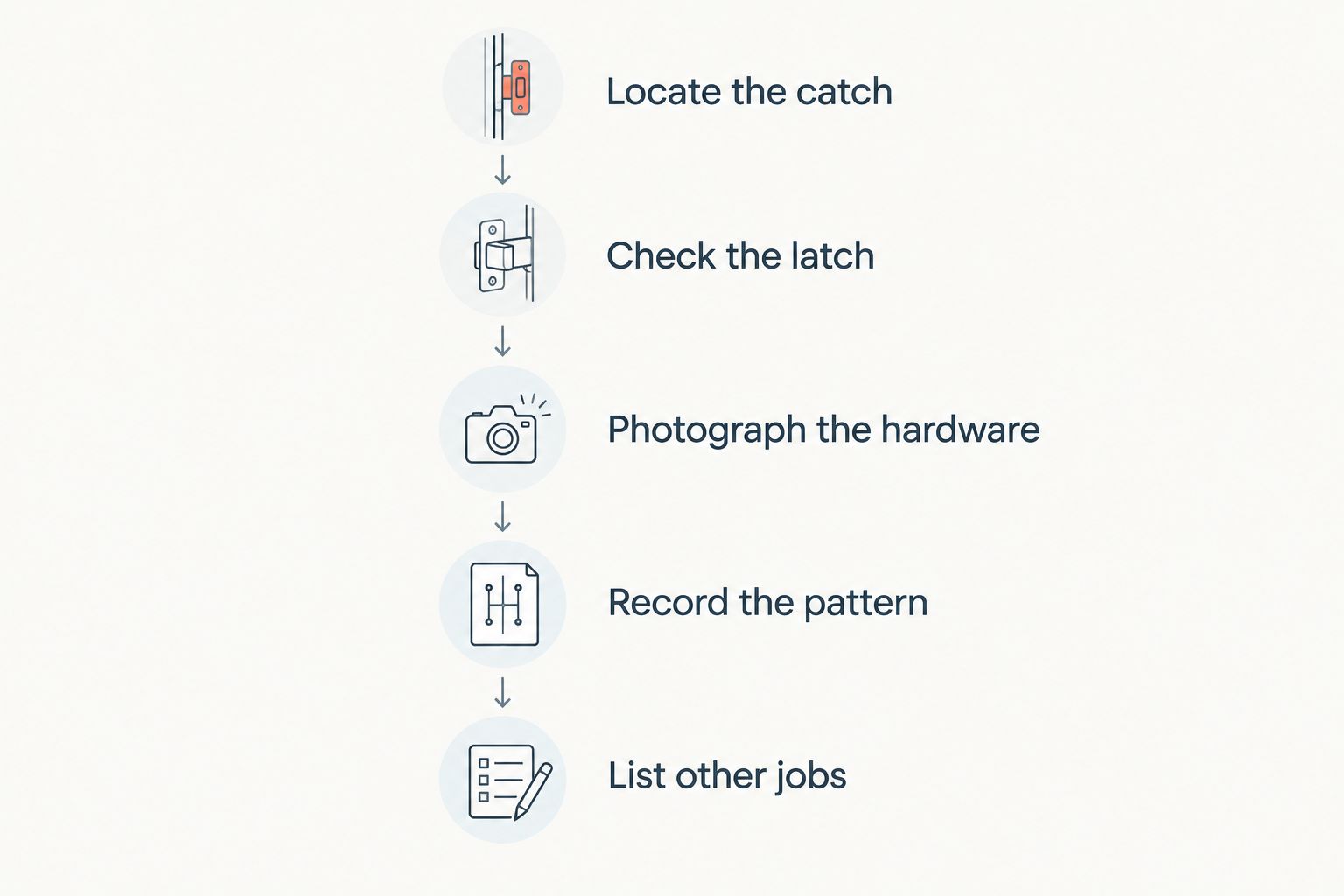
Use this 2026 appointment checklist to gather observations without dismantling the door. Stop if moving the door requires force or if the hardware feels unstable.
- Locate the catch. Open and close the door gently, noting where contact begins. Distinguish frame contact from floor contact.
- Check the latch. Note whether the door reaches the closed position and whether the latch engages without lifting the handle or door.
- Photograph the hardware. Take clear views of the hinges, latch, strike plate, and visible damage. Include a wider view of the doorway.
- Record the pattern. Write down when the sticking started and whether it changes with humidity or follows a recent incident.
- List other jobs. Add related door or cabinet hardware problems and other confirmed small-repair needs to your appointment description.
Each observation should answer a practical question. A close photograph shows a loose hinge; a wider photograph shows where that hinge sits and whether the surrounding jamb is damaged.
Keep your notes factual. Write that the door scrapes the floor near the handle side, rather than diagnosing a warped frame yourself. The professional can then inspect the cause without relying on an untested assumption.
What should you leave alone before the visit?
Avoid removing hinge pins, cutting the door, enlarging the strike opening, or changing an entrance door's hardware to make it close. Those changes can obscure the original symptom or introduce another problem.
Do not force a stuck door by repeatedly pulling on the handle. If a door cannot open normally, or an entrance door cannot close and secure properly, explain that clearly when arranging help; it is not just a cosmetic scrape.
Can several small repairs be handled in one visit?
Several small jobs can be handled in one visit through Mr. Mitchell's Home Maintenance & Services. That makes a sticking-door appointment a useful time to list related cabinet hardware issues and other confirmed repair needs.
For your 2026 job list, group tasks by location and describe the symptom for each. Include the room, the affected item, and any parts you already have. Do not assume that a longer list guarantees every task will fit the appointment.
Relevant jobs to discuss include:
- A bedroom door that catches and a cabinet handle that has loosened.
- A latch that misses its strike and another door with loose hardware.
- Drywall repair or painting needs near the affected doorway.
- Furniture assembly or wall mounting elsewhere in the home.
Grouping jobs is a planning benefit, not a promised discount. Confirm the scope before the visit, particularly when wall mounting, painting, or assembly needs materials, measurements, or additional preparation.
Clear the immediate work area and keep furniture assembly instructions or mounting instructions accessible when those tasks are on your list. For painting, explain which surface needs attention rather than assuming an entire room is included.
Book your repair appointment
Describe your sticking door and list other small jobs you want handled in the same visit.
Does a sticking door mean the frame needs repair?
A sticking door does not by itself establish a frame problem. Loose hinges, latch alignment, and moisture-related door movement also need checking.
Visible jamb damage, changing gaps, or new cracks near the opening make the frame especially relevant to the assessment. Replacing the door before checking those conditions can leave the cause untouched.
Should you sand a door that sticks in humid weather?
Do not sand a door solely because it sticks during humid weather. Check the hinges, contact point, and moisture pattern before removing material.
Wood expands and contracts as moisture content changes. An adjustment that creates enough clearance during swelling can create too much clearance later, so the repair needs to account for the pattern rather than just the day's symptom.
What should you put in the appointment description?
State where the door sticks, whether it latches, and when the problem began. Add visible damage and any previous adjustments.
A useful description identifies the room, contact location, and closing behavior. Mention whether it is an interior door or an apartment entrance door, then list other small jobs separately so they are not lost inside the door description.
FAQ
Should I repair or replace a door that sticks?
Repair is the starting point when the door is sound and the problem involves hinges, a latch, or localized rubbing. Consider replacement when the door has substantial damage or persistent distortion, after checking the frame.
Why does my door close but not latch?
A door that closes but does not latch needs its latch, strike alignment, and hinges checked. Describe whether lifting or pushing the door changes the result rather than forcing it closed.
Can home repair services fix loose door hinges?
Door hardware repairs include assessing loose hinges and their attachments. The repair depends on whether the screws, hinge, and surrounding material are sound.
Does a sticking door mean my home has a structural problem?
A sticking door alone does not establish a structural problem. Report new cracks, visible frame movement, or a sudden change alongside the sticking so the assessment covers those conditions.
Can I book other small repairs with my sticking door?
Mr. Mitchell's Home Maintenance & Services can handle several small jobs in one visit. List door or cabinet hardware repairs, drywall or painting needs, furniture assembly, or wall mounting when arranging the appointment, and confirm the scope.
How should I prepare for a door repair appointment?
Clear the door's swing path and record where it catches, whether it latches, and when the problem started. Keep photographs and any other small-job details ready for the visit.
One last thing
The most useful clue is often when the sticking began. A door that has always rubbed needs a different investigation from one that started catching after moisture exposure or alongside changes around the opening.
Before booking home repair services in 2026, record that timeline and resist making irreversible adjustments. A clear symptom description helps keep the appointment focused on fixing the cause rather than replacing a sound door.