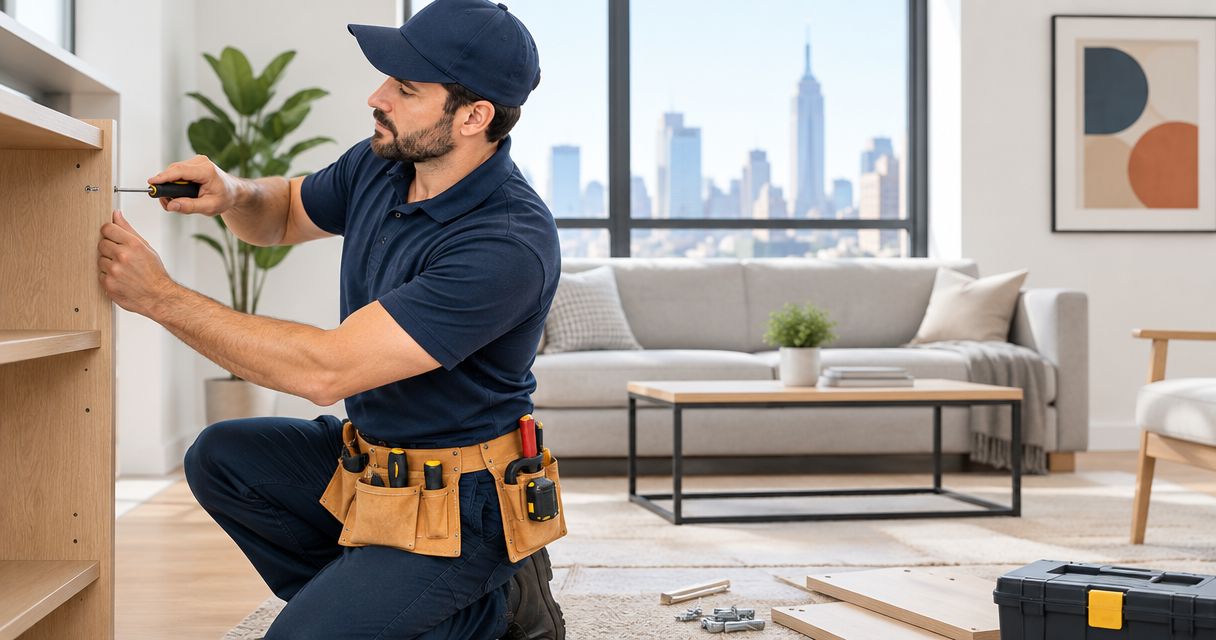
Best overall: Mr. Mitchell's Home Maintenance & Services for several small jobs in one visit. Best for damaged walls: drywall repairs and painting. Best for a tightly defined repair list: door and cabinet hardware repairs. This 2026 guide ranks home maintenance services for first-time homeowners in NYC by the problem you need solved, with practical preparation advice for Brooklyn and Queens homes.
- Mr. Mitchell's Home Maintenance & Services suits first-time homeowners who want online booking and several small repairs in one visit.
- Choose home maintenance services for first-time homeowners by repair scope, not an unexplained best-provider ranking.
- Prioritize drywall repairs, painting, furniture assembly, wall mounting, and door or cabinet hardware according to your home's needs.
- Before booking an NYC handyman visit, prepare photos, building access instructions, and a ranked repair list.
Why this matters
Your first home can come with a collection of small problems: an unfinished wall patch, a cabinet door that drops, furniture still in boxes. Those problems need different preparation, even when you want them handled during the same appointment.
The best first booking starts with a clear repair list, not a request to fix everything. For your 2026 move-in plan, separate visible finish work from problems whose cause remains unresolved. A wall stain, for example, needs its source addressed before cosmetic repair makes sense.
If you own a co-op or condo, ask management which repairs fall within your responsibility and what access arrangements apply. Do not assume that owning the apartment gives you permission to alter every wall or fixture.
What makes the best home maintenance service?
Use these criteria before choosing a service or booking an appointment:
- Task fit: Describe the actual work—patching drywall, assembling furniture, mounting an item, or repairing hardware.
- Clear scope: Identify the room, damaged part, desired result, and any related problem that still needs attention.
- Booking simplicity: Online appointment booking gives you a direct starting point; provide the job details rather than relying on a vague appointment note.
- Grouped-job suitability: Put several small repairs on the same list, then confirm which tasks fit the visit.
- Preparation requirements: Ask what materials, replacement parts, instructions, and clear workspace you need to provide.
- Building coordination: Check access instructions, work rules, and any approval requirements before the appointment.
These criteria favor a well-defined job over an impressive-sounding service description. A provider cannot assess a loose cabinet hinge from the words general maintenance alone.
Best services at a glance
This ranking compares repair categories, not competing companies. The first choice suits a mixed repair list; the remaining choices suit a specific problem.
| Rank and service | Best for | Standout benefit | Key limitation |
|---|---|---|---|
| 1. Grouped small-repair visit | Several unrelated small jobs | Handles multiple confirmed tasks in one visit | The full list needs scope confirmation |
| 2. Drywall repairs and painting | Holes, patches, and unfinished wall surfaces | Connects surface repair with the intended finish | Cosmetic work does not resolve an active leak |
| 3. Furniture assembly | Boxed furniture waiting to be built | Turns a defined set of parts into usable furniture | Missing or damaged parts interrupt assembly |
| 4. Wall mounting | Items that need secure wall placement | Plans placement around the wall and mounting requirements | Wall construction and item details matter |
| 5. Door and cabinet hardware repairs | Loose hinges, handles, and related fittings | Focuses on everyday opening and closing problems | Damaged surrounding material changes the repair scope |
1. Grouped repairs: best for a first-home repair backlog
Mr. Mitchell's Home Maintenance & Services is best for first-time homeowners who want easy online booking and several small repairs handled in one visit. This is the default choice when your list spans confirmed services rather than a single large project.
For example, your list might include a drywall patch, furniture assembly, and a loose cabinet handle. Send the complete list before the appointment so the intended work is clear; grouping tasks is not a promise that an unlimited list fits one booking.
Grouped-repair pros:
- Gives scattered household problems a single written scope.
- Supports several small jobs during one visit.
- Lets you rank essential repairs above cosmetic extras.
Grouped-repair cons:
- An unclear list makes preparation harder.
- Tasks involving different materials still need separate descriptions.
- Additional problems discovered during the visit require scope discussion.
Best for: A Brooklyn or Queens homeowner with several small, clearly described repairs.
Before booking, identify your 3 highest-priority tasks. That is a planning recommendation, not a limit on the service: it tells the repair professional what matters most if the list needs narrowing.
Verdict: Buy this service when your repair list crosses several confirmed categories.
2. Drywall repairs and painting: best for unfinished walls
Drywall repair addresses damaged wall surfaces; painting addresses the visible finish. Book the work around the result you want, whether that is a repaired hole ready for finishing or a completed painted area.
In your 2026 repair list, describe each wall separately. A small furniture scuff, a hole from a removed fixture, and peeling paint should not all appear as the same task.
Drywall repair and painting pros:
- Gives holes and damaged surfaces a defined repair scope.
- Connects patch preparation with the finish you expect.
- Helps distinguish isolated touch-ups from broader painting work.
Drywall repair and painting cons:
- Repairing the surface does not correct an unresolved moisture source.
- Existing paint information matters when matching a finish.
- Drying and preparation requirements need discussion before assuming completion in one visit.
Best for: Homeowners whose main move-in problem is visible wall damage or unfinished paintwork.
Take 2 photos of each area: a close view of the damage and a wider view showing its location. Include any paint container labels you already have, but do not buy a guessed color before discussing the job.
Verdict: Buy for defined surface damage; wait on cosmetic work while an active moisture problem remains unresolved.
3. Furniture assembly: best for getting rooms usable
Furniture assembly suits homeowners who have the furniture but need it put together. The useful booking details are the item description, assembly instructions, package condition, and room where the finished piece will stand.
Keep assembly and wall anchoring distinct in your request. If the manufacturer's instructions call for anchoring, include that requirement in the scope rather than treating it as an optional detail.
Furniture assembly pros:
- Fits a clearly identified item and instruction set.
- Helps turn a room full of boxes into a usable space.
- Works as part of a grouped list when the scope is confirmed.
Furniture assembly cons:
- Missing hardware or damaged components prevent straightforward completion.
- An assembled item still needs suitable floor space.
- Required wall attachment needs its own mounting assessment.
Best for: First-time homeowners with delivered furniture and an unfinished room setup.
Before the visit, check the packages against the manufacturer's packing information. Keep the instructions and supplied hardware together, and clear the intended assembly area without moving heavy boxes unsafely.
Verdict: Buy when the furniture, instructions, parts, and intended location are ready.
4. Wall mounting: best for planned wall placement
Wall mounting starts with the item and the wall—not with drilling. Share the item's model information, mounting hardware details, intended position, and anything you know about the wall construction.
Read the guide to checking your wall before wall mounting before finalizing the location. A photograph helps communicate your plan, but it does not establish what is hidden inside the wall.
Wall-mounting pros:
- Makes item placement an explicit part of the appointment.
- Brings wall suitability into the discussion before installation.
- Helps coordinate furniture placement with the mounted item.
Wall-mounting cons:
- The wall and fixing requirements need assessment.
- Supplied hardware is not automatically suitable for every wall.
- Building restrictions can affect the proposed location or work.
Best for: Homeowners who know what they want mounted and can provide the relevant item details.
Mark your preferred position with removable tape if the surface permits it. Treat that mark as a discussion point, not proof that the position is suitable.
Verdict: Buy after sharing the item, hardware, wall details, and intended position.
5. Hardware repairs: best for everyday opening problems
Door and cabinet hardware repairs focus on hinges, handles, and related fittings. Start with the symptom: a handle moves, a cabinet door hangs unevenly, or a hinge pulls away from its fixing point.
Do not assume every sticking door needs replacement hardware. The surrounding material and alignment matter, so describe what happens during normal use rather than choosing the repair yourself.
Hardware-repair pros:
- Targets a specific, repeatable household problem.
- Fits a short list of individual doors or cabinets.
- Gives you a practical priority ahead of purely cosmetic work.
Hardware-repair cons:
- A new fitting does not fix damaged material underneath it.
- Replacement parts need to match the existing application.
- A door problem can extend beyond the visible handle or hinge.
Best for: Homeowners whose main frustration is a loose fitting or poorly operating door or cabinet.
Photograph the fitting, its attachment points, and the full door or cabinet. If you already have a replacement part, share its details before assuming it will fit.
Verdict: Buy for a clearly described hardware problem; hold off on purchasing replacement parts until compatibility is checked.
Prepare your first repair appointment
For a 2026 appointment in Brooklyn or Queens, organize the request around four practical steps. Good preparation makes the proposed work understandable without requiring you to diagnose it.
Describe the problem
Name the room and the symptom. Cabinet hinge pulls away from the side panel is more useful than kitchen needs fixing. Mention whether the problem changes during use.
Gather photos
Use close and wide views. Include item labels, instructions, and existing parts where relevant, while keeping personal documents out of the frame.
Check access
Ask building management about entry arrangements and applicable work rules. Share those instructions before the visit, and clear a safe path to each work area.
Rank the jobs
Put essential function first, followed by setup tasks and cosmetic work. Keep unresolved causes separate from finish repairs so a patch or paint request does not conceal a larger problem.
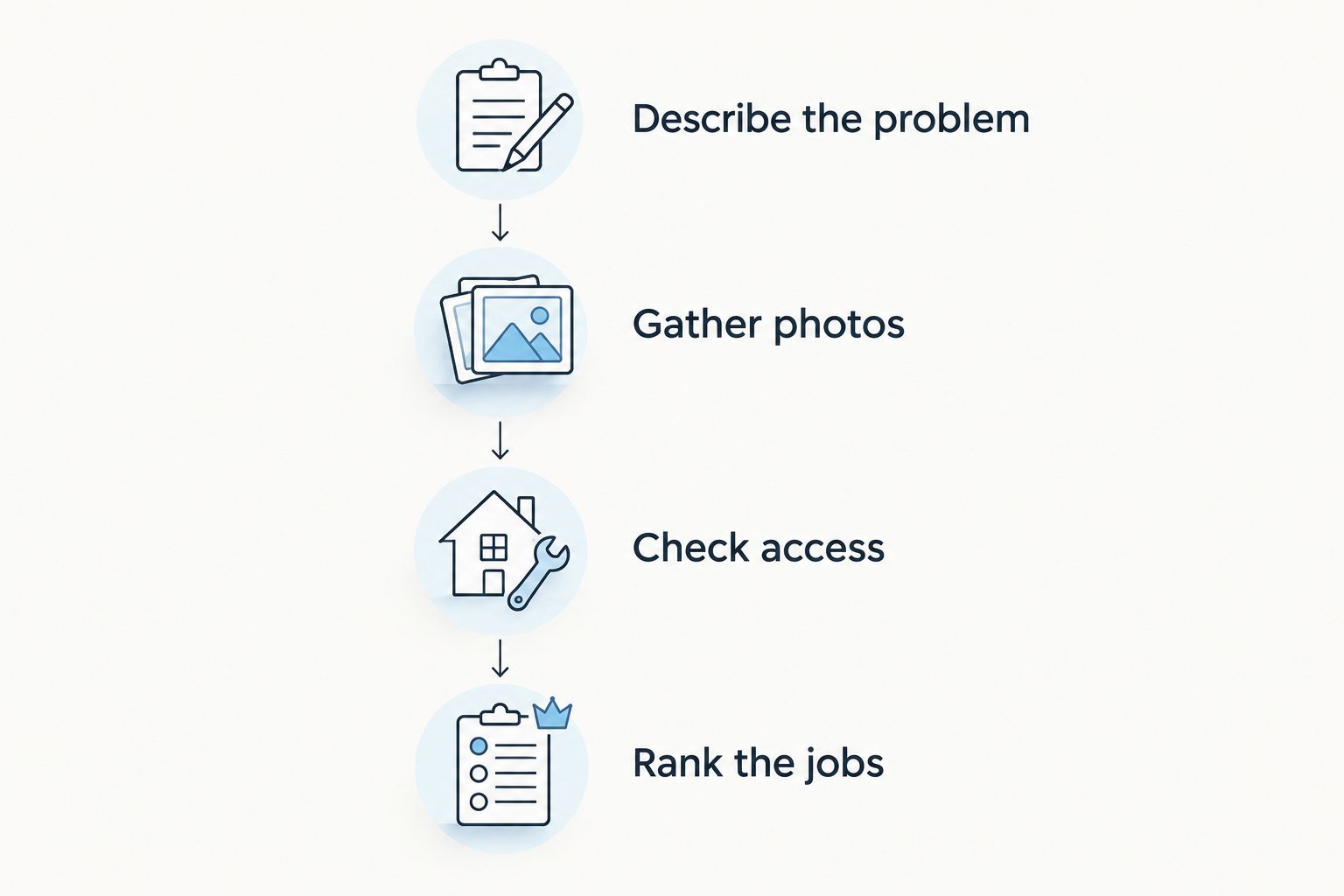
Your booking note can follow the same order: location, problem, photos, access, and priority. Include the entire proposed list rather than introducing extra tasks only after work begins.
Book your small-repair visit
Prepare your drywall, painting, assembly, mounting, and hardware repair list before booking online.
How the services are ranked
The 2026 order follows task fit, scope clarity, booking simplicity, preparation, and building coordination. Grouped repairs come first because they match a mixed first-home checklist; each later category serves a narrower need.
Mr. Mitchell's Home Maintenance & Services offers the confirmed combination of online appointment booking and several small jobs in one visit. This guide does not rank providers by unverified reviews, credentials, or promised completion times.
Which service should you choose?
Choose a grouped visit by default when you have several small jobs; choose a focused service when one problem dominates. That keeps the appointment tied to your actual home rather than a generic maintenance package.
For your 2026 first-home checklist, Mr. Mitchell's Home Maintenance & Services is the practical starting point for online booking across the confirmed repair categories. Send the scope first and confirm what belongs in the visit.
FAQ
What are the best home maintenance services for first-time homeowners in NYC?
A grouped small-repair visit is the best starting point when you have several clearly described tasks. For a single problem, choose drywall repairs and painting, furniture assembly, wall mounting, or door and cabinet hardware repairs to match the work.
Can I book several small repairs in one appointment?
Yes, Mr. Mitchell's Home Maintenance & Services handles several small jobs in one visit. Share the complete list before booking and confirm the scope rather than assuming every task fits the same appointment.
What should I repair first after buying an apartment?
Prioritize unresolved hazards or active damage before cosmetic improvements. For routine small repairs, put everyday function ahead of appearance and distinguish your responsibilities from the building's.
Should I book drywall repair if the wall has a water stain?
Address the moisture source before booking cosmetic wall repair. Describe the stain and any known history so the proposed work does not treat appearance as proof that the underlying issue is resolved.
What should I prepare for furniture assembly?
Prepare the furniture instructions, supplied hardware, item details, and a clear assembly area. Report damaged or missing components and include any manufacturer-required wall anchoring in the proposed scope.
What information is needed before wall mounting?
Provide the item details, mounting hardware information, intended location, and anything known about the wall. Check building requirements and do not assume that included fixings suit every wall.
How do I arrange a repair visit in Brooklyn or Queens?
Prepare photos, a ranked repair list, and building access instructions before using the online booking page. Confirm the location and proposed tasks as part of the appointment arrangements.
One last thing
Photograph the fixing point, not just the loose part. A close view of a cabinet handle shows the handle; a view of the screw holes and surrounding material helps explain why it moves. That small change makes your repair request more useful without requiring a technical diagnosis.