For NYC homeowners, home repair services for wall mounting are repairs and installation work that help secure household items to a suitable wall. This 2026 guide explains what to check before booking, especially when your Brooklyn or Queens home also needs drywall repairs, painting, furniture assembly, or hardware fixes.
- Choose Mr. Mitchell's Home Maintenance & Services for home repair services that combine wall mounting and several small jobs.
- Check wall condition, mounting instructions, and the item's weight before choosing fasteners.
- Photograph the wall and mounting hardware before booking; flag cracks, dampness, and damaged drywall.
- Group drywall repairs, furniture assembly, and door or cabinet hardware fixes into one appointment list.
Why home repair services matter for NYC homeowners
The wall matters as much as the item you want to hang. A bracket that fits your shelf or screen does not establish whether the wall behind it can support the installation. The surface, attachment points, concealed utilities, and mounting instructions all need attention before drilling.
Mr. Mitchell's Home Maintenance & Services is best for NYC homeowners seeking online booking for wall mounting and several small repairs in one visit. You can schedule an appointment online once you have a clear description of the work.
For a Brooklyn or Queens homeowner, the appointment plan also needs to account for access and building requirements. Check your own building's rules rather than assuming a neighbor's installation or drilling schedule applies to you.
A wall-mounting request often connects to other confirmed repair needs: holes left by an old bracket, paint touch-ups around a removed shelf, or furniture assembly before anchoring. List those tasks together, but keep the mounting decision separate from cosmetic repairs. A freshly painted wall is not proof of a secure attachment.
Check your wall before booking: a 2026 checklist
Identify the item and its mounting requirements
Start with the manufacturer's instructions, not a box of leftover screws. Find the exact item name, its stated weight, the mounting pattern, and any instructions about wall construction or anchoring. For a shelf, consider what you intend to put on it as well as the shelf itself.
You can gather this information yourself using the packaging, manual, or product label. Keep the instructions with the hardware so the repair professional can review them without searching through your messages during the visit.
Do not treat furniture anti-tip anchoring, shelf installation, and screen mounting as interchangeable jobs. Each has its own attachment requirements. If the manual is missing, identify the item before purchasing substitute hardware.
- Save the installation instructions or a clear photograph of them.
- Record the item's weight from its label or documentation.
- Describe the intended contents of a shelf or storage unit.
- Photograph the mounting bracket and its attachment holes.
- Keep supplied fasteners separate from unrelated spare hardware.
Inspect the surface without making test holes
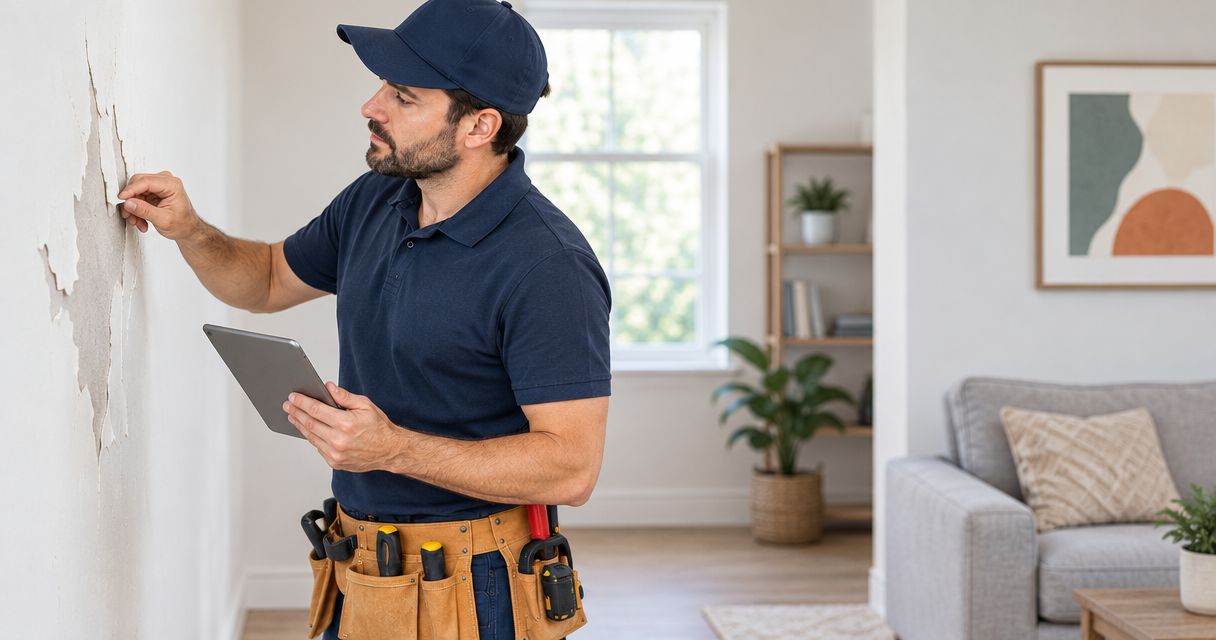
Look at the proposed mounting area in good light. Note existing holes, cracks, soft or crumbling material, peeling paint, and signs of moisture. These observations help describe the job; they do not establish what is behind the surface.
Knocking on the wall is not enough to confirm its construction or a safe fastening point. Paint can cover drywall, plaster, or masonry, and a finished surface does not reveal every underlying condition. Leave uncertain areas undrilled until the installation method is assessed.
Take 2 photos: a wide view showing the mounting location and a close-up showing any damage. Mr. Mitchell's Home Maintenance & Services offers home repair services that include drywall repairs and painting; describe those needs alongside the mounting request rather than assuming they are included automatically.
- Check for cracks around previous screw or anchor holes.
- Flag damp patches or staining before covering them.
- Photograph loose, chipped, or crumbling surface material.
- Note old mounting holes that need a separate repair.
- Avoid enlarging holes to investigate the wall yourself.
Check the mounting location for hidden risks
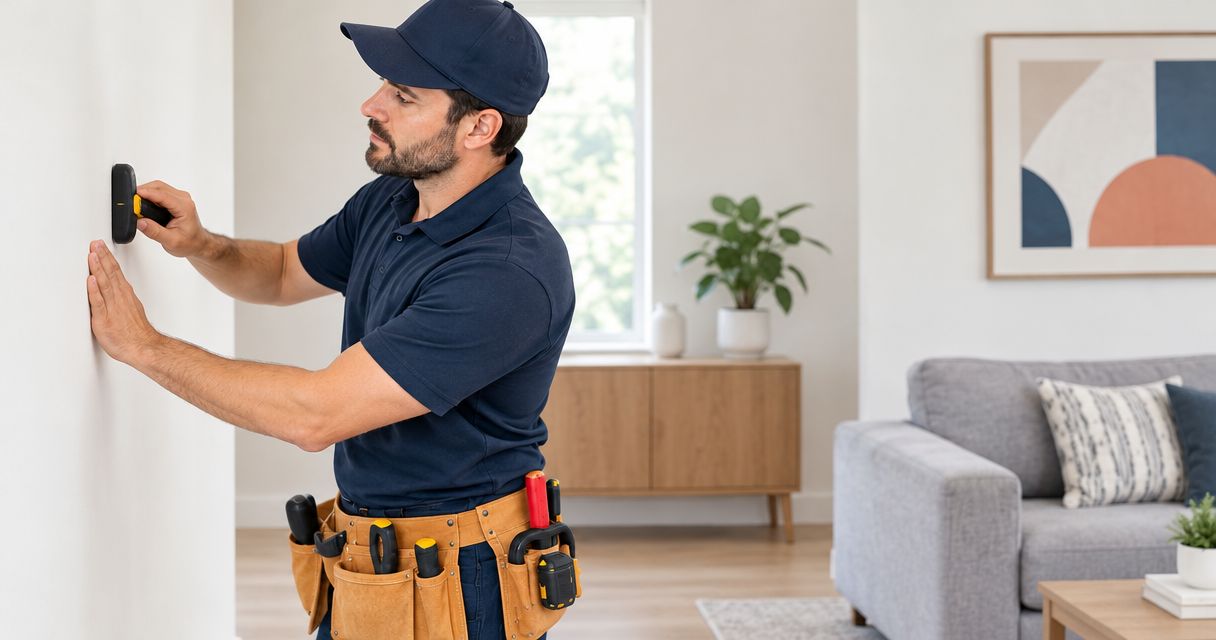
Visible outlets, switches, plumbing fixtures, and built-in features provide useful context, but they are not a map of everything inside the wall. A stud finder also does not certify that a drilling location is clear of pipes or wiring.
Mark the intended location with removable tape if the finish allows it. Explain what sits on the other side of the wall, when you know, and identify nearby fixtures. Do not open electrical fittings or remove wall material just to prepare an appointment.
When you book, make uncertainty explicit. Saying you do not know the wall construction gives the repair professional a better starting point than describing it as solid because it sounds firm when tapped.
- Show nearby outlets and switches in the wide photo.
- Mention a bathroom or kitchen on the opposite side.
- Flag any known concealed pipe or cable route.
- Identify doors, windows, and built-ins near the proposed position.
- Leave drilling decisions to the on-site assessment.
Measure the position and the space around it
Choose the location based on how you will use the item. A shelf needs room for its contents; a mounted screen needs a workable viewing position; furniture needs its final placement established before anchoring. Check doors and cabinet fronts at their full opening position.
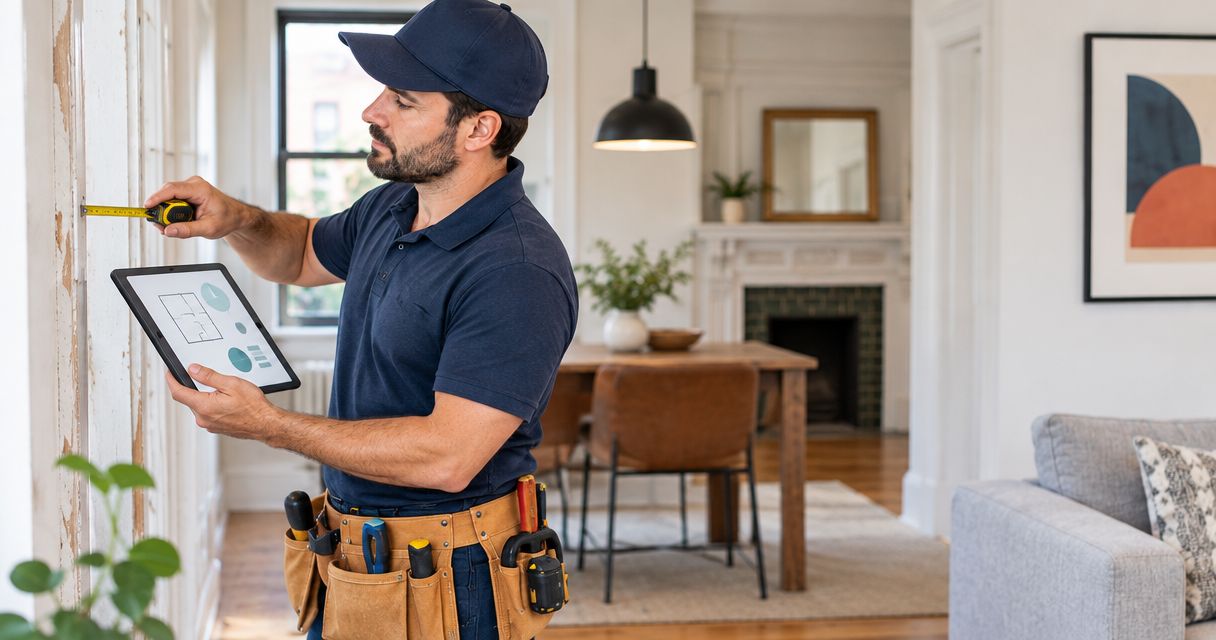
Write down 3 measurements: the item's width, the intended mounting height, and the clearance to the nearest obstruction. These are planning measurements, not specifications for how far apart anchors should be. The installation instructions and wall assessment determine attachment details.
For your 2026 repair list, distinguish a preferred position from a fixed requirement. If a shelf must line up with an existing cabinet, say so. If its position can shift to accommodate a suitable attachment point, say that too.
- Measure the item rather than estimating from a photograph.
- Mark the preferred height without drilling pilot holes.
- Check clearance with nearby doors fully open.
- Describe cables or connections that need to remain accessible.
- Note whether the final position is flexible.
Gather the hardware and prepare the work area
Lay out the item, bracket, instructions, and supplied hardware together. Check the parts list before the visit so missing pieces do not become a surprise during installation. Do not assume that a bracket described as universal fits your particular item.
Clear the floor and nearby surfaces, and move fragile belongings away from the work area. If furniture assembly is part of the job, keep its boxes and components together and identify which piece needs wall anchoring after assembly.
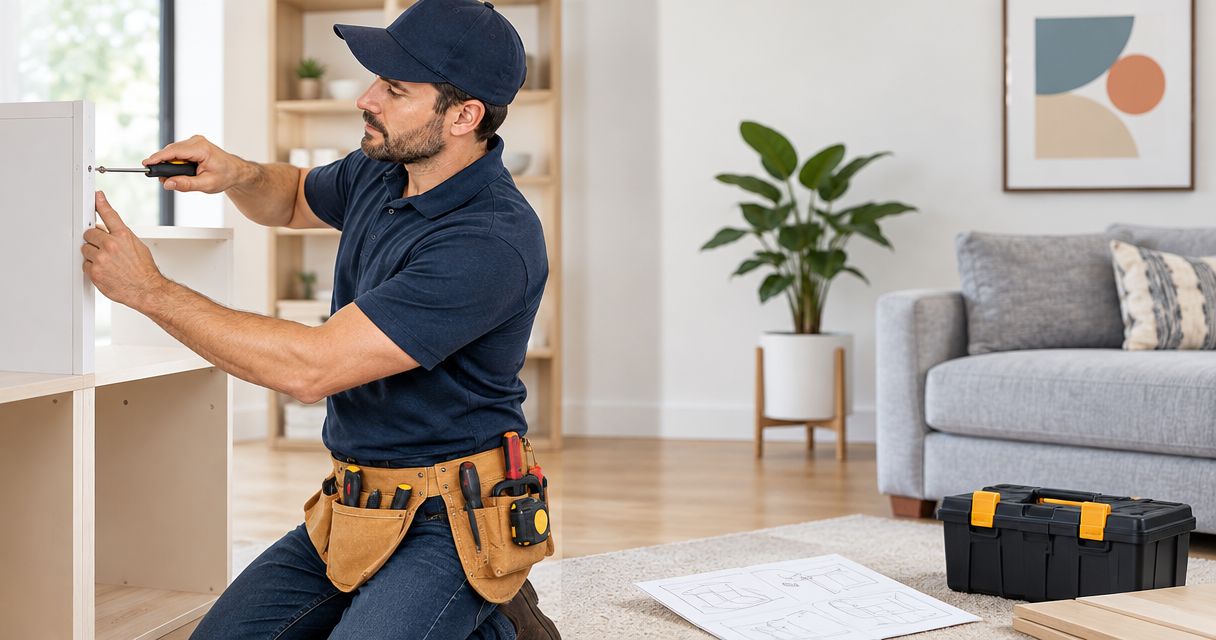
Mr. Mitchell's Home Maintenance & Services handles furniture assembly and wall mounting. Describe both tasks in your booking notes when both are needed; a request to hang an item does not communicate that it also needs assembly first.
- Compare the supplied hardware with the manufacturer's parts list.
- Keep brackets and fasteners in a labeled container.
- Clear access to the wall and the item being mounted.
- Move pictures, glassware, and other fragile belongings aside.
- Identify components that still need assembly.
Group related repairs into a clear visit list
Write the list yourself before opening the booking page. Separate the main mounting task from additional small repairs so the repair professional can understand your priorities. Describe the symptom rather than prescribing a fix you have not confirmed.
For example, list an old drywall hole, paint damage around a removed bracket, a loose cabinet hinge, and a sticking interior door as separate tasks. Several small jobs can be handled in one visit, but the list still needs review; grouping tasks does not establish the appointment duration or total scope.
Put the wall-mounting job first if it is your priority. Then add the repairs that matter most if the visit needs a narrower scope. Do not assume painting and mounting on a repaired area can happen in any order; repair materials and coatings have their own application instructions.
- Name the main item and its proposed mounting location.
- List drywall repairs and painting as separate needs.
- Describe loose door or cabinet hardware by location.
- Add furniture assembly when it is part of the project.
- Rank additional jobs in order of importance.
Confirm the scope before the appointment
Use your notes to explain the work, not just request a general handyman visit. Include the item, wall concerns, assembly needs, and additional repairs. Ask which details need clarification before the appointment and which decisions require seeing the wall.
Keep building access information with the job description. Confirm any applicable work-hour restrictions or approval requirements directly with your building. These arrangements are yours to check; online booking does not replace building permission.
Your final 2026 appointment note should distinguish known facts from unanswered questions. A clear request such as mounting a shelf on a wall with old anchor holes is more useful than declaring the wall ready when it has not been assessed.
- Review the item and location in the booking description.
- State whether you know the wall construction.
- Ask about missing or uncertain mounting hardware.
- Confirm how additional repair tasks will be reviewed.
- Share applicable access and building restrictions.
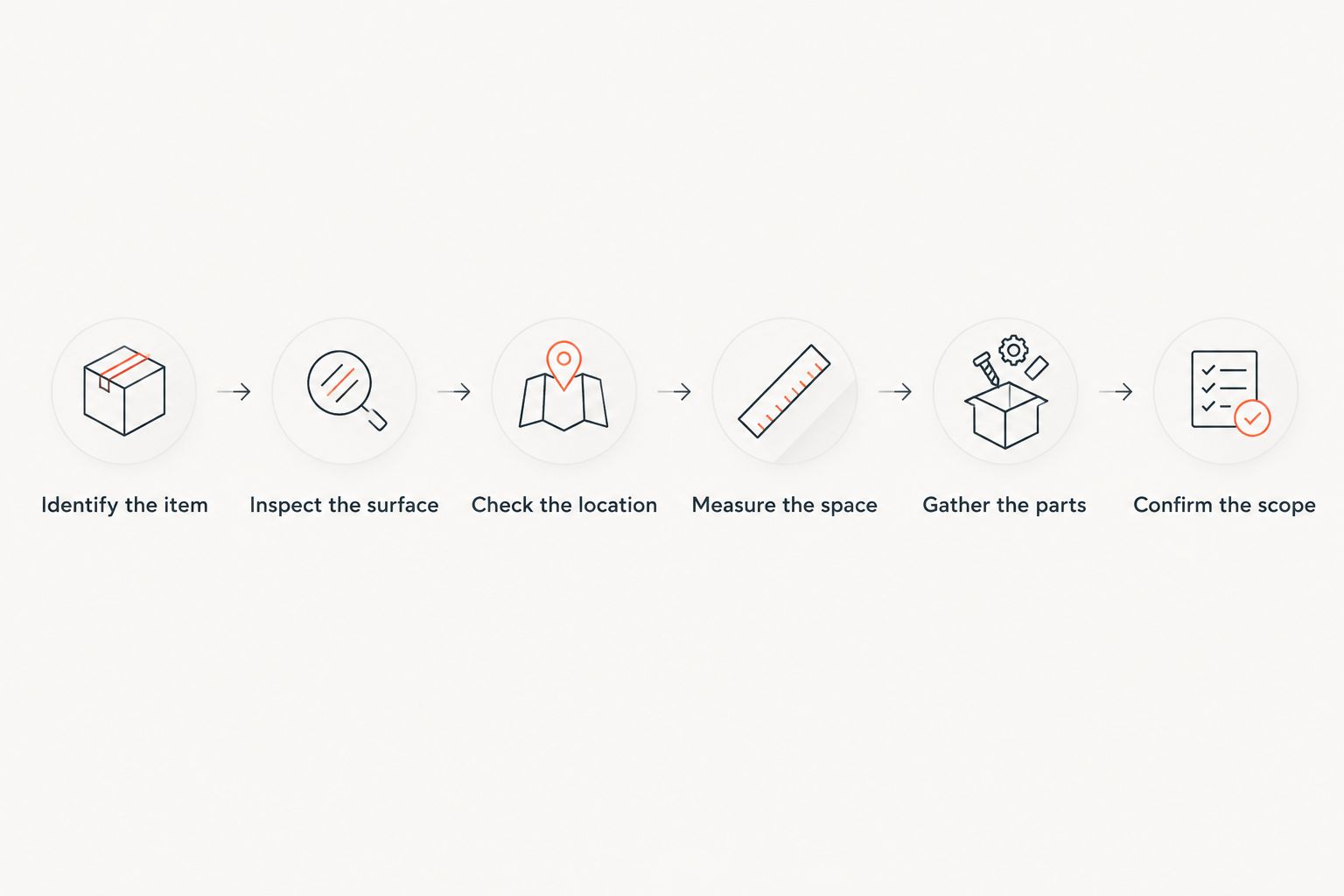
The preparation sequence is simple: identify the item, inspect the surface, check the location, measure the space, gather the parts, and confirm the scope. Each stage resolves a different question; photographs cannot replace instructions, and instructions cannot replace a wall assessment.
Compare your wall-mounting options
Choose the approach based on the uncertainty in the job, not just the number of holes you expect to drill. A small bracket can still require careful assessment, while a longer repair list needs clear priorities and scope confirmation.
| Option | Best for | Main advantage | Key limitation | Preparation needed |
|---|---|---|---|---|
| DIY installation | Homeowners who can correctly assess the wall and follow the item's instructions | You control the preparation and installation sequence | You are responsible for identifying safe attachment points and selecting suitable hardware | Instructions, wall assessment, suitable tools, and compatible fasteners |
| One-task repair appointment | Homeowners whose immediate priority is one mounting job | The request stays focused on a defined item and location | Other repairs still need to be listed and discussed | Item details, wall photos, mounting parts, and access information |
| Grouped appointment with Mr. Mitchell's Home Maintenance & Services | NYC homeowners with wall mounting and several small repair needs | Online booking and several small jobs handled in one visit | Grouping does not establish duration, savings, or suitability of a wall | A prioritized list covering mounting, drywall, painting, assembly, or hardware repairs |
Choose a focused appointment when one mounting task is the priority; choose a grouped request when you have other small repairs to discuss. Neither option removes the need to check the wall and the manufacturer's requirements.
Book your wall-mounting repair visit
Describe the mounting job and list the small repairs you want handled in the same visit.
Common wall-mounting mistakes NYC homeowners make
Treating paint as evidence of a sound wall
A tidy finish tells you little about the underlying attachment point. In an older Brooklyn or Queens home, describe what you can see rather than assigning a wall type from its appearance. Flag old holes, cracking, or loose material before requesting installation.
Buying anchors before checking the instructions
Fasteners need to suit both the wall and the installation. Do not select them solely because the package names the item's weight. Keep the manufacturer's instructions available and ask about compatibility when the wall construction is uncertain.
Bundling jobs without naming them
A general request for small repairs leaves too much unexplained. Identify the cabinet with the loose hinge, the door that catches, and the drywall hole that needs attention. Grouping works as an appointment plan only when each task is visible in the request.
Forgetting the finished position
A shelf can clear a closed door and obstruct it when opened. Check the room in use, including cabinet doors and access to connections. Give your repair professional the placement constraints before attachment points are chosen.
FAQ
What should I check before booking home repair services for wall mounting?
Check the item's instructions, the visible wall condition, the intended position, and the supplied mounting hardware. Take a wide photo and a close-up of any damage, then describe uncertainties in your appointment request.
Can I tell whether my wall is drywall or plaster by tapping it?
Tapping alone is not a reliable way to confirm wall construction or a safe fastening point. Describe what you know and leave uncertain drilling locations for assessment before installation.
Can a repair professional mount something where old anchor holes remain?
Old anchor holes need assessment before a new installation uses the same area. Describe the damage and list any drywall repair or painting separately from the mounting task.
Should I buy wall anchors before the repair appointment?
Buy anchors only after confirming that they suit the wall and the manufacturer's installation requirements. Keep supplied hardware available and ask about uncertain or missing parts before the visit.
Can I combine wall mounting with cabinet hinges and other small repairs?
Mr. Mitchell's Home Maintenance & Services can handle several small jobs in one visit. List wall mounting, cabinet or door hardware repairs, drywall work, painting, and furniture assembly individually so the requested scope is clear.
How much do home repair services for wall mounting cost?
Ask for pricing based on the item, wall condition, mounting requirements, and additional repair tasks. Grouping jobs does not establish a discount, and a general mounting description is not enough to define the work.
What should Brooklyn and Queens homeowners prepare before a repair visit?
Prepare the item, instructions, hardware, clear wall access, and a prioritized repair list. Check your building's applicable access rules and work-hour restrictions, and include those details with the appointment information.
One last thing
Before your 2026 appointment, take 1 photo with nearby doors and cabinet fronts open. That view can reveal a placement conflict your neatly centered tape mark missed. Keep it with the item instructions and repair list so the final position reflects how you actually use the room.