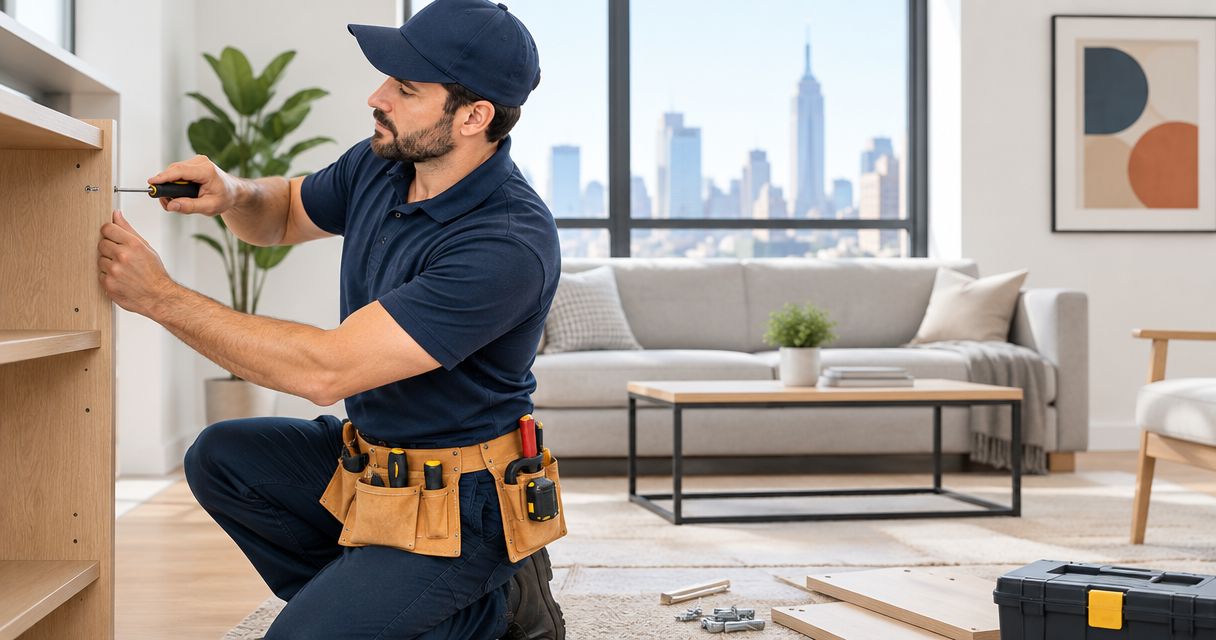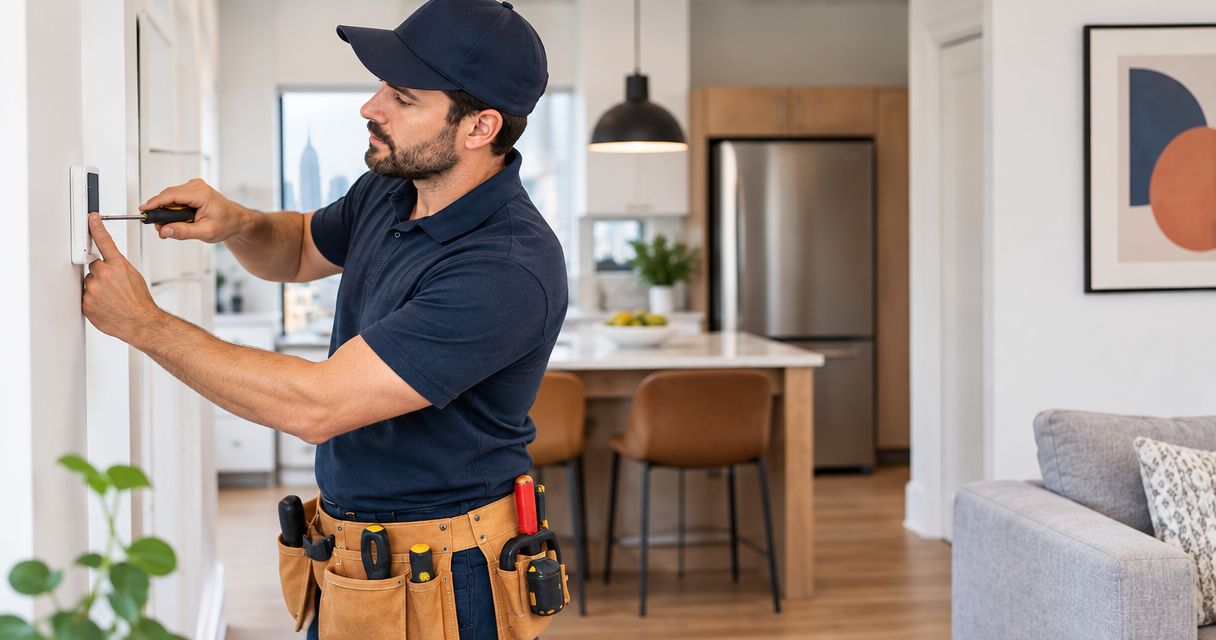
Best overall for grouped small repairs: Mr. Mitchell's Home Maintenance & Services. Best for damaged wall finishes: drywall repair and painting. Best for a narrowly defined repair list: door and cabinet hardware repairs. This 2026 guide compares home maintenance services by the work you need, so you can prepare a useful list and book the right appointment.
- Mr. Mitchell's Home Maintenance & Services is best for homeowners booking several small repairs in one visit.
- Choose drywall repair and painting for wall damage; identify any ongoing moisture problem before requesting finish repairs.
- Choose furniture assembly or wall mounting according to the item, its instructions, and the installation surface.
- For Brooklyn and Queens appointments, prepare repair photos, building access details, and a prioritized job list.
Why this matters
A wall patch, an unassembled bookcase, and a loose cabinet hinge need different preparation. Booking a vague appointment for general repairs leaves the actual work unclear.
Mr. Mitchell's Home Maintenance & Services offers home maintenance services with easy online appointment booking and several small jobs handled in one visit. You can schedule your appointment online; describe the work clearly and confirm the proposed scope before the visit.
For your 2026 repair list, choose by the problem rather than the broadest service label. The ranking below compares service types, not competing businesses, and gives each option a distinct purpose.
What makes the best home maintenance services?
- Task fit: Match the appointment to drywall, painting, assembly, mounting, or door and cabinet hardware work.
- Clear scope: Describe the damaged part, the room, and the result you want.
- Grouped work: Identify small jobs you want handled together, without assuming every task fits the appointment.
- Surface and material checks: Share what you know about wall construction, existing finishes, and replacement parts.
- Booking readiness: Prepare photos, instructions, access information, and any building requirements before confirming the work.
The best appointment is not the one with the longest task list. It is the one with clearly described work, suitable materials, and priorities you can explain.
Home maintenance services at a glance
| Rank | Service option | Best for | Standout feature | Key limitation |
|---|---|---|---|---|
| 1 | Grouped small-repair visit | Several unrelated small jobs | Brings a prioritized repair list into one visit | Scope needs confirmation; not every task belongs together |
| 2 | Drywall repair and painting | Damaged interior wall finishes | Addresses the patch and its visible finish | Ongoing moisture needs attention before cosmetic repair |
| 3 | Furniture assembly | Unassembled household furniture | Follows the item's assembly instructions | Missing or damaged parts interrupt the work |
| 4 | Wall mounting | Items that need secure wall attachment | Matches installation planning to the wall and item | Wall construction and fixing requirements must be established |
| 5 | Door and cabinet hardware repairs | Loose, sticking, or misaligned hardware | Focuses on specific everyday operating problems | Damaged material can make a simple adjustment insufficient |
1. Grouped small-repair visit: best for a mixed repair list
A grouped visit brings several small jobs into one appointment. Think of a loose cabinet handle, an interior door that rubs, and a small wall patch that you want assessed together.
Best for: NYC homeowners with several clearly defined repairs, particularly those preparing a Brooklyn or Queens home for everyday use, guests, or a move.
Mr. Mitchell's Home Maintenance & Services is best for homeowners who want easy online booking for several small repairs in one visit. Put the most important job first, then explain the remaining tasks rather than treating the appointment as an open-ended checklist.
Grouped small-repair visit pros:
- Keeps your requested work in one organized list.
- Supports several small jobs during one visit.
- Gives you a clear way to communicate priorities.
Grouped small-repair visit cons:
- Different jobs can require different materials or preparation.
- Grouping work does not establish a discount or guarantee completion of every item.
What to prepare: Write down the room, problem, and desired result for each task. Separate essential repairs from optional additions, and ask which items belong in the proposed appointment.
Verdict: Buy this service for a mixed list of small repairs, after confirming the scope.
2. Drywall repair and painting: best for damaged wall finishes
Drywall repair addresses damaged wall surfaces; painting addresses the visible finish. If your goal is a finished-looking wall, describe both needs when you request the work.
Best for: Homeowners with wall holes, damaged patches, or interior paint areas that need attention.
A small repair is not automatically an invisible repair. Existing texture, paint sheen, color, and the surrounding surface affect how noticeable a touch-up looks.
Drywall repair and painting pros:
- Connects surface repair with the finish you actually want.
- Gives you an opportunity to identify nearby wall damage.
- Fits a clearly photographed, room-specific repair request.
Drywall repair and painting cons:
- A local paint touch-up can remain visible against the existing finish.
- A wall affected by unresolved moisture is not ready for cosmetic repair.
What to prepare: Take 2 photos per damaged area: one close view and one wider view showing the surrounding wall. Keep any existing paint information or labeled container available, and describe whether the surface feels damp or the damage has returned.
For a 2026 refresh, avoid choosing a patch size as your only description. State whether you want the hole repaired, the area painted, or the broader wall finish discussed.
Verdict: Buy this service for wall damage; wait on cosmetic work if the underlying moisture problem remains unresolved.
3. Furniture assembly: best for an unassembled household item
Furniture assembly follows the item's instructions to put its components together. The useful booking details are the item name, assembly instructions, package condition, and the room where the finished furniture will stand.
Best for: Homeowners with an unassembled desk, table, bed frame, or other household furniture requiring assembly.
Keep assembly and wall attachment separate in your description. If the instructions require an anti-tip attachment, include that requirement rather than assuming assembly alone covers it.
Furniture assembly pros:
- Gives the appointment a specific item and clear instructions.
- Lets you prepare the final location before work begins.
- Makes missing components easier to identify before assembly starts.
Furniture assembly cons:
- Missing hardware or damaged panels can prevent completion.
- Required wall attachment introduces a separate surface and fixing check.
What to prepare: Keep the instructions and hardware together. Leave room to lay out components safely, and avoid mixing parts from different items.
If you want furniture placed in a particular room, clear the route there before the visit. Do not assume a large assembled item will fit through the same openings as its flat packages.
Verdict: Buy this service when your furniture and instructions are ready; hold if essential parts are missing.
4. Wall mounting: best for items needing secure wall attachment
Wall mounting attaches an item to a suitable supporting surface. The item, bracket, wall construction, and manufacturer's instructions all belong in the booking conversation.
Best for: Homeowners planning to mount a television, shelf, or another wall-mounted household item.
Start with the wall, not just the desired height. Share what you know about its construction, and do not assume a fixing that worked elsewhere suits this location.
Wall mounting pros:
- Defines the intended item and location before installation.
- Brings wall suitability into the decision early.
- Lets you discuss placement before holes are made.
Wall mounting cons:
- Unknown wall construction prevents a complete installation plan.
- A bracket or fixing must suit the item and supporting surface.
What to prepare: Gather the item instructions, bracket details, and a photo of the intended location. Identify nearby outlets and anything that affects placement, but do not assume electrical work or concealed cable routing is included.
For your 2026 mounting project, distinguish your preferred position from a confirmed installation position. Building requirements and the wall itself still need consideration.
Verdict: Buy this service after the item, bracket, wall, and proposed position have been checked.
5. Door and cabinet hardware repairs: best for everyday annoyances
Door and cabinet hardware repairs focus on problems such as a loose handle, a misaligned cabinet door, or an interior door that does not close properly. Describe what happens during use instead of diagnosing the repair yourself.
Best for: Homeowners with a short list of irritating operating problems rather than broad replacement plans.
A door rubbing at its edge and a loose hinge are different symptoms. Explain where the contact occurs, whether anything moves, and whether the problem appeared suddenly.
Door and cabinet hardware repair pros:
- Targets a specific problem you encounter during daily use.
- Fits a room-by-room inspection of existing hardware.
- Can join a grouped visit when the scope is confirmed.
Door and cabinet hardware repair cons:
- Damaged surrounding material can require more than tightening.
- Replacement hardware needs to match the existing installation.
What to prepare: Photograph the hardware and the surrounding material. Keep any detached pieces, and explain whether you want an existing part repaired or a replacement discussed before buying anything.
Verdict: Buy this service for loose or poorly operating hardware; hold off on replacement purchases until compatibility is checked.
How these services are ranked
This ranking puts a grouped visit first because it matches a mixed small-repair list. The remaining options follow distinct needs: wall finish, furniture assembly, wall attachment, and operating hardware.
The criteria are task fit, clear scope, grouped work, material checks, and booking readiness. This is not a rating of workmanship, appointment duration, or competing providers.
Prepare a repair list that is ready to book
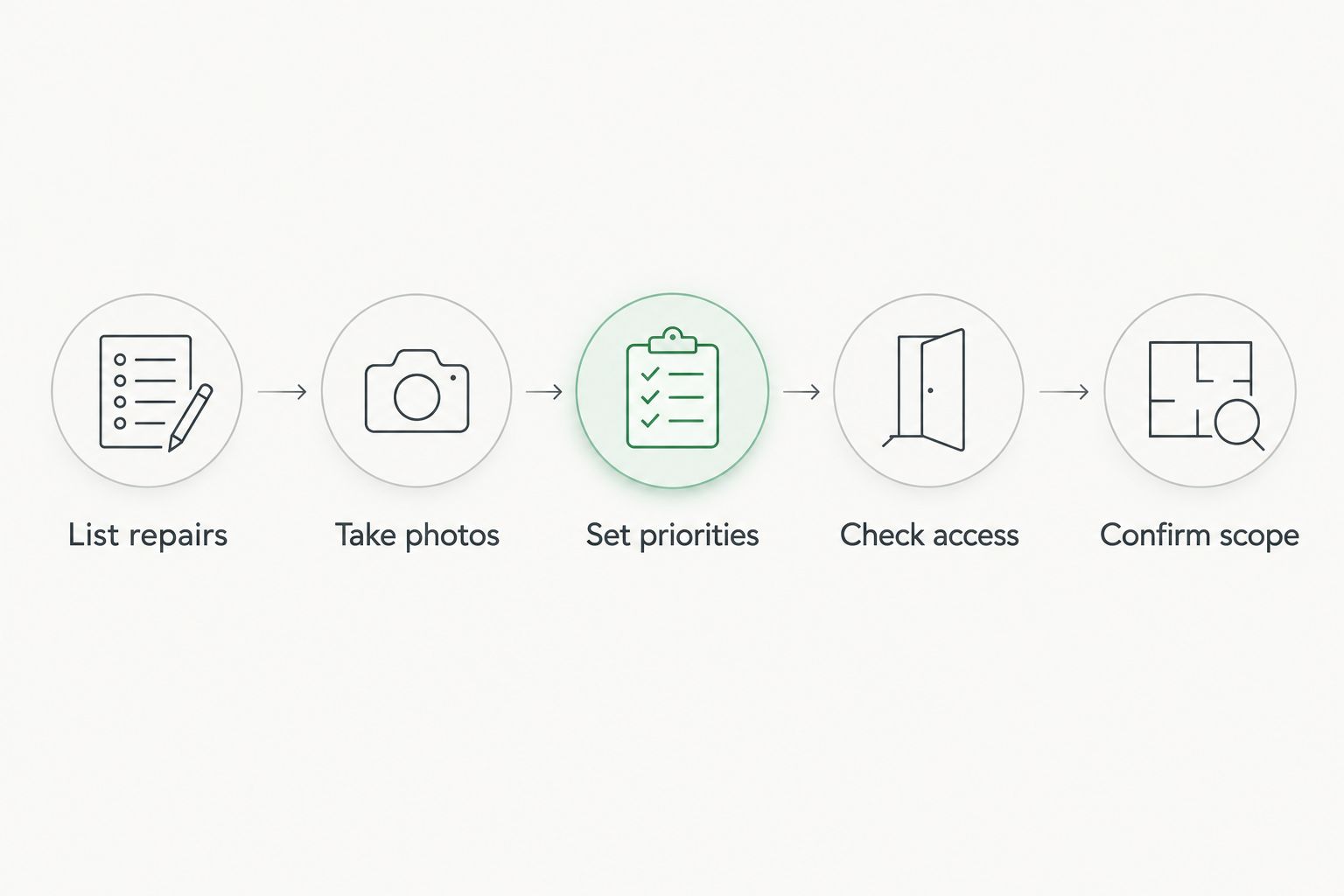
For a 2026 appointment, use this sequence before submitting your request. It turns a collection of annoyances into work you can describe clearly.
- List repairs: Walk through the rooms and note each problem separately.
- Take photos: Show the damaged part and its surroundings, not just an extreme close-up.
- Set priorities: Choose your top 3 tasks so the most important work is clear.
- Check access: Ask your building about entry arrangements, work rules, and any required documents.
- Confirm scope: Share the list and establish what the appointment is intended to cover.
For Brooklyn and Queens homeowners, include the apartment or house access details that affect the visit. Explain stairs, entry arrangements, and building coordination without assuming the person attending already knows the property.
Do not add a new task silently on appointment day. Describe it first so its materials, preparation, and fit with the agreed work can be discussed.
Book your small-repair appointment
Prepare your repair list and request several small jobs in one visit.
Which home maintenance services should you choose?
Choose a grouped small-repair visit if your list spans several confirmed service types. Choose a focused appointment if one wall repair, assembly task, mounting project, or hardware problem is the real priority.
For 2026 planning, Mr. Mitchell's Home Maintenance & Services offers a straightforward starting point: online appointment booking and several small jobs handled in one visit. Make the request specific, and confirm which tasks fit before expecting the full list to be completed.
FAQ
What's the best home maintenance service for several small repairs?
A grouped small-repair visit is the best fit for several clearly defined tasks. Mr. Mitchell's Home Maintenance & Services offers online appointment booking and several small jobs handled in one visit; confirm the proposed list before the appointment.
Can I request drywall repair and painting together?
Yes, describe both the damaged surface and the finish you want when requesting the work. Ask whether the proposed scope includes patching, preparation, and painting, rather than assuming a patch includes every finishing step.
What should I prepare before furniture assembly?
Prepare the furniture instructions, hardware, components, and a clear working area. Tell the service provider if the instructions require wall attachment, and flag missing or damaged parts before the visit.
What should I check before booking wall mounting?
Identify the item, its mounting instructions, the bracket, and the intended wall location. Share what you know about the wall construction and confirm the installation requirements before work begins.
Does grouping small repairs guarantee savings?
No, grouping small repairs does not establish a discount or a lower total. Confirm the proposed work and any materials or other charges before agreeing to the appointment.
How do I prepare for a repair appointment in Brooklyn or Queens?
Prepare a prioritized repair list, clear photos, and property access details. Check your building's work rules and document requirements before confirming arrangements.
Should I book painting over a damp or repeatedly damaged wall?
No, address the ongoing moisture problem before requesting cosmetic wall repair. Explain the history of the damage so the proposed patching and painting are not treated as a fix for its cause.
One last thing
Photograph how the problem behaves, not only how it looks. A cabinet door shown open and closed communicates alignment better than a close-up of its handle alone.
Before your visit, add that context to the job list. A useful description is simple: what moves, what catches, what is damaged, and what you want corrected.