NYC homeowners’ home repair services are appointment-based help with furniture assembly and small household fixes, aimed at making rooms usable. For Brooklyn and Queens homeowners, preparation means checking furniture parts, clearing working space and identifying other small jobs before booking.
- Mr. Mitchell's Home Maintenance & Services suits homeowners booking furniture assembly and several small repairs in one visit.
- Prepare home repair services appointments with model details, assembly instructions, checked hardware and a clear work area.
- Treat wall mounting as a separate task to discuss, not an automatic part of furniture assembly.
- List drywall repairs, painting and door or cabinet hardware fixes before booking a grouped visit.
Mr. Mitchell's Home Maintenance & Services is best for homeowners booking furniture assembly alongside several small repairs. You can use its online appointment booking once you have a clear description of the work. The service offers easy online booking and several small jobs handled in one visit; describe those jobs rather than assuming every task fits the same appointment.
Why home repair services matter for NYC homeowners
Furniture assembly becomes a planning problem when boxes occupy the room where the finished piece needs to stand. You need space to lay out panels, identify hardware and move around the furniture without blocking the route through your home.
A Brooklyn or Queens apartment also calls for practical access notes. If your building has visitor procedures, elevator arrangements or restrictions on repair work, check them before choosing an appointment. These are details to confirm for your building, not assumptions about every NYC property.
A useful booking request describes the furniture, the room and the other repairs—not just the word assembly. For your 2026 repair list, separate the main assembly job from wall mounting, paint touch-ups and hardware repairs. That distinction helps you ask clear questions about what the visit should cover.
Prepare your furniture assembly visit in 2026
Identify each furniture item before booking
Start with a written list on your phone or a sheet of paper. Record the furniture type, manufacturer and model shown on the packaging or instructions, then describe whether it is unopened, partly assembled or being reassembled after a move.
A bed frame, desk and storage cabinet need different preparation. A partly assembled item needs an explanation of where you stopped, especially if a panel appears reversed or a connector will not engage. Do not hide a stalled assembly behind a general request to finish it.
Take 3 photos per item as a preparation checklist: the packaging label, the full item or laid-out components, and any problem area. This is a suggested way to explain the job, not a booking requirement. Keep the photos ready to share through whatever communication method is provided.
- Record the manufacturer and model exactly as printed.
- Note whether the item is new, used or partly assembled.
- Identify any drawers, doors or adjustable sections involved.
- Photograph damaged panels or connectors separately.
- State the room where the finished furniture should stand.
Check the instructions and hardware
Use the furniture’s parts list to check what arrived. Match bags of fasteners to their labels and keep different screw types separate, even when they look alike. Similar-looking hardware is not necessarily interchangeable.
Keep the assembly instructions with the item, whether printed or saved on your phone. If you downloaded a manual, verify that its model matches the furniture rather than relying on a visually similar product. A manual for another version can create confusion about panel orientation or hardware.
Missing parts are a preparation issue, not something to conceal until the appointment. Contact the furniture seller or manufacturer about missing or damaged components and explain the status when discussing the visit. Do not buy substitute fasteners solely because they appear to fit.
- Compare panels and hardware against the supplied parts list.
- Keep labeled hardware bags together in a tray or container.
- Save the correct instructions where you can access them.
- Set aside damaged components without modifying them.
- Flag missing parts before agreeing on the assembly scope.
Define the appointment scope before selecting a slot
Once you know what needs assembling, write down the outcome you want. Explain whether the job is assembly only, assembly plus positioning, or assembly with a separate wall-mounting request. Ask about moving heavy boxes or furniture rather than treating that work as included.
Mr. Mitchell's Home Maintenance & Services offers online appointment booking and handles several small jobs in one visit. That makes a grouped repair list relevant, but it does not remove the need to discuss the individual tasks. Put the main furniture item first and list the smaller repairs beneath it.
For your 2026 booking notes, describe work instead of trying to guess a charge from the number of boxes. The handyman cost guide is a related starting point for cost questions. Confirm the actual scope and charging basis before proceeding.
- Name the main assembly task and its intended result.
- Separate assembly, positioning and wall mounting in your notes.
- Identify furniture that is already partly assembled.
- Ask how the appointment should accommodate additional repairs.
- Confirm what preparation and materials you must provide.
Clear the work area and access route
Begin with the room where the furniture will stay. Move loose belongings, protect fragile objects and clear a route from the entrance to the work area. Avoid unpacking across a hallway that the repair professional needs to use.
Record 2 measurements before the visit: the narrowest opening along the access route and the space intended for the finished piece. Compare them with the furniture’s stated assembled dimensions. Those measurements help you spot a layout problem; they do not replace an assessment of turns, stairs or the item’s shape.
Keep pets and children out of the working area while parts and tools are on the floor. If existing furniture must move, discuss that before the visit and do not attempt a lift you cannot safely manage.
- Clear the entrance, hallway and working area.
- Remove fragile objects from nearby shelves and surfaces.
- Check the furniture’s intended position against its dimensions.
- Explain any stairs, tight turns or building access procedures.
- Arrange a separate space for children and pets.
Separate wall mounting from freestanding assembly
Freestanding assembly and wall mounting are different tasks. A cabinet can be assembled correctly yet still require anchoring under its manufacturer’s instructions. Do not assume that putting the panels together completes every installation requirement.
Read the instructions for anchoring or mounting requirements and include that information in your booking notes. Describe the intended wall location and any mounting hardware supplied with the item. Do not choose wall fasteners by appearance alone or assume the hardware in the box suits your wall.
For a 2026 wall-mounting request, photograph the intended position and mention visible outlets, switches or existing holes nearby. Let the repair professional assess the mounting approach; a photograph does not establish wall construction or what is behind the surface.
- Check the manufacturer’s anchoring and mounting instructions.
- State whether you want assembly, wall mounting or both.
- Keep supplied brackets and mounting instructions together.
- Identify the proposed position without drilling test holes.
- Discuss wall conditions before selecting installation hardware.
Group related small repairs into a clear list
Walk through your home and note the repairs that belong with the visit. Keep the list tied to confirmed services: drywall repairs and painting, furniture assembly and wall mounting, and door or cabinet hardware repairs. Do not turn an assembly request into an undefined whole-home maintenance job.
A useful description names the symptom. Write that a cabinet hinge is loose, a drawer pull spins or a door handle moves in its fitting. For drywall damage, record the location and whether you also want painting discussed; the drywall repair booking guide covers questions to raise before arranging the work.
Keep 1 repair list for the appointment, with the main job first. Grouping jobs does not establish a saving, a completion time or a guarantee that every task will fit. Ask which tasks belong in the planned visit and which require a separate arrangement.
- List loose cabinet hinges, handles and pulls by location.
- Describe door hardware problems without guessing the cause.
- Photograph drywall damage and identify requested paint work.
- Mark the assembly task as the main priority.
- Separate confirmed work from additional tasks to discuss.
Review the preparation plan before the visit
Use four headings for a final check: Model details, Parts check, Room layout and Repair list. Together, they cover what is being assembled, whether its components are ready, where the work happens and what else you want addressed.
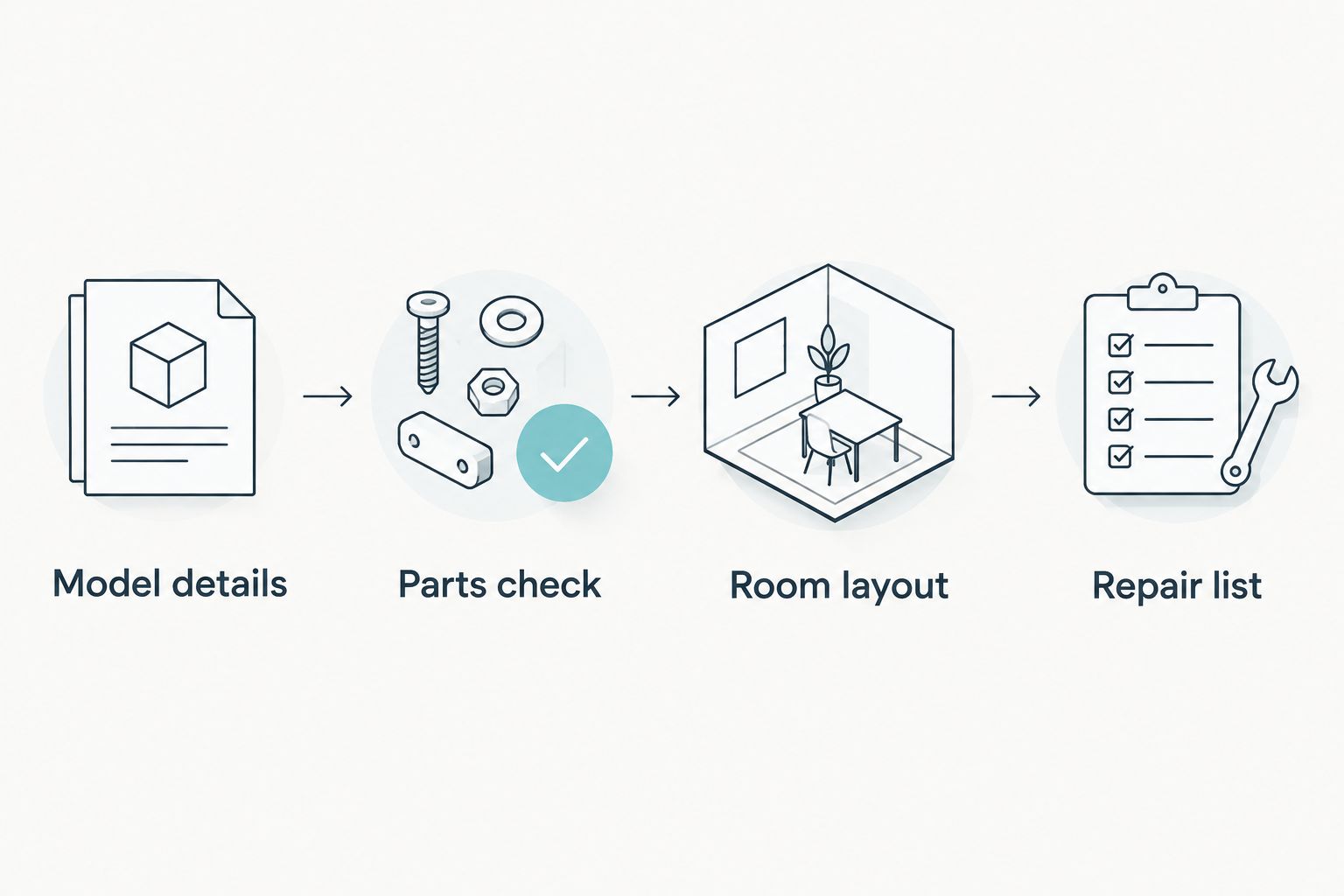
Make one final pass through your 2026 appointment notes before the visit. If a replacement component has not arrived or your requested work has changed, communicate that change rather than leaving an outdated job description in place.
- Model details: Keep the correct instructions and item information ready.
- Parts check: Confirm the status of missing or damaged components.
- Room layout: Clear the route and intended furniture position.
- Repair list: Keep priorities and additional requests easy to distinguish.
Book your furniture assembly visit
Prepare your furniture details and small-repair list, then schedule your appointment online.
Compare your furniture assembly options
Choose the approach that matches the work, not just the unfinished furniture. Manual assembly gives you control over the process, while a booked repair visit lets you discuss assembly and other household fixes together. Neither approach removes the need to check instructions, parts and wall-mounting requirements.
| Option | Best for | Main advantage | Key limitation |
|---|---|---|---|
| Assemble it yourself | Homeowners comfortable following the supplied instructions | You control the sequence and can inspect each component as you go | You must handle the assembly, positioning and any safety requirements yourself |
| Book an assembly-only repair visit | Homeowners with a clearly defined furniture job | The appointment request stays focused on the item and its assembly | Additional mounting or household repairs need separate discussion |
| Book a grouped visit with Mr. Mitchell's Home Maintenance & Services | Homeowners combining furniture assembly with several small repairs | Easy online booking and several small jobs handled in one visit | The individual jobs still need a clear scope; do not assume an open-ended repair list fits |
When comparing arrangements, ask what the requested work includes and what you need to supply. Do not assume packaging removal, moving existing furniture or painting is included simply because assembly is booked. Those details belong in the discussion before the visit.
Common mistakes NYC homeowners make
Unpacking every box into a shared route
Panels laid across the entrance or hallway obstruct the work before assembly starts. Keep the access route clear and organize components in the intended work area. If you are unsure where to unpack a large item, ask before opening everything.
Treating assembly and mounting as interchangeable
An assembled shelf unit and a wall-mounted shelf have different installation requirements. Describe the intended use and check the manufacturer’s instructions. Ask about anchoring even when the furniture appears to stand securely on its own.
Adding unnamed repairs at the door
A request to look at a few other things does not explain the work. List the loose cabinet hinge, damaged drywall or door handle beforehand so the appointment discussion covers actual tasks. Keep newly discovered issues separate from the agreed priorities.
Guessing replacement parts from a photograph
A hinge, connector or screw that looks similar is not proof of compatibility. Keep model information and existing parts available, and discuss replacements before purchasing them. This matters for both furniture assembly and cabinet hardware repairs.
FAQ
What should I prepare before booking home repair services for furniture assembly?
Prepare the furniture model, assembly instructions, parts status and intended room location. Add photos of the packaging and any problem areas, then list other small repairs separately.
Can I book furniture assembly and other small repairs in one visit?
Mr. Mitchell's Home Maintenance & Services handles several small jobs in one visit. Describe the furniture assembly and each additional repair before booking so you can discuss the appointment scope.
Should I unpack the furniture before the repair appointment?
Follow the agreed preparation instructions and keep the access route clear. If you unpack beforehand, retain labels, organize hardware and avoid spreading panels across a hallway.
Is wall mounting included with furniture assembly?
Do not assume wall mounting is included with furniture assembly. State whether mounting or anchoring is required and discuss the wall location and supplied hardware before the visit.
What happens if furniture parts are missing?
Flag missing parts before the appointment and contact the furniture seller or manufacturer about replacements. Explain which components are missing rather than assuming substitute hardware will work.
How much do home repair services for furniture assembly cost?
Confirm the charge for your specific assembly and repair scope before proceeding. Provide the furniture model, assembly status and additional tasks, and ask how the work will be charged.
What should Brooklyn and Queens homeowners check about building access?
Check your building's visitor procedures, work restrictions and any elevator arrangements that apply. Include access instructions in your appointment notes instead of assuming the repair professional already knows them.
One last thing
Check the finished furniture’s location before tightening the booking plan. A piece that fits its intended corner still needs a usable layout: drawers must open, cabinet doors need clearance and your walking route should remain clear. Tell the repair professional where the furniture belongs before assembly starts, and keep the instructions for later adjustments or replacement-part requests.