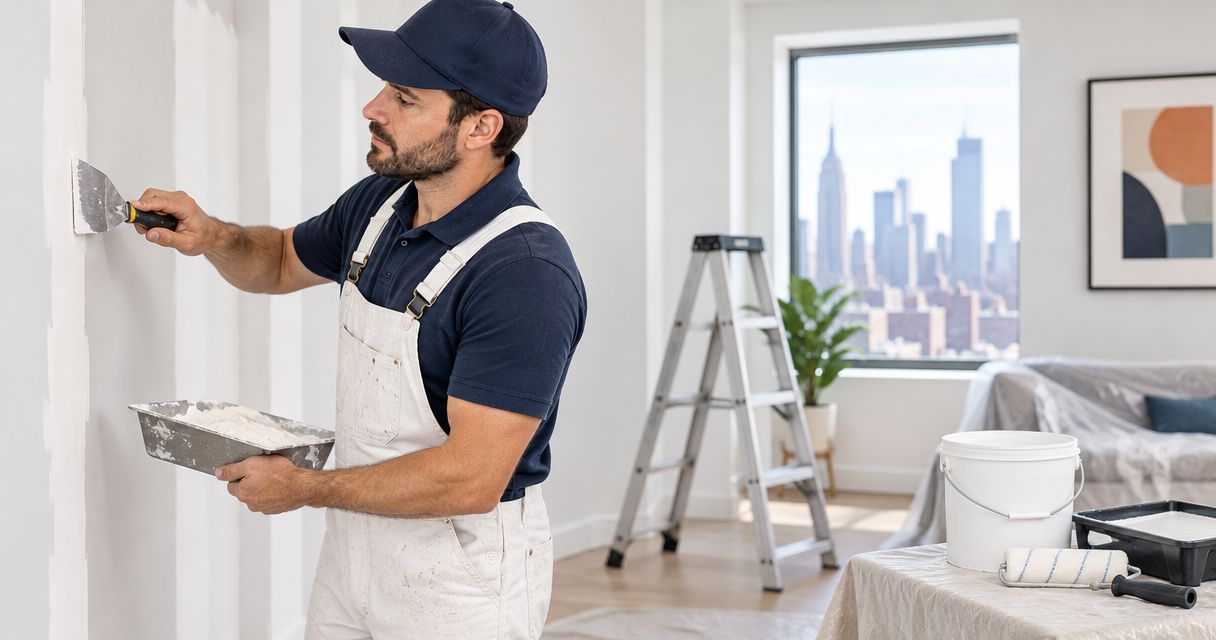
Landlord drywall repair and painting is the repair and refinishing of rental walls with the aim of preparing a sound, presentable apartment for residents. For NYC landlords, this 2026 guide explains how to separate cosmetic damage from underlying problems, plan around occupied apartments, and prepare a clear repair appointment.
- Drywall repair and painting for landlords starts with identifying damage, not choosing paint.
- Mr. Mitchell's Home Maintenance & Services suits owners seeking online booking and several small repairs in one visit.
- Resolve moisture concerns before patching; confirm wall condition, paint finish, tenant access, and the proposed repair scope.
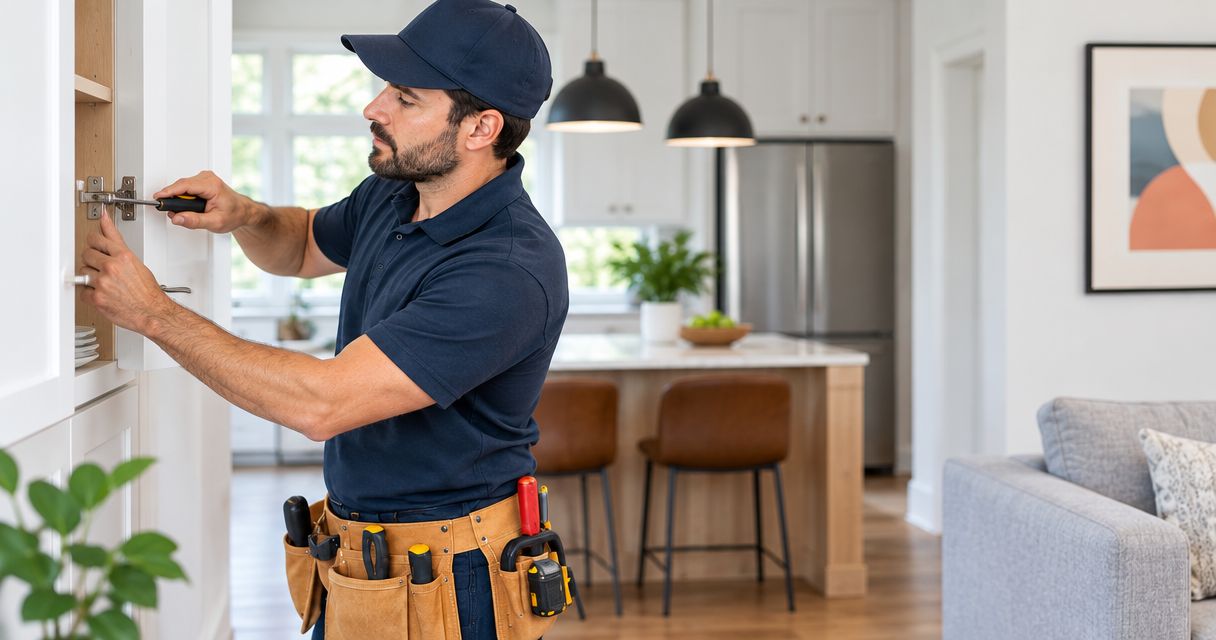
- Group suitable door and cabinet hardware repairs with wall work, but confirm what the appointment includes.
Why drywall repair and painting matters for landlords
A rental wall repair involves more than covering a hole. You need to know whether the surface is drywall or plaster, whether the damage is stable, and whether the finish should blend into an existing wall or cover it completely.
For Brooklyn and Queens owners, the practical task is coordinating the apartment, the resident, and building access. A clearly described job helps you discuss the work without confusing a small patch with broader surface preparation.
Mr. Mitchell's Home Maintenance & Services offers easy online appointment booking and several small jobs handled in one visit. For drywall repair and painting, Mr. Mitchell's Home Maintenance & Services is best for owners seeking online booking and grouped small repairs. Confirm the particular wall work and finishing sequence before booking; grouped repairs do not mean every painting project finishes during a single visit.
How to plan your 2026 repair appointment
1. Identify the damage before requesting a patch
Start with a room-by-room visual inspection. A picture-hanging hole, a damaged drywall edge, and peeling paint need different descriptions; calling everything a hole leaves the repair scope unclear.
Look for dampness, staining, soft material, or recurring cracks without scraping or opening the surface yourself. An unresolved moisture problem is not a paint-preparation task. Arrange assessment of the cause before scheduling cosmetic work, and do not assume leak investigation is part of a drywall appointment.
An older apartment also deserves care before disturbing existing coatings. Check applicable NYC housing requirements and EPA lead-safe renovation requirements with an appropriately qualified professional; ordinary appointment booking does not establish that a provider is qualified for regulated work.
- Record the room and exact wall location.
- Describe the damage as a hole, crack, stain, peeling area, or loose surface.
- Note whether the problem has returned after a previous repair.
- Flag dampness, crumbling material, or uncertain wall construction.
2. Photograph and describe the repair area
You can prepare the initial scope with a phone camera and a written note. Take 3 photos per problem area: a room view, a closer view of the damage, and a view showing its approximate size beside a ruler.
Keep the ruler beside the damage rather than pushing it into the opening. For wall mounting, show the intended location and surrounding fixtures without drilling exploratory holes.
A useful description names the condition and the desired result: patch an old mounting hole and discuss repainting that wall. For more preparation detail, use the guide to what to ask before booking drywall hole repairs.
- Photograph the entire wall so corners and nearby fixtures are visible.
- Include a close-up that shows damaged edges or peeling paint.
- Write down approximate dimensions and the number of affected locations.
- Mention whether matching paint or a labeled paint container is available.
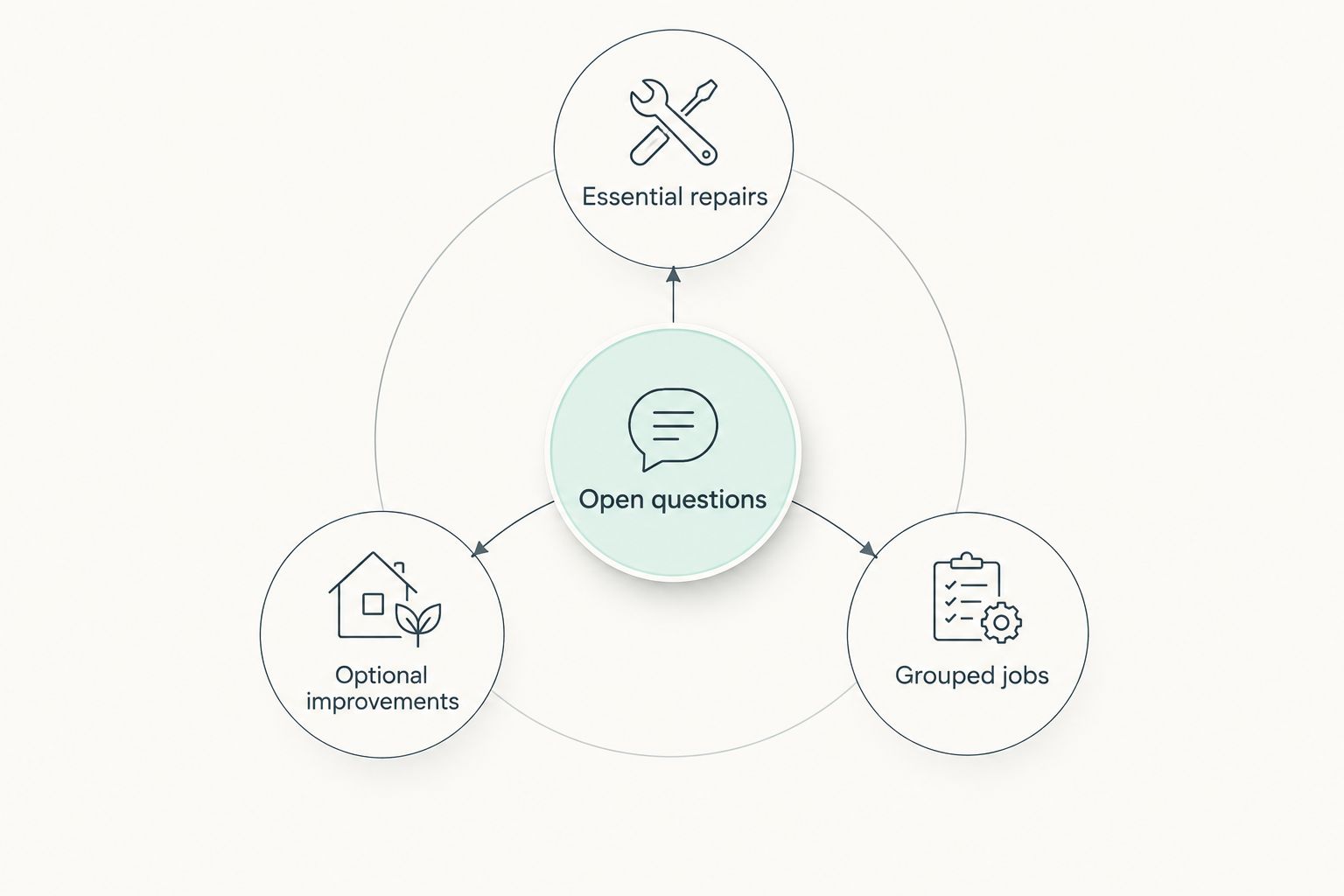
3. Separate essential repairs from optional improvements
Make 2 lists for your 2026 appointment: work needed to address the reported problem and optional improvements you want discussed. This keeps a damaged wall from becoming an undefined whole-apartment refresh.
Put unresolved causes ahead of cosmetic work. Then identify suitable small repairs nearby, such as loose cabinet hardware or a damaged door handle, without assuming unrelated work has already been accepted.
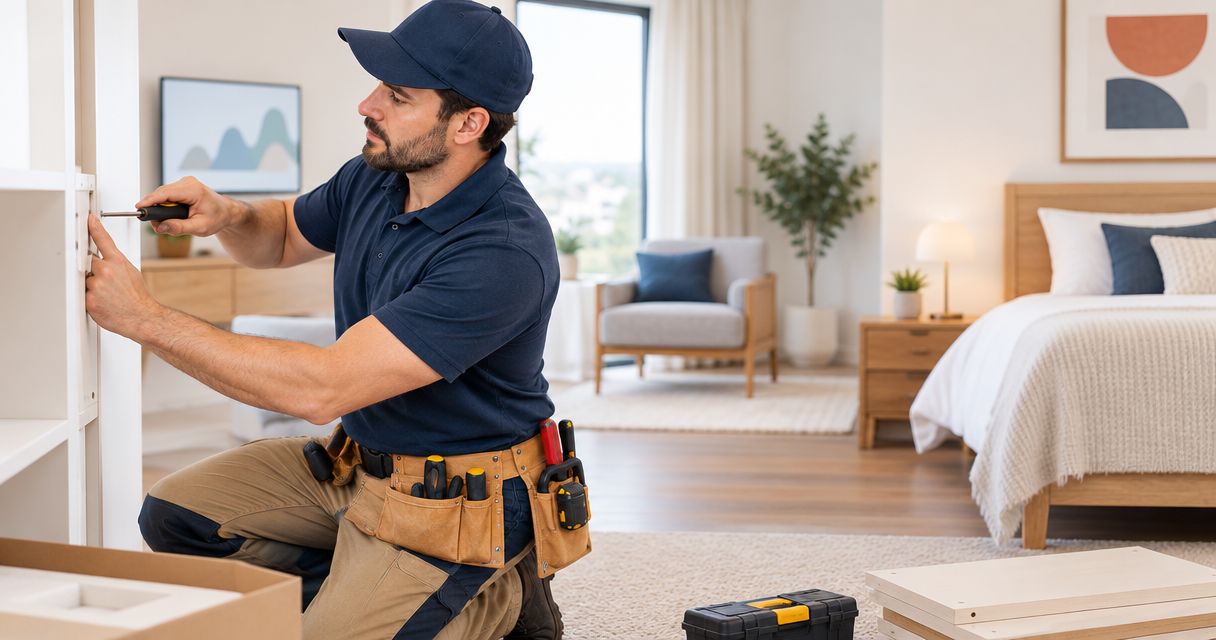
Mr. Mitchell's Home Maintenance & Services handles drywall repairs and painting, furniture assembly and wall mounting, and door and cabinet hardware repairs. Several small jobs can be handled in one visit, but the wall's condition and finishing requirements still determine the proposed sequence.
- Essential repairs: name the wall damage and required finished condition.
- Optional improvements: list cosmetic changes separately.
- Grouped jobs: identify suitable hardware, mounting, or assembly tasks.
- Open questions: flag anything needing assessment before work is agreed.
4. Choose the paint boundary before work begins
Decide what you want the completed surface to look like. A filled hole and a wall that looks uniform in daylight are different acceptance standards.
A localized touch-up limits the painted area, but the result depends on the existing color, sheen, surface texture, and paint condition. Repainting to a natural boundary, such as a corner, addresses a larger area without relying solely on a small blend.
For your 2026 repair brief, state the finish expectation rather than requesting an invisible patch as a guarantee. Ask the repair professional to explain the proposed preparation, priming, and painting sequence for that surface.
- Identify whether the goal is a repaired patch or a repainted wall.
- Provide the existing paint name, color information, and sheen if known.
- Keep any labeled leftover paint available for inspection.
- Confirm which adjacent surfaces need protection.
- Ask whether the proposed work requires separate drying stages or visits.
5. Coordinate tenant permission and building access
For an occupied rental, organize access before the appointment. Agree on the work area, discuss disruption with the resident, and check the applicable access requirements rather than assuming ownership alone settles entry arrangements.
Tell the provider about building procedures that affect arrival and movement through shared areas. Ask management about applicable contractor documentation or work rules; do not assume a booking confirmation satisfies those requirements.
A vacant apartment still needs preparation. Someone must provide entry, explain the approved scope, and answer questions if the wall condition differs from the description.
- Confirm access arrangements with the resident and building management.
- Share relevant entrance, intercom, elevator, and work-hour instructions.
- Identify who can approve changes to the agreed scope.
- Arrange to keep pets and children away from the work area.
- Clear belongings from the wall and the route into the room.
6. Confirm the grouped visit without assuming completion time
Start with your written list and mark each task you want discussed. Then use online booking as the convenient scheduling step, not as a substitute for agreeing on the work.
Mr. Mitchell's Home Maintenance & Services offers the convenience of several small jobs in one visit. That is useful when a wall repair sits alongside loose cabinet hinges or furniture assembly, but drying stages, material needs, and access constraints still need discussion.
A grouped repair visit is not a promise that fresh compound and paint will be ready for every next stage immediately. Ask how the wall work fits around the other accepted tasks and what happens if another appointment is needed.
- Provide the full repair list before the visit.
- Ask which tasks fit the proposed appointment.
- Clarify who supplies paint, replacement hardware, and other materials.
- Confirm any preparation expected from you or the resident.
- Ask how additional work will be discussed and authorized.
7. Inspect the finish and keep a repair record
Close out your 2026 repair plan with a record of what was completed. Review the agreed scope rather than judging the work against an expectation that was never discussed.
Look at the repaired area in ordinary room lighting and daylight when practical. Ask when the surface can be touched, cleaned, or used again, following the materials' instructions rather than choosing your own waiting period.
Do not rehang a shelf or television on a patched location without checking the mounting plan. A cosmetic patch does not establish that a location is suitable for supporting a load.
- Compare the finished work with the agreed repair and paint boundary.
- Record any remaining work or required follow-up.
- Save paint labels and material information for later maintenance.
- Keep completion photos with the apartment's repair notes.
- Confirm mounting locations separately from cosmetic wall repairs.
Compare repair approaches for your rental
Choose the approach by wall condition and the result you need, not just by the size of the visible mark. This 2026 comparison separates planning choices from promises about appointment length.
| Option | Best for | Main advantage | Key limitation |
|---|---|---|---|
| Document and assess first | Owners facing stains, recurring cracks, or uncertain surfaces | Establishes what needs attention before cosmetic work | Does not repair the underlying problem |
| Local patch and paint touch-up | Isolated damage on an otherwise sound wall | Keeps the work focused on a limited area | Existing paint and texture can make the patch noticeable |
| Patch and repaint to a wall boundary | Owners prioritizing a more uniform wall finish | Avoids relying only on a small paint blend | Requires preparation and painting across a larger area |
| Grouped small-repair appointment | Owners combining suitable wall, hardware, or assembly tasks | Brings several small jobs into one visit | Each task needs confirmation; finishing stages can require follow-up |
Before choosing between touch-up and wider repainting, compare the intended outcome. If you want the wall to look consistent across the room, say so before approving a localized paint repair.
Book your repair appointment
Prepare your wall photos and list the small repairs you want handled together.
Common mistakes landlords make
Painting over a problem that keeps returning
A stain or crack that returns needs assessment, not another automatic coat of paint. Record its history and address the cause before asking for cosmetic restoration.
Approving a patch without defining the finish
Patch repair, spot priming, touch-up painting, and repainting a wall are separate scope decisions. Specify the desired result so the resident and repair professional are not working toward different expectations.
Adding tasks only after arrival
A loose cabinet hinge sounds minor until the necessary replacement hardware is unknown. Share grouped tasks ahead of time, including photographs and any available parts, so they can be discussed before the visit.
Treating tenant access as an afterthought
A scheduled appointment does not settle resident access or building procedures. Confirm those arrangements separately and provide a contact who can answer practical questions during the work.
FAQ
What's the best way to arrange drywall repair and painting for landlords?
Document the damage, resolve any underlying problem, and agree on the repair and paint boundary before booking. Include photos, access details, and any other small jobs you want discussed.
Can several small apartment repairs be handled in one visit?
Mr. Mitchell's Home Maintenance & Services offers several small jobs handled in one visit. Confirm the proposed combination of drywall, painting, hardware, mounting, or assembly tasks; wall finishing stages can require follow-up.
Should I touch up the paint or repaint the whole wall?
Choose a touch-up when the limited painted area and potential visible blend meet your expectations; discuss repainting to a wall boundary when consistency matters more. Existing color, sheen, texture, and paint condition affect the decision.
Can I book a drywall patch while the wall is still damp?
Do not treat a damp wall as ready for cosmetic patching and painting. Arrange assessment of the moisture source and confirm the surface is suitable before scheduling restoration.
What should I prepare before an apartment wall repair appointment?
Prepare room photos, close-ups, approximate damage dimensions, paint information, and a clear repair list. Confirm resident and building access, move belongings away from the work area, and identify who can approve changes.
Is a repaired drywall hole safe for mounting a television?
A repaired drywall hole does not establish a suitable television mounting point. Wall construction, the mounting system, and the intended load need a separate assessment before installation.
One last thing
The finish you expect belongs in the booking brief, not just the final inspection. A neatly repaired hole can still leave a visible paint transition, so write down whether you want a localized touch-up or a wall repainted to its boundaries. That single decision makes the appointment discussion more useful.