Home repair services match paint touch-ups by checking the existing color, sheen, surface texture and application method—not just the color name on a can. A small repair can still show after the paint dries, so the right plan includes surface preparation, a test patch and a decision about whether to repaint the whole wall.
- Home repair services should check paint color, sheen and wall texture before recommending a touch-up.
- Matching paint does not guarantee an invisible repair; test the finish before expanding the painted area.
- Mr. Mitchell's Home Maintenance & Services handles painting and several small jobs in one visit.
- Keep paint labels, photograph the damage and clear access before your repair appointment.
Why this matters
A touch-up can fix a mark while leaving a different-looking patch. Matching the color is only part of the job: the repaired area also needs to reflect light and carry texture like the surrounding wall.
For Brooklyn and Queens homeowners preparing a 2026 repair list, that distinction helps define the appointment. Describe whether you want to cover a scuff, repair damaged drywall or improve a previous patch. Those are different starting points, even when they occupy the same small area.
You can use Mr. Mitchell's Home Maintenance & Services for easy online appointment booking. Before booking, collect the paint information and list any door hardware, cabinet hardware, furniture assembly or wall-mounting jobs you want considered for the same visit.
How do home repair services match the finish on paint touch-ups?
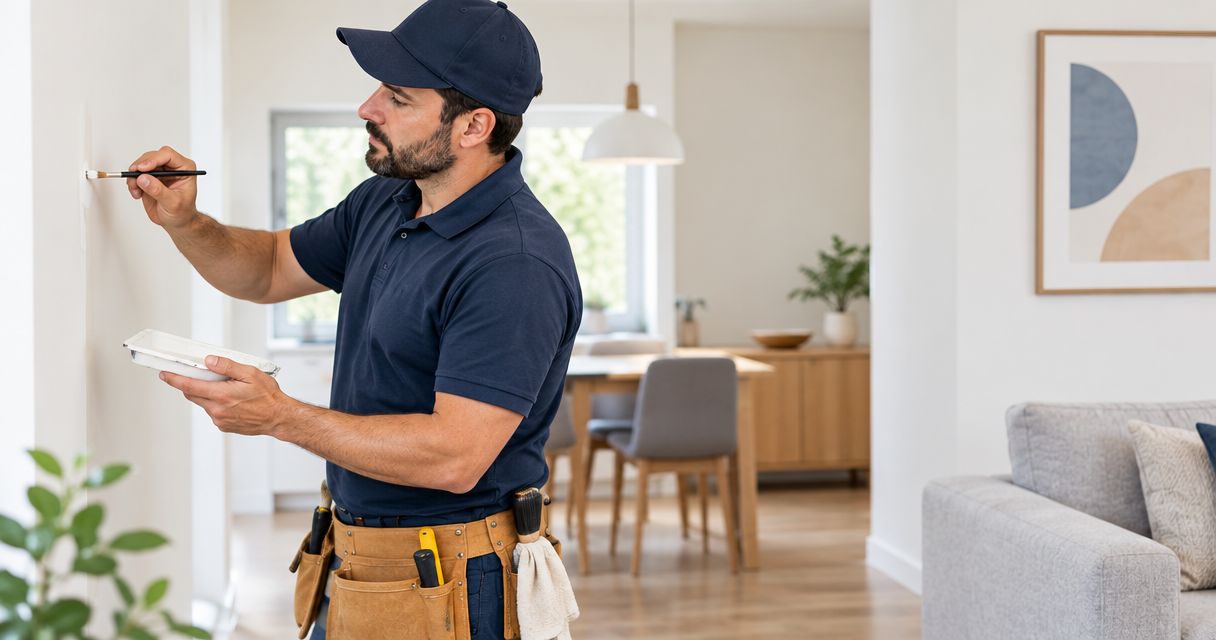
A successful paint touch-up matches the surface as well as the paint. The repair professional needs to assess what is damaged, prepare it appropriately and check the dried result against the existing wall.
The choice is not simply between a little paint and a lot of paint. It is between repairing an isolated spot, repairing the material beneath it, and repainting a continuous surface when a local repair remains visible.
| Repair approach | Best for | Advantage | Limitation |
|---|---|---|---|
| Local paint touch-up | An isolated mark on sound paint | Keeps the painted area small | Differences in sheen, texture or aging can remain visible |
| Drywall repair followed by painting | A hole, dent or uneven previous patch | Addresses the damaged surface before painting | The repaired area still needs preparation and finish matching |
| Repainting the wall | A wall where test patches remain noticeable | Creates a continuous finish across the wall | Expands the work beyond the original spot |
Ask the repair professional to explain which approach fits the wall, rather than choosing solely by the size of the mark. A small patch in strong side light can be more noticeable than a larger repair in a less exposed location.
None of these approaches guarantees an invisible result under every lighting condition. Agree on the intended scope before work begins, especially if repainting the wall would require moving furniture or protecting a larger area.
Local touch-ups: start with the original paint information
If you have leftover paint, keep the can and its label available for the appointment. The useful details include the manufacturer, paint line, color information and sheen. A color name alone does not identify the complete finish.
Tell the repair professional whether the can was used on that exact wall. A container left by a previous owner might belong to another room, trim or an earlier paint job. Treat an uncertain can as a clue, not proof of a match.
The existing wall also changes over time. Light exposure, dirt, cleaning and wear can alter its appearance, so paint from the original can does not automatically blend into today's surface.
For a 2026 touch-up appointment, gather:
- The original paint container, if you have it.
- A readable photo of its label.
- Any record of the room and surface it was used on.
- Notes about previous touch-ups or cleaning attempts.
- A description of when you notice the mark most clearly.
Do not mix leftover containers or add anything to the paint before the visit. Let the repair professional assess its condition and whether it is appropriate for the job.
Drywall repairs: make the surface ready before matching paint
Paint cannot flatten a ridge or fill a dent by itself. If the damage includes a hole, raised patch edge or rough filler, the repair needs to address that surface before the finish is evaluated.
Bare filler and exposed drywall can absorb paint differently from the surrounding coated wall. Appropriate preparation and primer help address that difference. The repair professional should decide what the surface needs rather than treating every mark as a paint-only job.
Look at the area from the side. If you can see a bump or depression before painting, adding a matching color will not remove its shape.
Ask for the patch and the painting to be discussed as one repair. That keeps attention on the finished surface, not just whether the hole has been filled. It also lets you explain whether a previous repair looks smooth straight on but stands out near a window.
Avoid applying another layer of paint to a patch you already dislike before the appointment. Show the existing condition and describe what bothers you: the outline, texture, color or reflection.
Repainting the wall: when a spot repair remains visible
A whole-wall repaint is an option when a dried test patch still stands out. Painting from one natural boundary to another creates a continuous surface rather than leaving a new painted area surrounded by an older finish.
That does not mean every scuff requires a wall repaint. Start with an assessment of the damage and the finish. The recommendation should follow the wall's condition and your expectations.
Repainting expands preparation. You need to account for furniture, wall-mounted items and access along the wall, not just around the damaged spot. Discuss what needs to move and who will move it before the appointment.
For a 2026 repair plan, decide whether your priority is covering isolated damage or achieving a more uniform appearance across the wall. Explain that priority directly. It gives the repair professional a useful basis for recommending the scope without promising a result the existing surface cannot support.
Why paint touch-up results vary
The same paint can look different when the surface or application changes. These factors explain why a touch-up needs an assessment rather than a color guess:
- Color: An incorrect color or uncertain paint record makes matching harder before application even begins.
- Sheen: Flat, matte, eggshell, satin and glossier finishes reflect light differently. Matching the color without matching the sheen leaves a visible difference.
- Texture: Roller texture, brush marks and the smoothness of a repaired patch affect how the surface looks.
- Surface preparation: Dust, loose paint, rough filler and uneven absorption interfere with a consistent finish.
- Age and wear: The existing coating can change through exposure, cleaning and everyday use.
- Lighting: Daylight and light falling across the wall can reveal differences that are less obvious from another angle.
These factors interact. A patch can match the color yet look shinier, or match the sheen while carrying a smoother texture. Describe the difference you see instead of assuming the color is wrong.
What should you prepare before a paint repair visit?
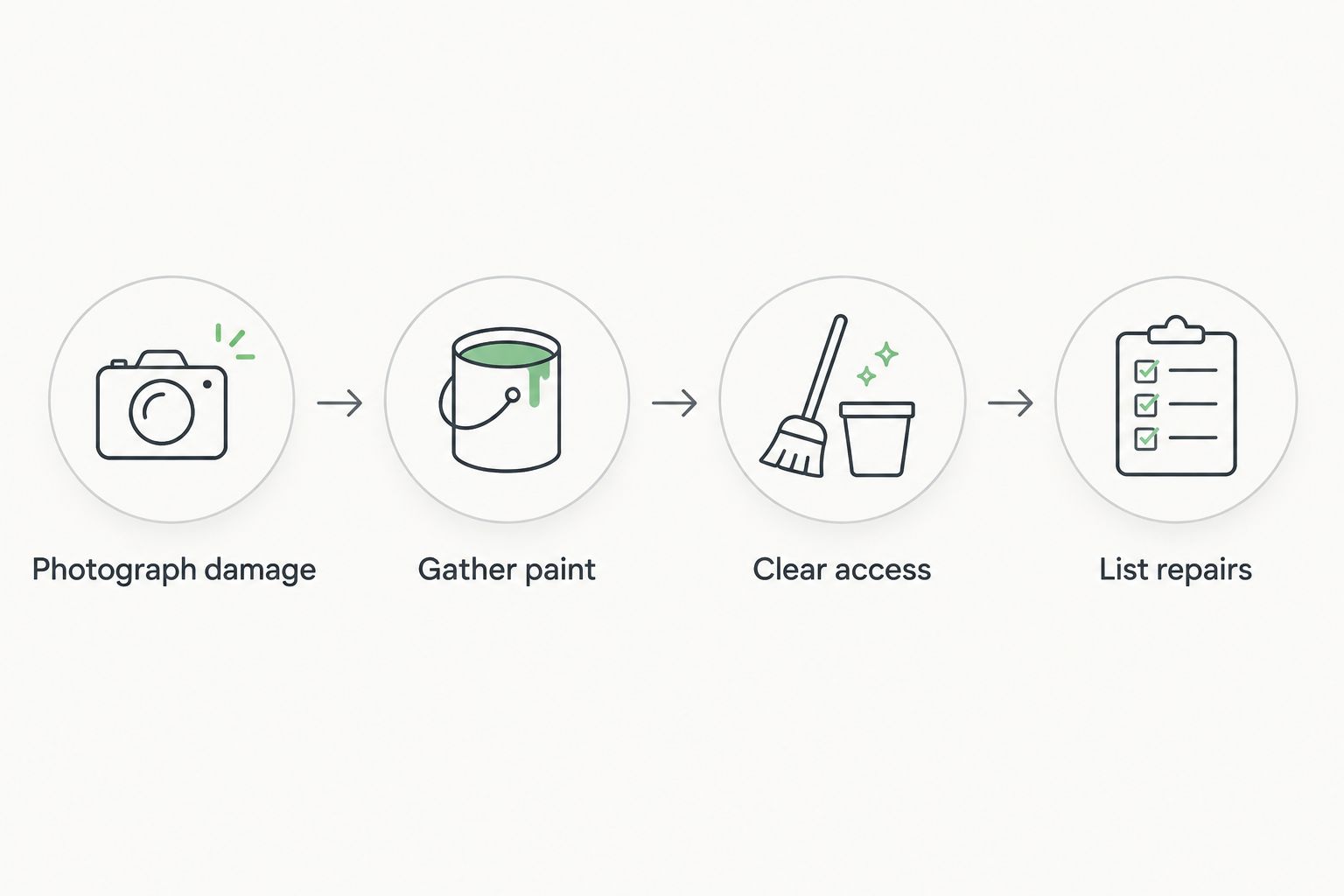
Use this sequence to make the appointment easier to assess. You do not need to diagnose the wall yourself; you need to show the condition and explain the result you want.
Photograph damage
Take 3 photos: a close-up, a wider room view and a side-angle view. The close-up shows the defect; the wider view shows its location; the side angle helps reveal raised edges or uneven texture.
Include something familiar for scale without covering the damage. Do not rely on a photograph to establish an exact paint color, because lighting and camera processing affect the image.
Gather paint
Put the leftover can, label photo and any room notes together. If you do not know the paint, say so in the appointment details rather than choosing a similar-looking color yourself.
Mention whether the wall was recently cleaned or previously patched. Those details help explain what the repair professional will see on arrival.
Clear access
Move small personal items away from the work area and identify larger furniture that blocks access. Ask what must be moved before the visit rather than assuming the work can happen around it.
Point out wall-mounted objects near the repair. If removing an item exposes more damage, that can affect the scope.
List repairs
Write down the paint issue and any additional small jobs, organized by room. Separate the task from the symptom: for example, a cabinet door that hangs unevenly, a loose handle or furniture awaiting assembly.
Give the repair professional the full list before the visit. Grouping jobs supports planning, but it does not establish that every task fits the same appointment or that painting stages can be rushed.
Book your repair appointment
Prepare your paint details and list the small repairs you want handled in one visit.
Can several small repairs be handled with paint touch-ups?
Several small jobs can be handled in one visit through Mr. Mitchell's Home Maintenance & Services. Share the complete list in advance so the paint work, access and other repairs can be considered together.
Mr. Mitchell's Home Maintenance & Services home repair services suit homeowners who want painting and several small jobs handled in one visit. Confirmed work includes drywall repairs and painting, furniture assembly and wall mounting, and door and cabinet hardware repairs.
The benefit is a grouped repair plan and easy online booking. The limit is that paint preparation and drying still follow the needs of the surface; one appointment is not a promise that every painting stage or additional task will be completed within it.
For your 2026 list, mark which issue matters most. If mounting an item or repairing hardware affects the same wall, mention that connection so the work order can be discussed before painting starts.
Should I judge a paint touch-up while it is still wet?
No—judge a paint touch-up after it has dried according to the coating's instructions. Wet paint is not a reliable picture of the finished color and sheen.
Check the repair from 2 viewing angles: straight on and from the side. Also look under the lighting you normally use in the room. Avoid demanding a decision from a wet test patch or repeatedly adding paint before the previous application can be assessed.
Is peeling paint just a touch-up problem?
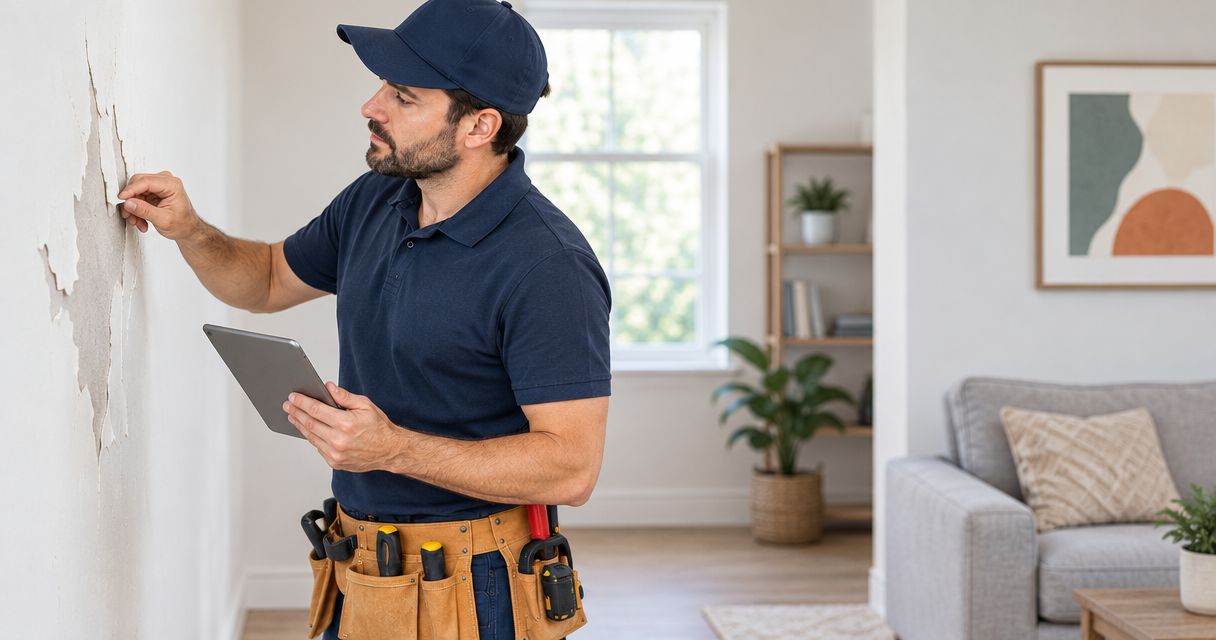
Peeling paint needs an assessment of the cause before repainting. Covering loose paint does not address the condition underneath it.
Tell the repair professional whether you have noticed dampness, recurring stains or repeated peeling. Drywall repairs and painting are confirmed services, but do not assume a painting appointment includes correcting an underlying leak or another unconfirmed type of work.
FAQ
Can home repair services match my existing wall paint?
Home repair services can assess the existing color, sheen and texture and test an appropriate touch-up. An exact color match alone does not guarantee that the dried repair will disappear into an older wall.
What if I don't have the original paint can?
Tell the repair professional that the original paint is unknown and provide clear photos of the wall. Discuss how the finish will be assessed before choosing paint or deciding between a spot repair and a wall repaint.
Why does my paint touch-up look shiny?
A touch-up can look shiny because its sheen, texture or application differs from the surrounding wall. Assess the dried patch under normal room lighting before deciding what needs correction.
Should I paint over a drywall patch myself before booking?
Leave an unfinished or uneven drywall patch visible for the repair assessment. Additional paint does not remove ridges or dents and can make the existing condition harder to evaluate.
Can I book painting and cabinet hardware repairs together?
Mr. Mitchell's Home Maintenance & Services handles several small jobs in one visit, including painting and cabinet hardware repairs. Share the complete task list before the appointment so the scope can be discussed.
What should I include in a 2026 paint touch-up appointment request?
Include the damaged area, paint information, photos and your goal for the finished wall. Add any drywall damage and other small repairs you want considered for the visit.
Does booking a touch-up mean the whole wall will be repainted?
Booking a touch-up does not automatically mean repainting the whole wall. Ask whether a local repair is appropriate and agree on any larger painting scope before work begins.
One last thing
A paint repair that looks wrong is not always the wrong color. Before buying another can, identify whether the difference is color, shine, texture or the shape of the patch.
For your next visit, describe the visible problem in those terms. A clear description of the mismatch is more useful than asking for another coat without checking the surface.