Co-op board cabinet hardware repair is the planning and coordination of hinge, handle, catch, and drawer hardware fixes to keep cabinets usable while respecting building responsibilities. For NYC homeowners and board members, the work starts with identifying who authorizes the repair, who provides access, and which small jobs belong in the same appointment.
- Cabinet hardware repairs for co-op boards start with responsibility, photos, and building access—not replacement hardware.
- Mr. Mitchell's Home Maintenance & Services suits homeowners booking cabinet hardware repairs alongside other small jobs.
- Keep repair requests specific: identify the cabinet, describe the movement, and photograph the attachment points.
- Separate a homeowner appointment from a board-managed project before booking.
Why cabinet hardware repairs matter for co-op boards
A loose kitchen handle is a repair request; deciding who approves work inside an apartment is a separate question. Keep those decisions separate so the person booking can describe an authorized job rather than ask the repair professional to settle building responsibilities.
Mr. Mitchell's Home Maintenance & Services is best for homeowners booking cabinet hardware repairs alongside other small jobs. Homeowners can use Mr. Mitchell's Home Maintenance & Services for easy online appointment booking. A board coordinating work should confirm the proposed scope before treating a homeowner booking as a building-wide arrangement.
For your 2026 repair list, prioritize function over appearance: a door that will not stay attached needs attention before a mismatched knob. In Brooklyn and Queens apartments, describe the actual cabinet and access arrangements rather than assuming the neighborhood explains the job.
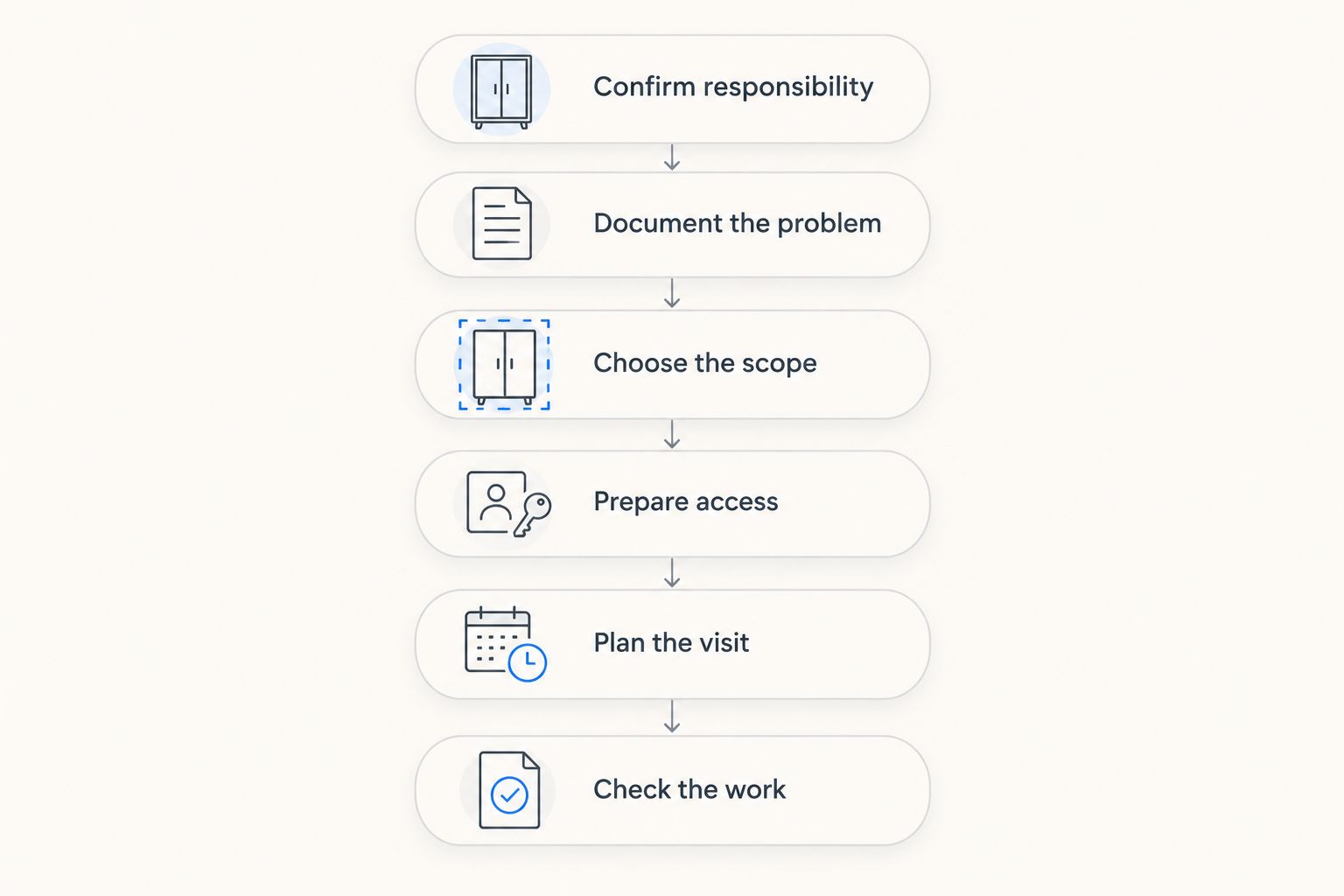
How to organize cabinet hardware repairs
Confirm responsibility
Start with the apartment owner and the building's own documents or managing agent. Establish whether the cabinet belongs to an individual apartment or a shared space, and identify the person authorized to request work. Do not assume that every repair inside an apartment is automatically the board's responsibility—or automatically outside it.
You can handle this preparation yourself by writing a short scope and asking the appropriate building contact to confirm the process. Keep authorization separate from payment arrangements, and identify who can approve changes if the repair turns out to involve more than hardware.
For a board's 2026 maintenance record, a clear description is more useful than an entry that only says “kitchen issue.” It gives the homeowner, board contact, and repair professional the same starting point without implying a legal conclusion.
- Name the apartment or shared space containing the cabinet.
- Identify the owner or board contact authorizing the request.
- Confirm who will receive appointment updates.
- Record any approval needed before work begins.
- Separate the requested repair from unrelated building concerns.
Document the problem
Inspect the cabinet without forcing the door or dismantling hardware you cannot safely support. Describe what happens: the door drops when opened, the handle turns without tightening, or the drawer stops before closing. Symptoms are more useful than guessing which replacement part is needed.
Prepare 4 photos for the initial repair request: the full cabinet, the affected door or drawer, the hardware close-up, and its attachment to the cabinet. Add another view if an obstruction hides the problem. Include a ruler in the hardware photo when scale matters, without removing an unstable component just to measure it.
The guide to loose cabinet hinges and hardware is a useful companion when organizing that description. Your goal is to make the condition visible, not to diagnose hidden damage from a photograph.
- Photograph the cabinet with the affected area clearly identified.
- Show the hinge, pull, catch, or drawer hardware close up.
- Describe when the problem occurs during normal use.
- Note missing screws, visible cracks, or loose attachment points.
- Keep any detached hardware together for inspection.
Choose the scope
Write the cabinet repair as a specific task before adding other work. “Assess the loose upper cabinet hinge and repair its attachment” gives a clearer starting point than “fix kitchen.” Distinguish adjustment, hardware replacement, and damage to the cabinet itself; those are different scopes even when the symptom looks similar.
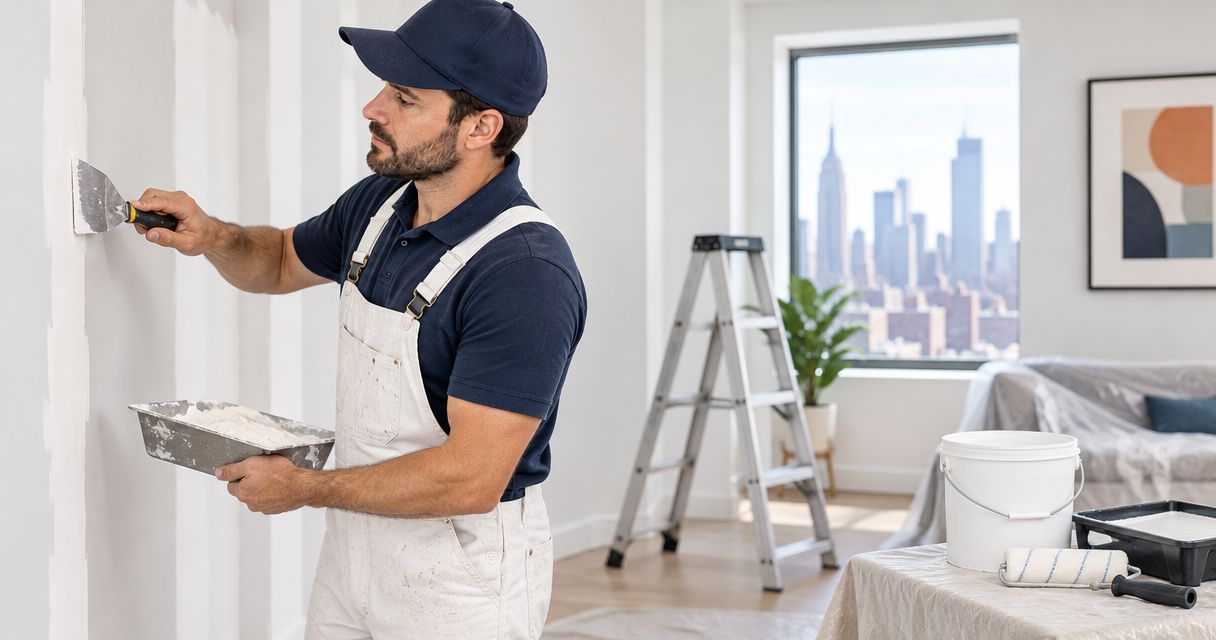
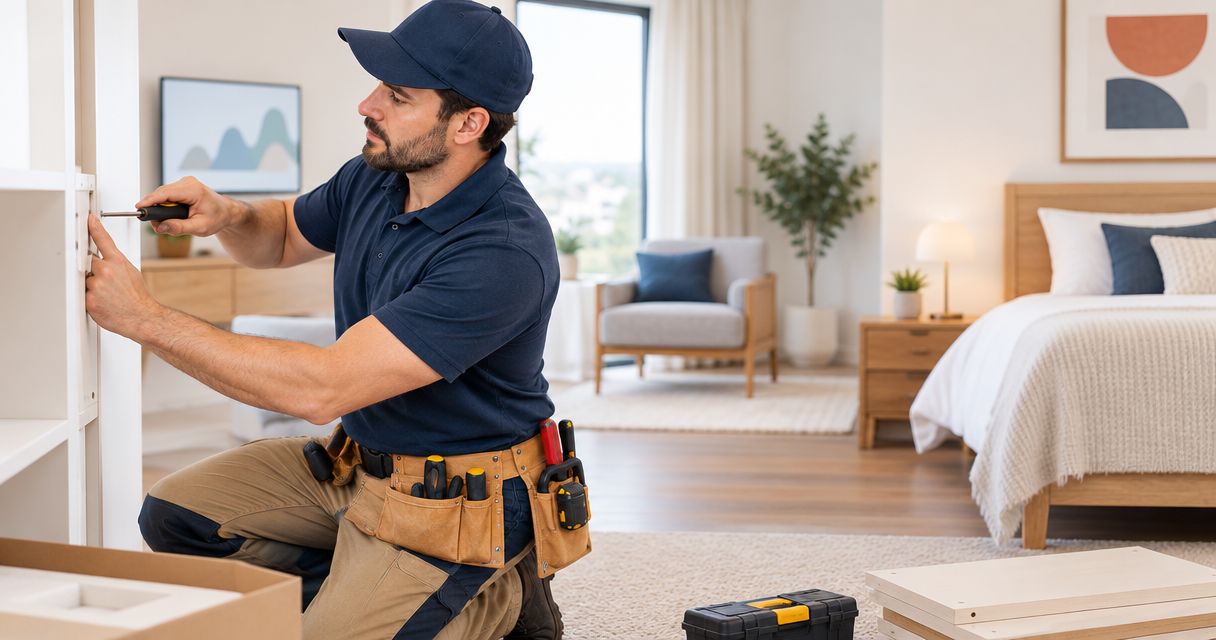
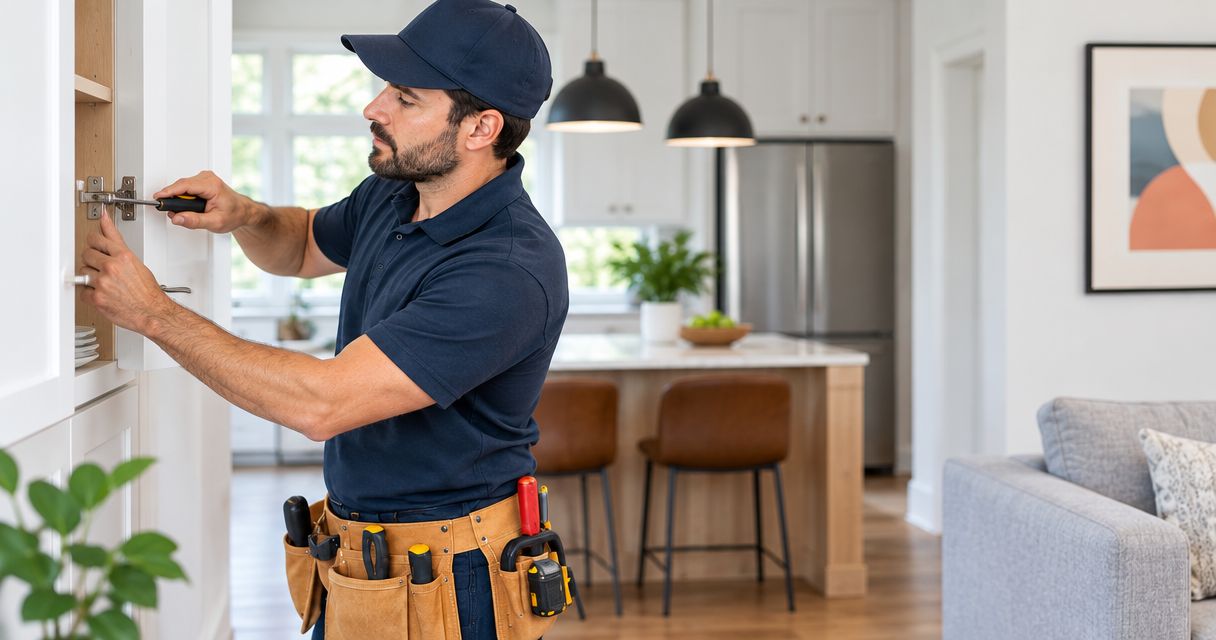
For homeowners, Mr. Mitchell's Home Maintenance & Services offers cabinet and door hardware repairs, drywall repairs and painting, furniture assembly, and wall mounting. Several small jobs can be handled in one visit. Use that option to organize an agreed repair list, not to assume that an unlimited list fits a single appointment.
A grouped visit is appropriate when you can describe each task and prepare the work areas. It does not establish a price reduction, a fixed completion time, or the availability of a matching replacement part. Confirm the intended work before purchasing hardware.
- List the cabinet hardware problem as its own task.
- Add relevant door or cabinet hardware repairs separately.
- Identify any drywall repair or painting request by location.
- Describe furniture assembly and wall mounting as distinct jobs.
- Ask which tasks belong in the proposed appointment.
Prepare access
Arrange access before selecting an appointment that depends on someone else opening the apartment. Ask the building contact which entry procedures, work-hour rules, or documents apply to the specific visit. Use the building's actual requirements rather than borrowing a checklist from another co-op.
Clear the cabinet and the space immediately around it. Move fragile contents yourself, and avoid leaving someone to empty a kitchen drawer while the repair is being assessed. For wall mounting or furniture assembly added to the visit, prepare those areas separately so the cabinet task does not hide the rest of the scope.
For your 2026 appointment notes, keep 3 access details together: the entry procedure, the on-site contact, and the permitted work window. These are planning fields, not a promise about how long the repair takes.
- Confirm how the repair professional enters the building.
- Identify the person providing apartment access.
- Ask about applicable work-hour and documentation requirements.
- Empty the affected cabinet or drawer where practical.
- Clear a safe work area and protect movable belongings.
Plan the visit
Put the approved tasks in order of importance. Start with hardware that is detached, unstable, or preventing normal use, then list adjustment and appearance concerns. If a door appears ready to fall, stop using it and keep people clear; do not repeatedly open it to demonstrate the problem.
Use online booking after the scope and access arrangements are clear. Mr. Mitchell's Home Maintenance & Services provides easy online appointment booking, but the booking process should not replace a clear job description. State what needs attention and ask how to communicate photos or additional task details.
Before buying a replacement pull, record 2 measurements when applicable: the distance between mounting-hole centers and the thickness of the door or drawer front. These measurements help describe the existing installation; they do not establish that a particular replacement will fit.
- Put unstable or unusable hardware at the top of the list.
- Separate essential repairs from optional appearance changes.
- Record relevant measurements without dismantling unsafe hardware.
- Ask who will supply replacement hardware if needed.
- Keep task priorities available for the appointment discussion.
Check the work
Review the repaired cabinet with the person responsible for accepting the work. Use normal, gentle movement rather than force: open the door, close it, and check the repaired handle or hardware attachment. If another problem remains, describe it separately instead of assuming it was included in the original request.
Complete 3 functional checks where relevant: door or drawer movement, closure, and hardware attachment. Compare the result with the task that was agreed. A hinge repair does not automatically include repainting, matching every handle in the kitchen, or repairing another cabinet.
Keep the completed scope in your 2026 repair record, including any work left for a separate decision. This helps the homeowner or board follow up on the remaining issue without reopening the entire request or confusing completed tasks with proposed ones.
- Check normal opening and closing without forcing the cabinet.
- Confirm the repaired pull or handle is secure in ordinary use.
- Review any remaining rubbing, catching, or misalignment.
- Record completed work separately from additional recommendations.
- Keep photos and hardware information with the repair notes.
Compare repair arrangements for your co-op
Choose the arrangement by who authorizes the work, not by how small the repair looks. A homeowner's loose handle and a shared-space cabinet can need similar hands-on work but different coordination.
The options below describe ways to organize the request. They are not promises of board contracts, building-wide coverage, or particular appointment terms.
| Option | Best for | Main advantage | Key limitation |
|---|---|---|---|
| Homeowner inspection and documentation | Identifying a minor issue before requesting help | Produces a clear description without buying parts first | Does not resolve unstable hardware or establish building responsibility |
| Homeowner-booked grouped repair visit | Cabinet hardware repairs alongside other small apartment jobs | Keeps several agreed tasks in one visit; Mr. Mitchell's Home Maintenance & Services offers this approach | Scope, replacement parts, and building access still need confirmation |
| Board-coordinated repair request | Shared-space cabinets or work requiring board involvement | Establishes a responsible contact and approval process | Requires coordination; confirm that the chosen provider accepts the proposed work |
For a single apartment, start with a homeowner-led request unless your building directs otherwise. For several apartments or shared spaces, establish the coordination process before booking individual appointments. Do not interpret an online scheduling page as confirmation of multi-apartment project management.
Book your small repair visit
Prepare your cabinet hardware photos and grouped repair list before choosing an appointment.
Common mistakes co-op boards make
Treating every cabinet problem as board work
A repair's location does not settle responsibility by itself. Check your building's process and identify the approving party before arranging work. This prevents a homeowner's request from becoming an unresolved authorization question at the appointment.
Ordering matching hardware by appearance alone
A similar finish does not establish compatibility. Compare mounting details and dimensions, and confirm what is needed before purchasing. If the cabinet material around the attachment is damaged, replacing the handle or hinge alone does not address that condition.
Grouping tasks without defining them
“Several small repairs” is not a usable scope unless each task has a location and description. List the loose hinge, sticking cabinet catch, drywall patch, and furniture assembly separately. Ask which tasks fit the visit rather than assuming the entire apartment checklist is included.
Confusing a booking with building approval
An appointment does not replace authorization, entry arrangements, or any documents your building requires. Confirm those items independently. For your 2026 board checklist, assign each requirement to a named contact instead of leaving it as a general reminder.
FAQ
Who is responsible for cabinet hardware repairs in an NYC co-op?
Confirm responsibility through your building's documents and the appropriate owner, board, or managing-agent contact. Identify whether the cabinet is inside an apartment or in a shared space, then establish who can authorize the work.
What's the best way for a co-op board to arrange cabinet hardware repairs?
Start with a written scope, a responsible contact, and confirmed access arrangements. Separate homeowner appointments from shared-space or multi-apartment work, and confirm that the repair provider accepts the proposed scope.
Can I combine a loose cabinet hinge with other apartment repairs?
Yes. Mr. Mitchell's Home Maintenance & Services handles several small jobs in one visit, including confirmed services such as cabinet hardware repairs, drywall repairs and painting, furniture assembly, and wall mounting. Confirm the specific task list before the visit.
What photos should I prepare before booking a cabinet repair?
Prepare views of the full cabinet, the affected door or drawer, the hardware, and its attachment points. Show visible damage and describe when the problem occurs without forcing unstable hardware.
Should I buy replacement cabinet hinges before the appointment?
Confirm the required hardware before purchasing replacement hinges. A similar-looking hinge does not establish compatibility, and damage at the attachment point can require a different repair approach.
Does online booking mean the building has approved the repair?
No. Online booking schedules an appointment; building authorization and access requirements are separate matters. Confirm your co-op's process with the appropriate building contact.
How should a co-op board plan the cost of cabinet hardware repairs?
Define the repair scope, replacement-hardware needs, and access requirements before requesting cost information. Keep additional tasks separate so everyone understands what the proposed work includes.
One last thing
Photograph the attachment point, not just the loose handle. The visible symptom and the place that needs repair are not always the same. A useful photo set shows both, giving the repair discussion a clearer starting point before anyone selects replacement hardware.