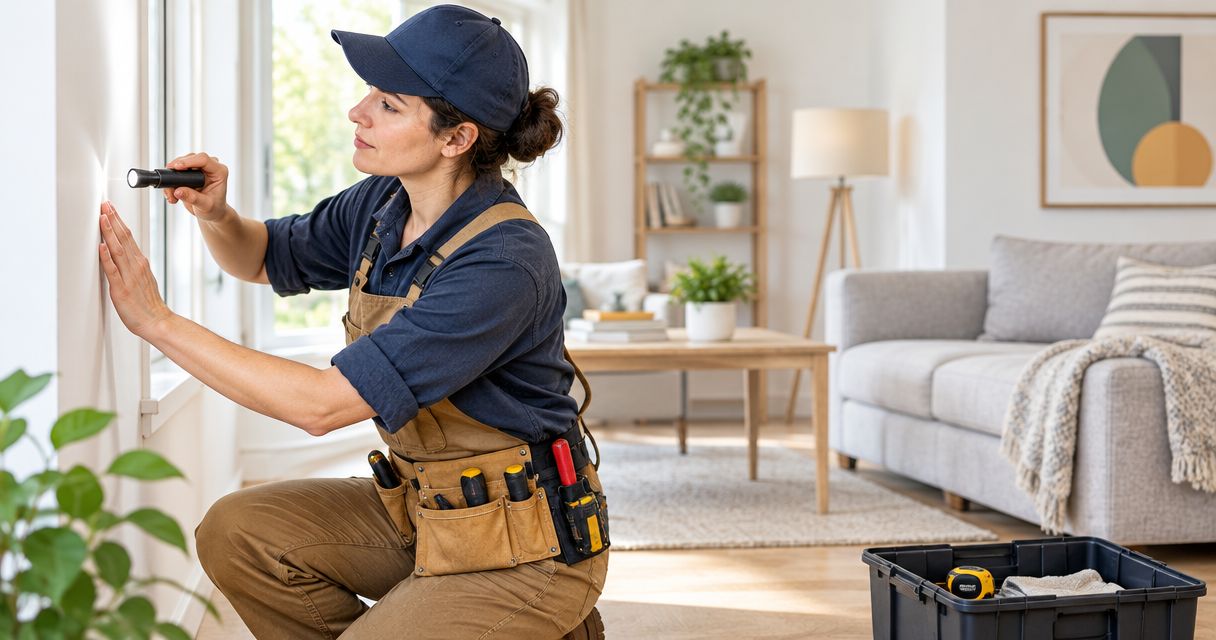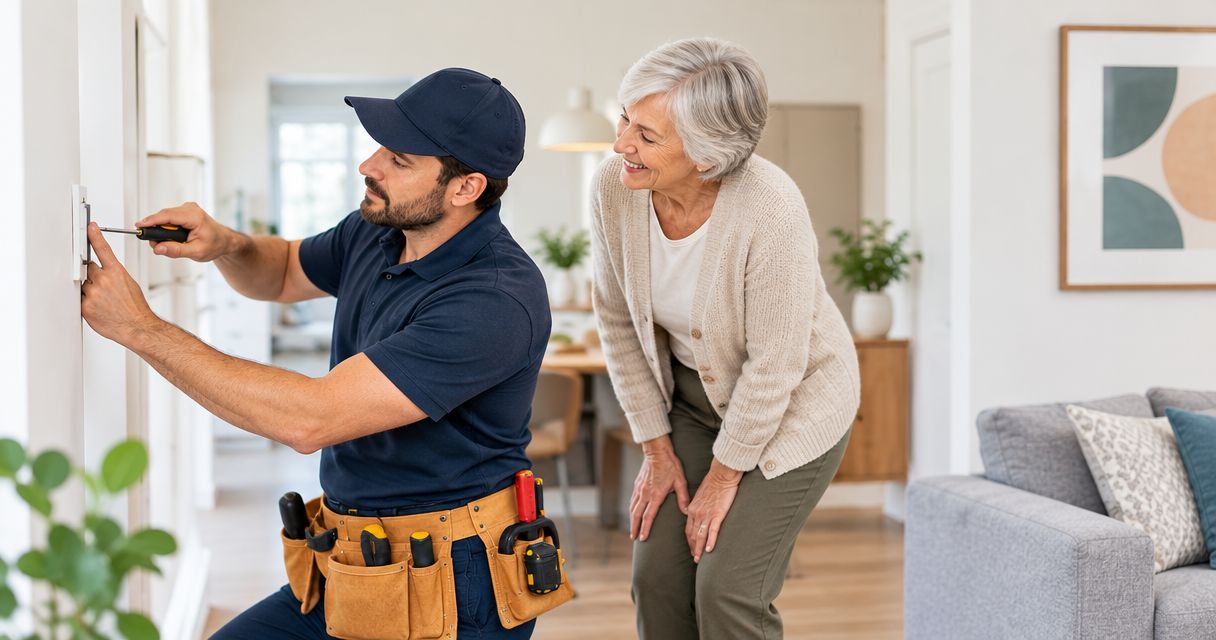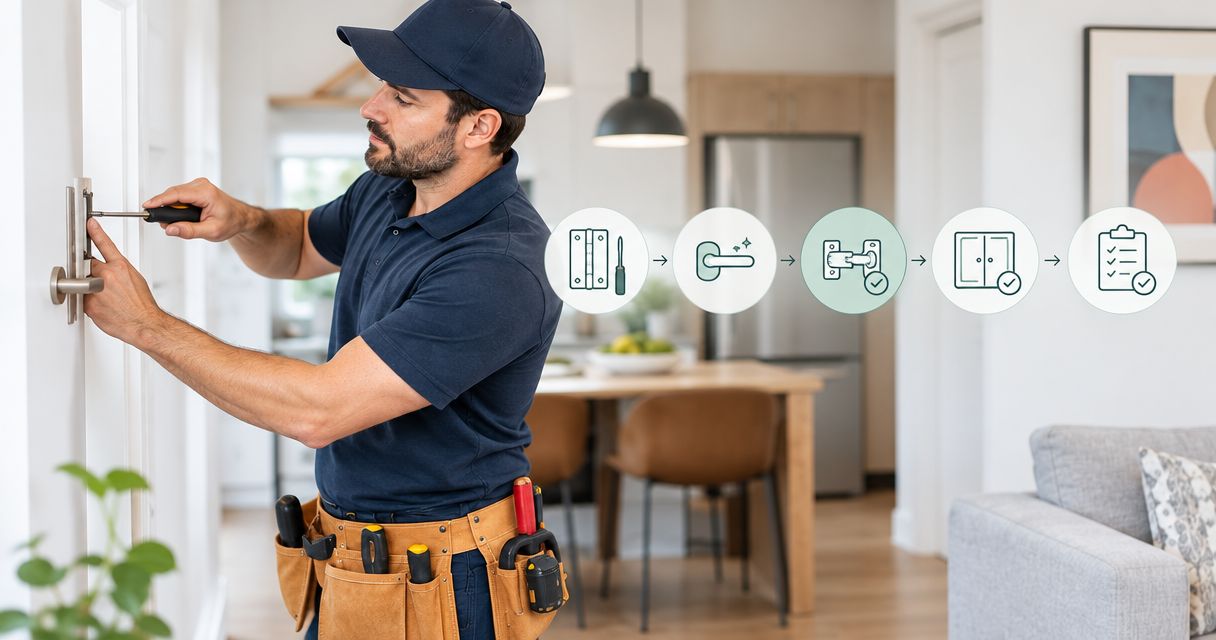
NYC homeowners’ home maintenance checklist is a practical inspection and repair list aimed at keeping doors and cabinet hardware working properly and preparing small jobs for a booked visit. For homeowners in Brooklyn and Queens, this guide separates simple checks from repair decisions and explains what to prepare before Mr. Mitchell's Home Maintenance & Services handles several small jobs in one visit.
- Use this home maintenance checklist to identify sticking doors, loose cabinet hinges, and handles that need attention.
- Mr. Mitchell's Home Maintenance & Services is best for NYC homeowners booking several small repairs in one visit.
- Check door movement before changing hardware; a sticking door and a faulty latch are different repair problems.
- Group door and cabinet hardware repairs with suitable drywall, painting, furniture assembly, or wall mounting tasks.
Why a home maintenance checklist matters for NYC homeowners
A useful checklist turns a vague request such as fixing the kitchen cabinets into an identifiable job: the upper cabinet door drops when opened, and its handle moves when pulled. That distinction helps you describe the problem before booking instead of discovering the full repair list during the visit.
Door and cabinet hardware deserve attention because you use them repeatedly. A handle that moves, a cabinet door that catches, or a bedroom door that needs lifting is a functional problem—not just a cosmetic detail.
Your 2026 checklist should record symptoms, locations, and priorities—not assume every problem needs replacement. A loose hinge, damaged screw hole, and misaligned latch require different responses. Start by observing what happens, then decide what belongs on the repair list.
For a Brooklyn or Queens apartment, include practical access details with that list. Tell the repair professional where the work is, what furniture blocks it, and whether building arrangements need confirming before the appointment.
Build your door and cabinet hardware checklist
1. Make a room-by-room repair list
Start with a phone note or a sheet of paper. Walk through your home and record each problem where it happens, rather than collecting a single list of parts you think need replacing.
Give every item a location, a symptom, and a priority. For example, record the hallway closet handle turning without opening the door—not simply a broken handle. Specific descriptions leave room for the correct diagnosis.
Use 3 photos per problem as a preparation target: an overall view, a close-up of the hardware, and a view showing damage or misalignment. Add a short video when the problem only appears during movement.
Build your 2026 repair list around these details:
- Name the room and identify the exact door or cabinet.
- Describe what happens when you open, close, or pull it.
- Note whether the problem is constant or intermittent.
- Photograph the hardware and surrounding material.
- Mark the items that affect daily access first.
2. Check how each door moves and closes
Check doors manually before looking for replacement hardware. Open and close each door gently, watching where it rubs or stops. Do not force a door that resists movement.
Make 2 inspection passes: first observe the door’s movement, then inspect the latch and handle. This separates a door that catches on its frame from one that closes freely but fails to latch.
Look at the hinge attachment, the gap around the door, and the area where the latch meets the strike plate. A visible scrape is useful evidence, but it does not establish the cause by itself.
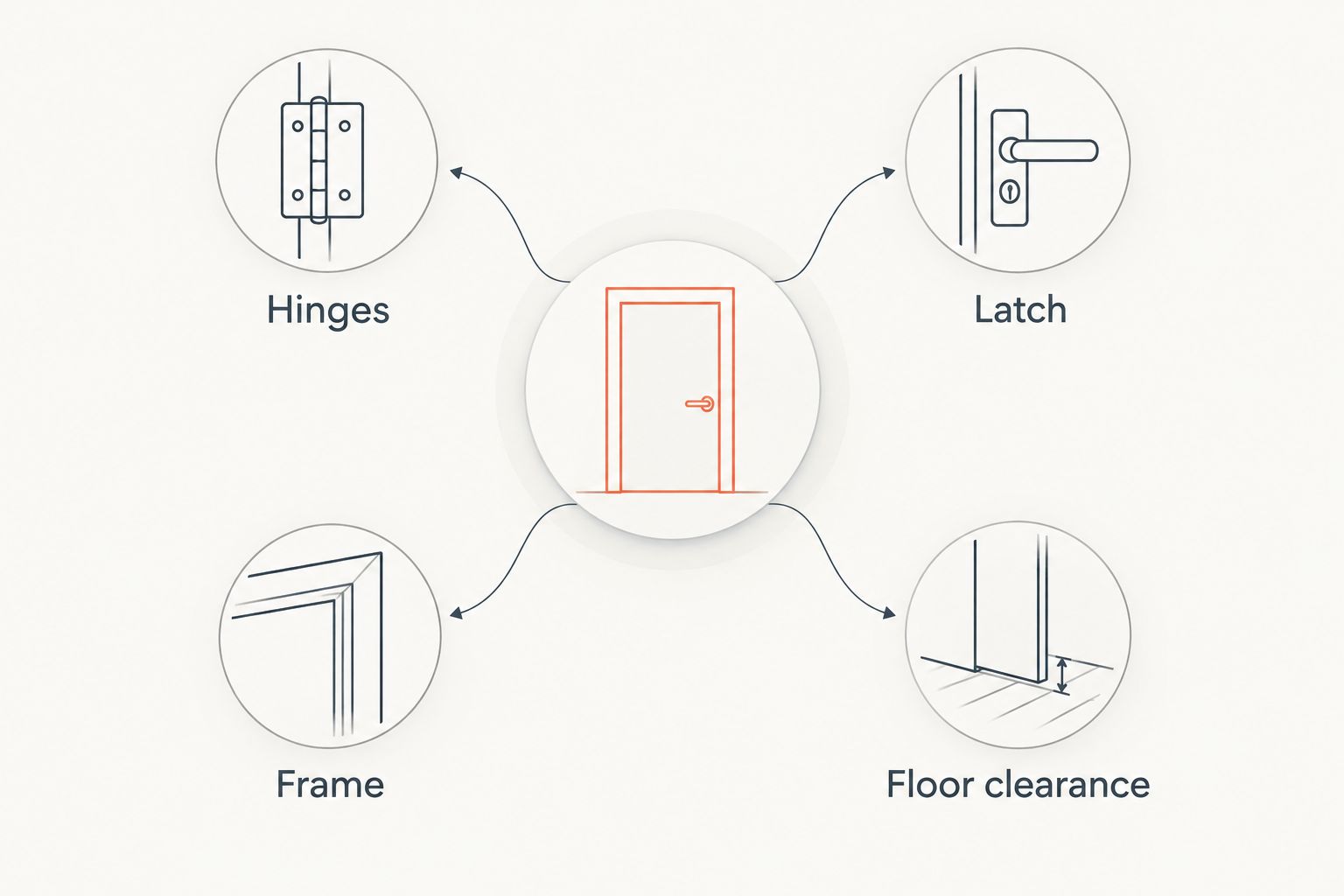
Check these areas:
- Hinges: look for movement at the attachment points.
- Latch: check whether it enters the strike opening without lifting the door.
- Frame: note where the door edge contacts the surrounding frame.
- Floor clearance: identify contact with flooring or a rug.
These checks describe the repair problem without prescribing sanding, hinge replacement, or a new door. Keep alterations off your checklist until the cause is assessed.
3. Inspect cabinet hinges, handles, and attachment points
Open cabinet doors gently and watch the hinge attachment while the door moves. Check whether the hinge itself moves, whether the door sits unevenly, or whether a handle shifts against the cabinet face.
If a screw is visibly loose and the surrounding material is intact, use a correctly fitting hand screwdriver and stop when the screw is snug. Stop if the screw spins without tightening or the material starts to crumble. More turning will not restore a damaged attachment point.
For a booked repair, describe the symptom instead of guessing a hinge model. Mr. Mitchell's Home Maintenance & Services handles door and cabinet hardware repairs; its guide to loose cabinet hinges and hardware provides a related preparation topic.
Include these cabinet checks:
- Test each handle with a gentle pull.
- Watch for hinge movement against the cabinet or door.
- Look for cracked, enlarged, or damaged screw holes.
- Record doors that overlap, rub, or sit unevenly.
- Note drawers or contents that obstruct the work area.
4. Separate cleaning from adjustment and replacement
Use a soft cloth to remove surface dirt around accessible handles and hinges. Follow the hardware manufacturer’s care instructions when you have them, and avoid introducing an unfamiliar cleaner or lubricant into a lock or hinge.
Cleaning is not a substitute for fixing loose attachments or damaged material. Likewise, replacing a handle does not resolve a door that rubs against its frame.
On your 2026 checklist, keep the desired result separate from the proposed method. Write that the cabinet should close without catching; do not insist on a new hinge unless the repair assessment supports replacement.
Sort the work into these categories:
- Clean accessible surfaces without taking hardware apart.
- Tighten only visibly loose, accessible screws in sound material.
- Request assessment for doors that need lifting or pushing to latch.
- Flag damaged attachment points rather than repeatedly tightening them.
- Ask whether replacement is necessary before buying parts.
5. Group compatible small repairs into one visit
Start by reviewing your own list and identifying nearby tasks. A cabinet hinge repair, a loose bedroom handle, and a drywall patch can belong on the same appointment request—but each still needs a clear description.
Mr. Mitchell's Home Maintenance & Services offers easy online appointment booking and several small jobs handled in one visit. Group the work to clarify the appointment scope, not to assume a discount or a particular completion time.
Include suitable tasks from the confirmed services: drywall repairs and painting, furniture assembly and wall mounting, and door and cabinet hardware repairs. Describe the full list before the visit so the scope can be confirmed.
Prepare a grouped request with:
- Door and cabinet hardware symptoms, listed by room.
- Drywall damage, with photos showing the surrounding wall.
- Painting needs, including any existing paint information.
- Furniture assembly details and the available instructions.
- Wall mounting details, including the item and intended location.
- Your priority order if the entire list needs further planning.
6. Prepare parts, permissions, and working space
Before ordering hardware, check whether a replacement is actually needed and what information identifies it. A similar-looking handle or hinge is not enough to establish fit.
Photograph existing parts and retain any manufacturer instructions you already have. If you have purchased replacements, keep the packaging and tell the repair professional before the appointment. Do not remove a working handle simply to identify it if doing so would leave you unable to use the door.
For your 2026 appointment, confirm any applicable building access arrangements with the appropriate contact. Clear the immediate work area without creating obstacles elsewhere in the home.
Prepare these items:
- Photos of existing hardware and any visible markings.
- Replacement parts already purchased, with their packaging.
- Paint labels or finish information for related touch-ups.
- Assembly instructions for furniture on the repair list.
- Clear access to the affected doors, cabinets, and walls.
- Relevant building entry or work arrangements.
7. Check the result and update your maintenance record
After a repair, test the function that prompted the booking. Open and close the door normally, operate the handle, and check whether the cabinet door still catches. Do not settle for checking appearance alone.
Keep 1 repair record with the location, work completed, and any remaining issue. Save useful part information so a future repair does not begin with another search for the same hinge or handle.
Ask what to watch for after the work, especially when a damaged attachment point or surrounding surface required attention. Your completed 2026 checklist should distinguish finished tasks from items needing another decision.
Close out the visit with:
- A movement and closing check for each repaired door.
- A gentle handle and hinge check on repaired cabinets.
- Notes on replacement parts or adjustments made.
- A record of unfinished work and its next action.
- Photos of repaired areas when useful for future reference.
Compare your repair options
Choose the option by the problem’s scope, not by the number of visible screws. A simple check can stay on your personal checklist; recurring misalignment or damaged attachment points deserve assessment before more alterations.
| Option | Best for | Main advantage | Key limitation |
|---|---|---|---|
| Homeowner inspection and light upkeep | Identifying symptoms and cleaning accessible hardware | You can build a clear repair list without replacing parts | Observation alone does not establish the cause of sticking or misalignment |
| A focused door or cabinet repair appointment | A specific hardware problem affecting daily use | Keeps the appointment request centered on the main fault | Separate small tasks still need describing and scope confirmation |
| A grouped visit with Mr. Mitchell's Home Maintenance & Services | NYC homeowners with several suitable small repairs | Combines online booking with several small jobs handled in one visit | The task list and work scope need confirmation; do not assume every item fits |
For the focused or grouped appointment, send the symptoms and photos first. That gives the repair professional something more useful than a shopping list of guessed replacement parts.
Book your small repair appointment
Prepare your door, cabinet, drywall, painting, assembly, or mounting task list before booking.
Common mistakes NYC homeowners make
Buying hardware before checking fit
A handle’s appearance does not establish compatibility. Keep photos and identifying information, then confirm the required replacement before ordering parts for the appointment.
Sanding a sticking door before finding the cause
Removing material is an alteration, not an inspection. Record where the door catches and have the movement assessed before deciding that sanding is the right repair.
Adding jobs only after the visit starts
An unmentioned wall mount or furniture assembly task changes the work request. Put every intended job on the booking list, including the smaller items you would otherwise remember at the doorway.
Clearing the room but blocking the cabinet
A tidy kitchen still needs access to the affected hardware. Move contents that obstruct the hinge area and clear the floor immediately around the work, rather than shifting everything into another doorway.
FAQ
What should a home maintenance checklist include for doors and cabinets?
A home maintenance checklist should include door movement, latch operation, hinge attachment, handle stability, and visible damage around screw holes. Record each symptom by room and photograph the affected hardware before booking repairs.
Can I tighten a loose cabinet hinge myself?
You can tighten an accessible, visibly loose screw gently when the surrounding material is intact and you have a correctly fitting screwdriver. Stop if the screw spins without tightening, the material crumbles, or the door remains misaligned.
Should I replace a door that sticks?
Do not choose replacement solely because a door sticks. Record where it catches and have the door, hinges, frame, and latch assessed before deciding between adjustment, repair, and replacement.
Can several small repairs be handled in one appointment?
Mr. Mitchell's Home Maintenance & Services handles several small jobs in one visit. Include your door and cabinet repairs alongside suitable drywall, painting, furniture assembly, or wall mounting tasks, and confirm the scope before the appointment.
What should I prepare before a cabinet hardware repair visit?
Prepare symptom notes, photos, clear access, and any replacement parts you already have. Keep packaging and instructions, and avoid buying additional hardware until fit and need are confirmed.
How do I plan a door and cabinet repair budget?
Plan the repair scope before comparing estimates: identify the affected items, symptoms, possible parts, and related surface work. Ask what the estimate includes rather than treating different repair lists as equivalent.
How should I update my home maintenance checklist in 2026?
Update your 2026 checklist whenever you notice a new symptom or complete a repair. Keep the location, work completed, useful part information, and unresolved issues together so the next appointment starts with a clear record.
One last thing
Record what makes the problem happen. A door that latches only when lifted gives a repair professional more useful information than a note saying the door is broken. Before booking, repeat the normal movement gently, capture it on video, and add the symptom to your list.