
Put immediate safety concerns first, repairs that affect everyday use second, and cosmetic work last when planning your home maintenance cost in 2026. Before paying to patch drywall or repaint, address the cause of recurring damage; grouping unrelated small repairs into one visit does not remove the need for assessment, preparation, or follow-up work.
- Mr. Mitchell's Home Maintenance & Services suits homeowners who want several small repairs handled in one booked visit.
- Prioritize home maintenance cost around safety, daily use, and preventing repeat damage—not appearance alone.
- For New York City homeowners, a clear repair list helps separate immediate problems from optional improvements.
- Resolve the cause of damaged drywall or peeling paint before scheduling the cosmetic finish.
Home maintenance costs: which repairs should come first?
Address hazards before inconvenience, and inconvenience before appearance. A loose mounted shelf and a scuffed wall do not belong at the same priority level, even when both look like small repairs.
For routine work, use Mr. Mitchell's Home Maintenance & Services to book an appointment online and describe the jobs you want handled together. Keep urgent hazards separate from that ordinary repair list.
| Repair category | Best for | Main benefit | Limitation | Priority decision |
|---|---|---|---|---|
| Loose wall-mounted items or unstable assembled furniture | Addressing a potential injury risk | Restores attention to safe support and stability | Wall conditions or damaged parts need assessment | Stop using the affected item and arrange assessment |
| Sticking doors and loose cabinet hardware | Restoring everyday access and use | Addresses problems you encounter repeatedly | Tightening hardware alone does not explain every fault | Move ahead of cosmetic work |
| Drywall damage and peeling interior paint | Restoring a sound, finished surface | Repairs visible damage after the cause is resolved | Finishing over unresolved moisture or movement does not solve the cause | Investigate first, then repair |
| Scuffs and optional paint touch-ups | Improving appearance | Refreshes an otherwise functional surface | Color and sheen differences can remain visible | Defer when more pressing repairs compete for attention |
This is a decision order, not a diagnosis. A sticking door that blocks an essential exit needs different attention from a cabinet door that rubs slightly. Describe what the problem prevents you from doing, not just how it looks.
Why this matters
A useful 2026 maintenance plan separates the problem you see from the work needed to resolve it. Peeling paint is visible, but repainting is not the first task when the surface underneath remains damp. A loose cabinet hinge is visible too, but the condition of its fixing points affects the repair.
That distinction matters in Brooklyn and Queens homes where a repair list can span several rooms. Your goal is not to collect the longest possible checklist. It is to identify the work that protects safe use, restores function, and leaves a suitable surface for finishing.
A grouped visit is a way to organize work, not a guaranteed discount or a promise that every job finishes together. Put the essential repairs at the top so the appointment has a clear purpose even if another item needs further investigation.
Safety concerns: stop using the affected item first
Do not keep loading a shelf that moves away from the wall or using furniture that rocks because its connections are loose. Clear people away from a potentially falling item, and avoid testing it with additional weight.
Wall mounting depends on more than the visible bracket. The wall material, fixing method, mounting location, and condition around the attachment all matter. A photograph helps explain the concern, but it does not replace an assessment of the support.
For assembled furniture, describe where the movement occurs. A loose handle, a shifting frame, and a unit tipping forward are different problems. Keep any assembly instructions and unused hardware available rather than assuming every loose connection needs the same adjustment.
Active leaks, exposed electrical hazards, or signs of structural movement need the appropriate qualified professional or emergency response. Do not treat those conditions as routine drywall, painting, mounting, or hardware appointments.
Everyday-use repairs: fix what interrupts normal use
After safety concerns, prioritize repairs that interfere with ordinary movement and access. A door that will not close properly or a cabinet front that shifts whenever you open it deserves attention before an optional wall refresh.
Be precise about the symptom. Does the door rub at the top, catch near the floor, or fail to latch? Does the cabinet hinge move, or does the surrounding material move with it? Those observations help define the work without asking you to diagnose the fault.
Choose repair scope before choosing replacement parts. Buying a new handle does not solve a misaligned door, and replacing a hinge does not automatically restore damaged fixing points.
The benefit of prioritizing functional repairs is straightforward: you restore something you need to use. The trade-off is that the finished result might be less visually dramatic than repainting a room. Function still comes first when your list needs trimming.
Cosmetic repairs: confirm the surface is ready
Drywall repair and painting belong after unresolved causes of damage. Before booking, note whether a crack has changed, a stain has returned, or peeling paint sits over a surface that feels damp. Describe those observations without covering them up first.
For isolated drywall holes, explain what made the hole and whether anything will be mounted nearby afterward. Patching a former mounting point and preparing a location for a new attachment are different tasks. The intended use affects the conversation.
Paint touch-ups also need a realistic scope. Existing paint can differ from paint applied later because of wear, previous coats, color, or sheen. Keep any labeled paint container, but do not assume a matching label guarantees an invisible patch.
The advantage of deferring cosmetic work is that you can resolve underlying problems first. The disadvantage is living with visible marks for longer. If the surface is sound and appearance is your main concern, cosmetic work becomes a reasonable next step rather than an automatic last resort.
Why home maintenance cost varies
Your 2026 repair plan should describe the work, not rely on a generic allowance for anything called a small job. These factors change what needs to be assessed and included:
- Condition beneath the surface: A loose screw and damaged material around a screw hole require different repair decisions.
- Preparation: Furniture, wall-mounted items, and belongings can obstruct the area that needs attention. Identify what must be moved before work begins.
- Finish expectations: A functional drywall patch and a finished painted surface are different endpoints. State which result you want.
- Parts and compatibility: Cabinet hinges, handles, and furniture fittings need to suit the existing item. Keep identifying details and instructions where available.
- Order of work: Patching, drying, preparation, and painting have dependencies. Putting tasks on one list does not eliminate those dependencies.
- Scope across rooms: Several clearly described repairs are easier to discuss than an open-ended request to fix whatever needs attention.
Ask what the proposed work includes, what needs assessment, and what requires a separate decision. Do not assume materials, replacement parts, or finishing work are included unless that has been confirmed.
How to build a repair list before booking
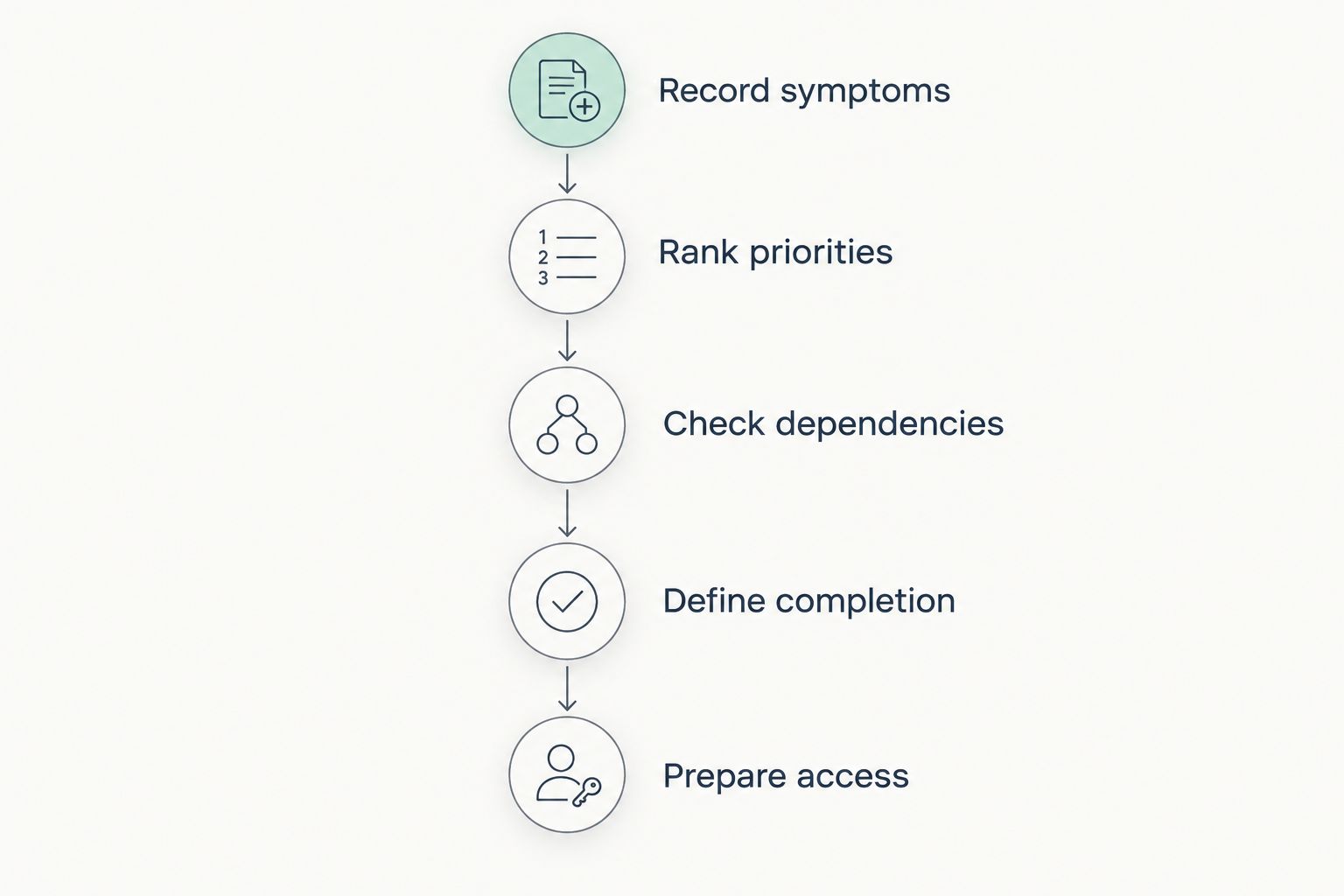
Use this sequence to turn a household walkthrough into a practical appointment request. You do not need a technical diagnosis; you need observable details and a clear order of importance.
1. Record symptoms
Write down what happens during normal use. Replace a vague note such as “bedroom door broken” with “bedroom door catches at the upper corner and does not close without lifting.” Include the room and the exact item so similar jobs do not get confused.
2. Rank priorities
Mark safety concerns, daily-use problems, and appearance-only work separately. If an item is unsafe to use, stop using it rather than leaving it in service until a routine appointment. Put the repair that matters most at the top.
3. Check dependencies
Ask what must happen before the visible repair. A damp wall needs its moisture source addressed before finishing. A furniture assembly area needs enough clear space to work. A cabinet repair needs access to the affected hardware.
4. Define completion
State what a satisfactory result means. For drywall, do you want the damaged area repaired and painted? For a door, is the goal reliable closing and latching? Clear endpoints prevent a functional repair from being mistaken for a full cosmetic refresh.
5. Prepare access
Clear the immediate work area where you can do so safely. Gather relevant instructions, spare fittings, photographs, and any existing paint information. If your building has access or work requirements, check them before arranging the visit.
Mr. Mitchell's Home Maintenance & Services is best for homeowners who want easy online booking and several small repairs handled in one visit. Prepare the list first, then ask which items belong together and which need separate attention.
Book your small-repair appointment
Describe your drywall, painting, assembly, mounting, or hardware jobs before the visit.
Should I group small repairs into one visit?
Group clearly defined small repairs when the work can be planned together. A cabinet hardware problem, furniture assembly task, and drywall repair can all go on the same request for discussion.
The benefit is a single organized list with clear priorities. The limitation is that different jobs need different parts, preparation, or finishing stages. Ask what can be handled together rather than assuming the list guarantees a single completed visit.
Should I repair drywall before painting?
Repair damaged drywall and resolve the cause before painting the affected surface. Paint changes the finish; it does not restore missing drywall or correct an ongoing source of damage.
Describe both the damage and the finish you want. For booking details, read what to ask before booking drywall hole repairs.
Should I buy hardware before booking a repair?
Confirm the required hardware before buying replacement parts. A similar appearance does not establish that a hinge, handle, bracket, or furniture fitting will fit the existing item.
Photograph the installed part and keep any manufacturer information. If you already have replacements, mention that in the request so suitability can be discussed before work begins.
What to prepare for a Brooklyn or Queens repair visit
For your 2026 repair appointment, organize details by room rather than sending an unstructured collection of photographs. Pair a wider view showing the location with a closer view showing the damage. Keep the written symptom beside the relevant photo.
For wall mounting, identify the item and intended location. Keep the supplied mounting instructions and parts available, and do not drill exploratory holes to identify the wall yourself.
For furniture assembly, retain the instructions and packaging until you have checked the parts. Keep the intended assembly area accessible. Mention any existing damage rather than discovering it after the work area is set up.
For door and cabinet repairs, empty the immediate area enough to show the problem clearly. Do not force a sticking component repeatedly to demonstrate it. For painting and drywall work, move belongings away from the affected surface where safe and practical.
Finally, tell the repair professional which job matters most if the scope changes. That instruction is more useful than treating every item as equally urgent.
FAQ
What should I repair first when my maintenance budget is limited?
Address immediate safety concerns first, everyday-use problems second, and cosmetic work last. Investigate recurring damage before paying to cover or repaint it.
Can several small home repairs be handled in one appointment?
Mr. Mitchell's Home Maintenance & Services offers several small jobs handled in one visit and easy online appointment booking. Describe each task beforehand so the scope and any separate preparation can be discussed.
How can I plan my home maintenance cost without a fixed estimate?
Build a prioritized repair list with symptoms, photos, and a clear finish for each task. Ask what the proposed work includes before deciding which optional items to proceed with.
Should a loose wall shelf wait until my next routine visit?
Stop using a shelf that is loose or pulling away from the wall and arrange an assessment. Do not add weight or keep testing an unstable mounting.
Does grouping repairs automatically make the visit cheaper?
Grouping repairs does not establish a lower price. Its confirmed benefit is organizing several small jobs into one visit; ask about the scope rather than assuming savings.
What should I tell a repair professional about peeling paint?
Describe where the paint is peeling and whether you have noticed dampness, staining, or recurring damage. Resolve the cause before treating repainting as the complete repair.
What should I prepare before booking repairs in Brooklyn or Queens?
Prepare a room-by-room list, photographs, and your priority order. Keep relevant parts and instructions available, and check any building access requirements before the appointment.
One last thing
Take a photograph of the problem before you tidy it away. A detached piece of hardware, the location of a fallen fitting, or the original position of a loose component can help explain what happened. Keep detached parts safely rather than discarding them.
On your 2026 checklist, add a final line beneath every repair: “What must work when this is finished?” That question keeps your home maintenance cost tied to a useful outcome—not simply to making a visible mark disappear.