
Prioritize home maintenance services by addressing unsafe or worsening conditions first, everyday function next, and cosmetic work last. For a limited budget, define the necessary repair before adding painting or other finishing work, then ask which small jobs can share one visit. Grouping jobs helps you organize the appointment; it does not establish a lower price or guarantee that everything fits into one visit.
- Prioritize home maintenance services by safety, worsening damage, daily function, then appearance.
- Mr. Mitchell's Home Maintenance & Services offers online booking and several small repairs handled in one visit.
- Group drywall repairs, hardware repairs, and furniture assembly only after confirming the appointment scope.
- Keep cosmetic painting separate from repairs that restore safe, usable doors, cabinets, or furniture.
How do you prioritize home maintenance services on a limited budget?
Choose the repair that prevents harm or restores essential use before the repair that only improves appearance. Your 2026 maintenance list should distinguish an active problem from an old mark, and an unstable item from something that simply looks unfinished.
Use this sequence before booking:
- Identify hazards. Stop using unstable furniture or a loose wall-mounted item. An immediate hazard needs an appropriate response, not a place at the bottom of a routine repair list.
- Check worsening damage. Describe spreading stains, recurring peeling, or a door problem that has changed. Identify the cause before approving a cosmetic cover-up.
- Restore daily function. Put frequently used doors, cabinet hardware, and necessary furniture ahead of minor appearance issues.
- Separate finishing work. List drywall repairs and paint touch-ups clearly, including whether you want a repaired surface or a finished appearance.
- Confirm the visit. Ask which tasks belong together and which need separate work before you commit your budget.
For a defined small-repair list, you can use the Mr. Mitchell's Home Maintenance & Services online booking page. Include the work you want addressed rather than treating a booked appointment as approval of an unlimited task list.
Why this matters
A repair list can mix very different needs: a loose cabinet hinge, a drywall hole, an unassembled bookcase, and chipped paint. Calling everything urgent makes it harder to decide what deserves your available budget.
For Brooklyn and Queens homeowners planning repairs in 2026, the useful distinction is consequence. Ask what happens if each task waits: continued loss of function, further damage, an unstable item, or simply an unfinished-looking room.
Mr. Mitchell's Home Maintenance & Services is best for homeowners seeking online booking for several small home repairs in one visit. The appointment still needs a clear scope; grouping jobs is not a promise of savings or completion of every task you list.
Compare repair priorities before choosing the work
This table compares repair needs, not estimates. The benefit explains why a task deserves attention; the limitation explains why it still needs assessment.
| Repair need | Best for | Benefit of prioritizing it | Limitation or preparation |
|---|---|---|---|
| Loose door or cabinet hardware | Restoring frequently used doors and cabinets | Addresses an everyday function problem | Tightening alone does not resolve every hinge, screw-hole, or alignment issue |
| Furniture assembly or wall mounting | Making necessary furniture usable and securing intended installations | Moves an essential setup task ahead of decoration | Parts, instructions, mounting requirements, and wall conditions need checking |
| Drywall damage | Repairing a damaged wall surface | Addresses holes or damaged areas before decorating | Recurring damage or dampness needs attention before patching and painting |
| Painting and touch-ups | Finishing sound, prepared surfaces | Improves appearance after repair work | A touch-up can remain visible when the existing finish does not match |
The category alone does not determine urgency. A small loose bracket can deserve attention before a large, dry, unchanged wall blemish. Describe the condition and how you use the item, not just how noticeable it looks.
Safety and worsening conditions come before cosmetic repairs
Your limited budget should not turn a dangerous condition into a routine appointment item. Keep people away from unstable furniture or a loose mounted object, and arrange an appropriate assessment before using it again.
Active leaking, electrical hazards, and other problems outside a small-repair scope need the relevant professional or emergency response. Do not assume a maintenance appointment includes those services. Drywall repair and painting address surfaces; they do not establish that an underlying problem has been corrected.
For your 2026 repair list, record what changed. A stain that has spread, a hinge that now pulls away from the cabinet, or a mounting bracket that moves provides more useful information than a general request to fix the room.
Before disturbing an old painted surface, establish whether special precautions are needed. Sanding or scraping without checking the surface is not a sensible way to stretch a repair budget.
Daily-use repairs come before optional upgrades
Once hazards and worsening conditions have an appropriate plan, focus on items you need to use. A cabinet door that will not close and a loose handle on a frequently used door deserve a different priority from a decorative shelf you have not yet installed.
For door and cabinet hardware, describe the symptom:
- The handle moves when you turn it.
- The hinge is loose at the door or frame.
- The cabinet door rubs or sits unevenly.
- A screw turns without holding securely.
- The door sticks at a particular point.
These descriptions help distinguish a hardware request from a broader repair question. Do not buy replacement parts solely because the old part looks worn; first confirm whether the part, its attachment, or the alignment is causing the problem.
Furniture assembly deserves priority when it makes a needed item usable. Keep the instructions and supplied hardware together, and identify missing or damaged pieces before the appointment. Assembly cannot resolve a missing structural component just by spending more time on the item.
Drywall repairs and painting need separate decisions
A wall repair has a practical purpose; the final appearance is a separate expectation. Tell the repair professional whether you want a hole addressed, a surface prepared for painting, or the area painted as well.
Check the surrounding surface before treating the damage as an isolated patch. A dry hole from a removed fitting is different from damaged drywall beside recurring moisture. Describe both the visible damage and anything that keeps happening around it.
Painting should follow the repair decision, not hide it. Peeling paint needs a cause assessment, and a patch needs appropriate surface preparation before you judge the finish. Avoid approving a cosmetic repair simply because it makes the problem less visible.
If appearance is the only issue, decide how much finish work your budget supports. A local touch-up and painting a larger continuous surface are different scopes. Existing paint, sheen, surface texture, and previous wear affect how noticeable a repaired area remains.
Keep necessary repair work on the main list and optional finish work on a separate list. That gives you a clear decision if the proposed scope exceeds your budget.
Why repair scope varies
Two requests that sound alike can involve different work. For home maintenance services in 2026, use these factors to describe the job before asking for an estimate:
- Condition: Loose hardware on a sound surface differs from hardware attached to damaged material.
- Extent: Identify every affected door, cabinet, wall area, or furniture item rather than writing a broad room-level request.
- Access: Explain whether furniture, stored items, or building arrangements limit access to the work area.
- Materials: State which parts, assembly instructions, mounting hardware, or paint you already have.
- Finish expectations: Distinguish a functional repair from a request for a particular painted appearance.
- Task dependency: Flag work that must happen before another task, such as wall repair before painting.
These details describe scope; they do not establish a price. Ask what the proposed work includes, what materials are required, and how any additional work will be discussed before it begins.
How do you group small repairs without overloading the visit?
Group jobs by readiness and priority, not merely by location. A loose cabinet hinge and a furniture assembly task can both belong on your list, but each still needs its own description, materials check, and access plan.
Use the guide to a grouped small-repair visit to organize the appointment request. Keep essential work at the top and make optional additions easy to identify.
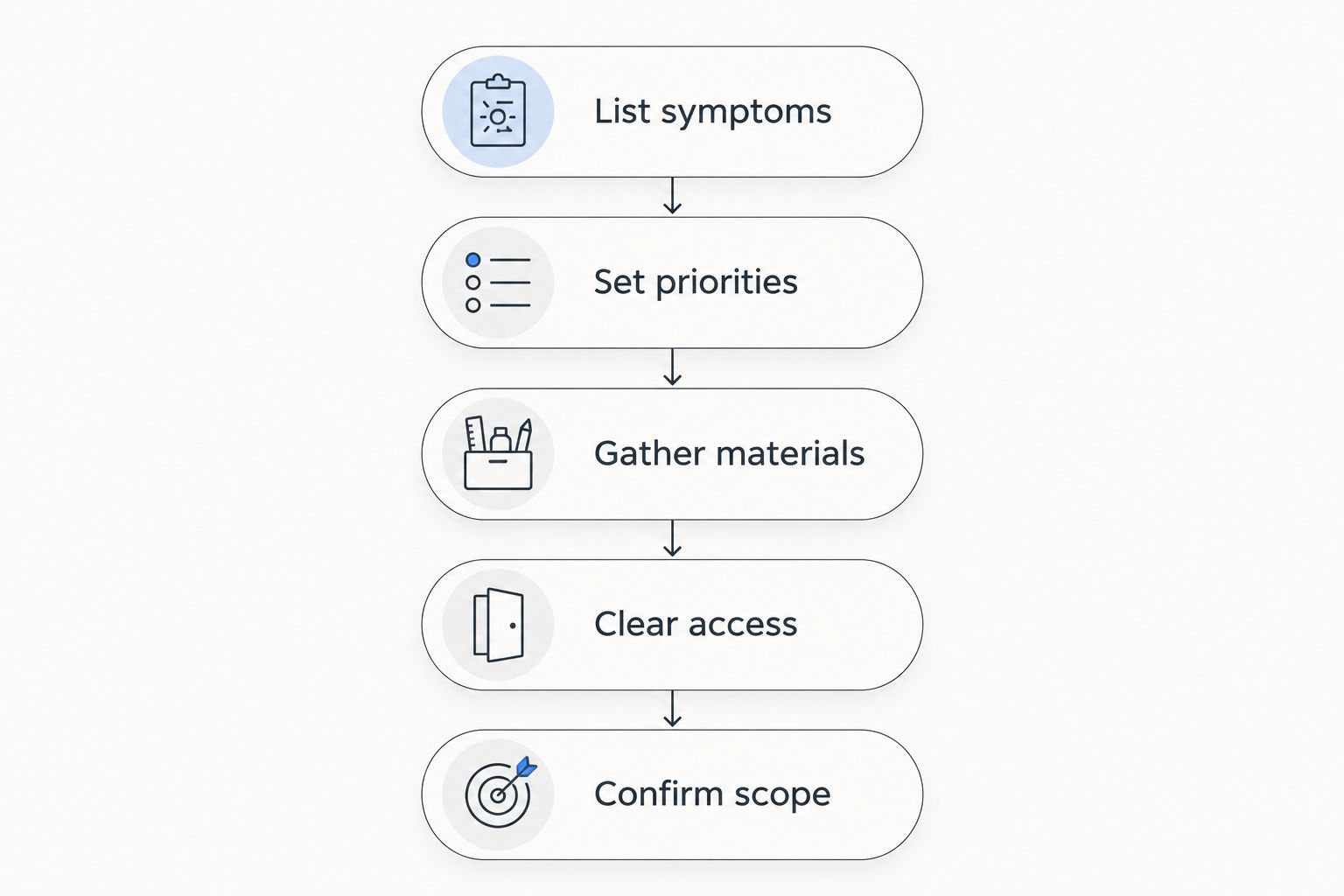
A useful list follows this order:
- List symptoms. Write what is wrong and which item is affected.
- Set priorities. Mark necessary repairs separately from optional improvements.
- Gather materials. Collect instructions, supplied hardware, and any existing paint information.
- Clear access. Move belongings away from the work area when safe to do so.
- Confirm scope. Ask which jobs fit the planned appointment and how changes will be handled.
Several small jobs handled in one visit is a confirmed offering from Mr. Mitchell's Home Maintenance & Services. Use that option to bring a well-organized list, not to assume every item can be completed together.
Book your small-repair appointment
Prepare your priority list for drywall, hardware, assembly, mounting, or painting work.
What should you prepare before booking a repair appointment?
Prepare enough detail for someone else to understand the work without standing in your home. For your 2026 appointment request, identify the room, the affected item, the symptom, and the result you want.
Photographs help show both context and detail. Include the surrounding wall or furniture as well as the damaged area, and do not move or handle an unstable item just to photograph it. For mounting work, describe the object and provide its supplied installation information.
Brooklyn and Queens homeowners should also check applicable building arrangements. Explain entry procedures, elevator access, work-area restrictions, and any required approvals before the visit rather than assuming they are already known.
Use a task list like this:
| Task | Information to prepare | Decision before booking |
|---|---|---|
| Cabinet hinge repair | Which door is affected and where the hinge moves | Is restoring function the goal, or are you also requesting replacement hardware? |
| Drywall patch | Location, photographs, and whether damage recurs | Does the request include painting after repair? |
| Furniture assembly | Instructions, parts, and intended location | Are all required components present? |
| Wall mounting | Object details, installation instructions, and wall information | Has the mounting scope been confirmed? |
Keep your preferred task order visible. If the scope changes after assessment, you can decide which optional item to defer without losing sight of the necessary repair.
Can cosmetic repairs wait when money is tight?
Cosmetic repairs can wait when the surface is sound and the issue affects appearance rather than safety or function. A small scuff or an old, unchanged blemish belongs below an unstable fitting or a door you cannot use properly.
Do not make that decision from appearance alone. Recurring peeling, dampness, or spreading damage needs assessment rather than a place on the optional painting list.
Should you buy repair materials before the appointment?
Buy repair materials after confirming what the job requires. An incorrect hinge, incompatible mounting hardware, or unsuitable paint does not become useful because it was purchased early.
Keep materials you already own available for review, with their instructions or labels. Ask whether you or the repair professional will supply anything additional before treating the appointment as ready to proceed.
FAQ
What's the best way to prioritize home maintenance services on a tight budget?
Prioritize hazards and worsening conditions, then repairs that restore daily use, and put appearance-only work last. Confirm the necessary scope before adding optional painting or other finishing tasks.
Can several small home repairs be handled in one visit?
Mr. Mitchell's Home Maintenance & Services offers several small jobs handled in one visit. Confirm which tasks belong in the appointment rather than assuming every item on your list is included.
Should I repair drywall before painting?
Repair the damaged surface and address any underlying cause before painting. Specify whether your request includes only the repair or the painted finish as well.
Does grouping handyman jobs guarantee a lower bill?
Grouping jobs does not guarantee a lower bill. Ask for the proposed scope and estimate, and separate essential repairs from optional additions.
What should I prepare for furniture assembly?
Gather the assembly instructions, supplied hardware, and all components, and clear the intended work area. Identify missing or damaged pieces before the appointment.
Should a loose cabinet hinge come before paint touch-ups?
Prioritize a loose cabinet hinge when it affects use or leaves the door unstable; appearance-only paint touch-ups belong later. Describe where the hinge moves so the repair request is specific.
How do I book a small-repair appointment in Brooklyn or Queens?
Use the online appointment booking system and provide a prioritized task list. Include the affected items, symptoms, available materials, and any building access arrangements.
One last thing
A clear stopping point protects your repair plan better than a vague request to fix everything. Before your 2026 visit, decide which functional repairs you want addressed first and which finishing tasks require a separate decision.
Ask for a scope check before optional work begins. That keeps a necessary hardware or drywall repair from turning into an open-ended appearance project, while leaving you free to approve additional work once you understand it.