NYC homeowners’ home repair services are practical help with diagnosing surface problems and repairing damaged finishes so peeling interior paint does not simply get covered over. This guide explains what to check, what to leave untouched, and what to prepare before booking a repair visit in Brooklyn or Queens.
- Home repair services for peeling paint should start with the cause, not a fresh coat.
- Mr. Mitchell's Home Maintenance & Services offers online booking and several small jobs handled in one visit.
- Describe moisture, loose paint, and drywall damage separately when preparing your repair request.
- Avoid sanding suspect paint or repainting a damp surface before the underlying problem is addressed.
Why home repair services matter for NYC homeowners
Peeling paint is a symptom, not a complete diagnosis. Moisture, poor adhesion, loose underlying paint, and an inadequately prepared surface can produce similar-looking damage. The repair approach depends on which problem is present.
For homeowners, the useful distinction is between a finish repair and a problem that must be resolved before painting. A dry patch beside a bumped corner is different from a ceiling patch that becomes damp after rain. Neither the room name nor a photograph alone establishes the cause.
Your 2026 repair list should describe both the damaged finish and the conditions around it. If you are arranging several household jobs, use this guide to choosing a handyman for a small repair visit to organize the request before booking.
Find the cause before choosing the repair
Record the location and pattern
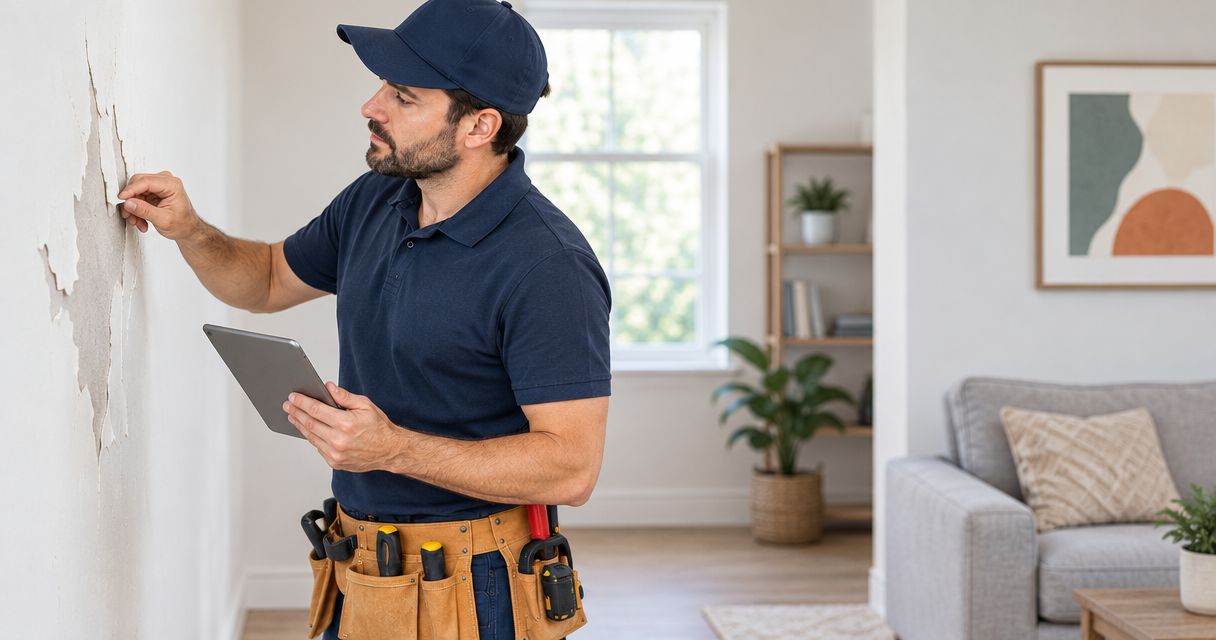
Start with observation, not scraping. Note exactly where paint is separating: above a window, around a bathroom ceiling, beside a door frame, or across a previously patched wall. Location gives the repair professional useful context without turning your description into a diagnosis.
Take 3 photos: a room view, a closer view of the affected area, and a detail of the paint edge. Include nearby trim or fixtures for context. Do not pull off more paint just to make the damage easier to photograph.
Keep a short record of what changed. Newly visible peeling after a leak is important information; so is peeling that appeared after a recent repaint. Neither automatically proves the cause.
- Location: Name the room and the exact wall or ceiling area.
- Appearance: Describe flakes, bubbles, stains, cracks, or exposed wall material.
- Timing: Note when you first noticed the damage and whether it is spreading.
- History: Record any recent painting, patching, or known water incident.

Check for moisture without disturbing the paint
Look for staining, recurring dampness, or paint failure near a known water incident. Condensation and leaks are different problems, but both deserve attention before a finish repair. A wall that looks dry at one moment does not establish that a recurring moisture problem has stopped.
Compare 2 views of the area: the damaged surface and the nearby window, ceiling junction, or fixture. Your role is to report what you can observe safely, not to open the wall or trace concealed pipes.
If moisture remains active, painting is not the next step. Contact the person responsible for resolving the source, including building management when the issue involves shared building systems. Keep plumbing, leak investigation, and other specialist work separate from the painting request.
- Record whether dampness follows rain, shower use, or another repeatable event.
- Describe stains without assuming they identify a particular leak source.
- Photograph visible bubbling or swelling without pressing on damaged material.
- Keep water away from electrical fixtures and avoid investigating unsafe areas.
- Confirm that the moisture issue is resolved before arranging finish restoration.
Match the visible damage to the requested service
Separate peeling paint from damaged drywall. A loose paint film can leave a sound surface beneath it; torn drywall paper or crumbling wall material changes the preparation needed. Ask about both the surface repair and the paint finish rather than requesting only a coat of paint.
Mr. Mitchell's Home Maintenance & Services home repair services suit NYC homeowners who want online booking and several small jobs handled in one visit. Drywall repairs and painting are confirmed services, alongside furniture assembly, wall mounting, and door and cabinet hardware repairs. That makes a clear, grouped repair list useful.
Use Mr. Mitchell's Home Maintenance & Services to schedule online. Describe the peeling area and any related drywall damage in your appointment request; do not assume that booking a painting repair includes locating or repairing a hidden leak.
- Identify whether your request involves paint, drywall, or both.
- Mention exposed paper, loose patches, or damaged corners separately.
- State whether a known moisture problem has already been addressed.
- Add related small repairs without treating them as automatically included.
- Ask how the requested work will be grouped before the visit.
Establish a safe preparation boundary
Do not start sanding or scraping just because peeling paint looks like a small job. When the coating’s history is uncertain, disturbing it can create hazardous dust. EPA guidance on lead-safe renovation is relevant to work that disturbs lead-based paint; testing and applicable requirements should be addressed before that work starts.
For your 2026 appointment, tell the repair professional whether you have paint-testing records or previous renovation information. An old-looking wall does not prove that paint contains lead, and a clean-looking finish does not prove that it does not.
Keep children and pets away from loose paint and debris. If the area has extensive deterioration, suspected mold, or an unresolved water problem, ask what assessment is needed before including it in a routine repair visit.
- Share existing paint-testing or renovation records.
- Leave uncertain coatings undisturbed until the work approach is established.
- Ask how dust and loose debris will be contained.
- Identify damaged areas that need assessment before ordinary preparation.
- Avoid dry sanding, aggressive scraping, or opening the wall yourself.
Define the finish you want restored
Once the underlying issue is addressed, decide what a satisfactory result means. Repairing the loose area and restoring a consistent wall finish are related but different tasks. A small patch does not automatically mean an invisible touch-up.
Existing paint color, sheen, age, and surface texture affect how a repaired area blends. If you have leftover paint, keep the container and label available. Do not promise yourself a perfect match based only on a color name or a phone photograph.
Ask whether the request is for a localized touch-up or repainting a larger wall area. The appropriate scope depends on the surrounding finish and the repaired surface, not just the size of the flake you first noticed.
- Photograph the wall in normal room lighting.
- Keep any existing paint label or finish information available.
- Explain whether appearance or simply stopping deterioration is your priority.
- Ask whether patched drywall needs additional preparation before painting.
- Confirm the boundary between the repair area and the repainting area.
Group compatible small jobs into one visit
A peeling-paint appointment is a useful time to identify other small repairs, but write each job separately. A loose cabinet hinge, sticking door latch, unassembled piece of furniture, and wall-mounting request all need different information. A vague request to fix everything makes preparation harder.
Mr. Mitchell's Home Maintenance & Services can handle several small jobs in one visit. Grouping jobs is a planning benefit, not a promise of savings or a guarantee that every task will fit. Paint preparation, drying, and access requirements still affect how work is arranged.
For a 2026 household repair list, organize requests into 4 groups: drywall and painting, furniture assembly, wall mounting, and door or cabinet hardware. Ask which jobs can be combined and whether any part of the paint repair requires a separate stage.
- Describe each job with its room and exact location.
- Send photographs of damaged hardware and the surrounding door or cabinet.
- Keep furniture instructions and supplied hardware together.
- Identify the item, intended location, and available mounting instructions.
- Ask which repairs can share the visit and which need further assessment.
Prepare the room and confirm the appointment scope
Good preparation means providing access and information, not doing risky surface preparation yourself. Move fragile belongings from the work area and identify anything too heavy to relocate safely. Tell the repair professional about tight access, occupied rooms, or furniture directly beneath the damaged surface.
Before the appointment, confirm who will provide paint and other materials. Check any building rules for contractor access, work scheduling, and common-area protection. In Brooklyn or Queens, use your own building’s requirements rather than assuming that another property’s rules apply.
Keep your 2026 booking notes together: photographs, the job list, paint information, and any relevant building instructions. This gives the visit a defined scope without assuming a fixed duration or a guaranteed finish from the booking alone.
- Clear a safe route to the wall or ceiling area.
- Remove nearby fragile items without disturbing damaged paint.
- Confirm material responsibilities and the intended finish.
- Share access instructions and applicable building requirements.
- Review the job list before work begins.
Book your small repair visit
Prepare your peeling-paint photos and list the other small jobs you want handled in the same visit.
Compare your repair options
Choose the option that matches the condition, not simply the smallest visible patch. Observation helps you prepare a request; it does not replace resolving moisture or assessing uncertain coatings.
| Option | Best for | Main advantage | Key limitation |
|---|---|---|---|
| Homeowner observation | Documenting the problem before booking | Gives the repair request clear location, history, and photographs | Does not establish hidden causes or coating safety |
| DIY touch-up | A small, dry area with a sound surface and known coating history | Lets you control a straightforward cosmetic task | Poor preparation or an uncertain paint match can leave a visible repair |
| Mr. Mitchell's Home Maintenance & Services | Booking drywall and painting alongside other confirmed small repairs | Online appointment booking and several small jobs in one visit | Painting and drywall repair do not establish that hidden-leak work is included |
| Building management or the appropriate specialist | Active moisture, shared-system problems, or hazardous-material concerns | Addresses the problem that must precede finish restoration | Finish repair needs its own confirmed scope |
For peeling interior paint, the right order is cause, preparation, then finish. Choosing a repainting option before understanding the surface condition reverses that order.
Common mistakes NYC homeowners make
Treating every ceiling stain as a painting job
A ceiling stain with peeling paint needs a history check before cosmetic work. Report whether it appeared after rain or a known water incident. If dampness continues, address that issue before scheduling restoration of the finish.
Asking for a touch-up without discussing the wall finish
A repaired patch and the surrounding wall can reflect light differently. Ask about color, sheen, texture, and the repainting boundary. Keep any existing paint information available, but do not assume leftover paint guarantees an invisible result.
Grouping jobs without describing them
Several small jobs in one visit still require a specific list. For Mr. Mitchell's Home Maintenance & Services, separate painting and drywall work from furniture assembly, mounting, and hardware repairs. Include photographs and instructions that help define each task.
Starting preparation before checking coating safety
Scraping first and asking questions later can spread dust and destroy useful evidence about the failing surface. Leave uncertain paint undisturbed. Establish testing, containment, and preparation requirements before work that removes the coating.
FAQ
Why is my interior paint peeling?
Interior paint can peel because of moisture, poor adhesion, loose underlying paint, or inadequate surface preparation. The location, repair history, and condition of the wall help determine what to investigate before repainting.
Can I just paint over peeling paint?
Painting over loose paint does not provide a sound base for the new finish. Resolve the underlying problem and establish a safe preparation method before restoring the surface.
Do I need drywall repair or just painting?
Damaged drywall paper, broken corners, or deteriorated wall material require attention beyond the paint finish. Describe the exposed surface and send photographs so the appointment request covers the actual damage.
Should I book a painting repair while the wall is still damp?
Do not treat an actively damp wall as ready for repainting. Resolve the moisture source first, then confirm the condition of the surface before arranging finish restoration.
Can I include loose cabinet hinges in the same repair visit?
Mr. Mitchell's Home Maintenance & Services handles several small jobs in one visit, including confirmed door and cabinet hardware repairs. List each task separately and ask which jobs can be grouped with the painting or drywall work.
What should I prepare before a peeling-paint appointment?
Prepare photographs, the location and history of the damage, and any available paint information. Clear safe access and share building instructions without scraping or sanding uncertain coatings yourself.
How do I book home repair services for peeling paint?
Book online through the appointment page and describe the peeling paint, related drywall damage, and any other small repairs. Explain any known moisture history so the requested finish work is not confused with resolving an active leak.
One last thing
Before repainting in 2026, photograph the damaged area and save the record. If the paint later fails in the same place, that history is more useful than remembering only that the wall was painted. Your repair goal is a sound surface with the cause addressed, not merely a patch that looks covered on appointment day.