TV wall mounting takes as long as the wall assessment, bracket installation, lifting, cable connections, and safety checks require; there is no single duration that fits every setup. Concealing cables, removing an old mount, or repairing wall damage adds work beyond attaching the television. For a useful appointment estimate, describe the wall, TV, bracket, and cable plan before booking—not just the screen size.
- How long does TV wall mounting take? Wall construction, bracket compatibility, and cable routing determine the appointment scope.
- Confirm the mounting surface and hardware before setting aside time for installation.
- Mr. Mitchell's Home Maintenance & Services suits homeowners booking wall mounting alongside several small repairs.
- Discuss cable concealment separately; mounting a TV does not automatically include electrical work.
Why this matters
If you're planning a TV installation in Brooklyn or Queens in 2026, plan around the full job rather than the moment the screen goes onto the bracket. Access arrangements, wall checks, furniture placement, and your cable preferences all belong in the booking conversation.
Start with checking your wall before mounting. A photograph helps explain the location, but it does not establish what is behind the finished surface.
A useful time estimate describes the work included, not just how quickly someone can hang a screen. That distinction helps you decide when to be home and what to prepare.
How long does TV wall mounting take?
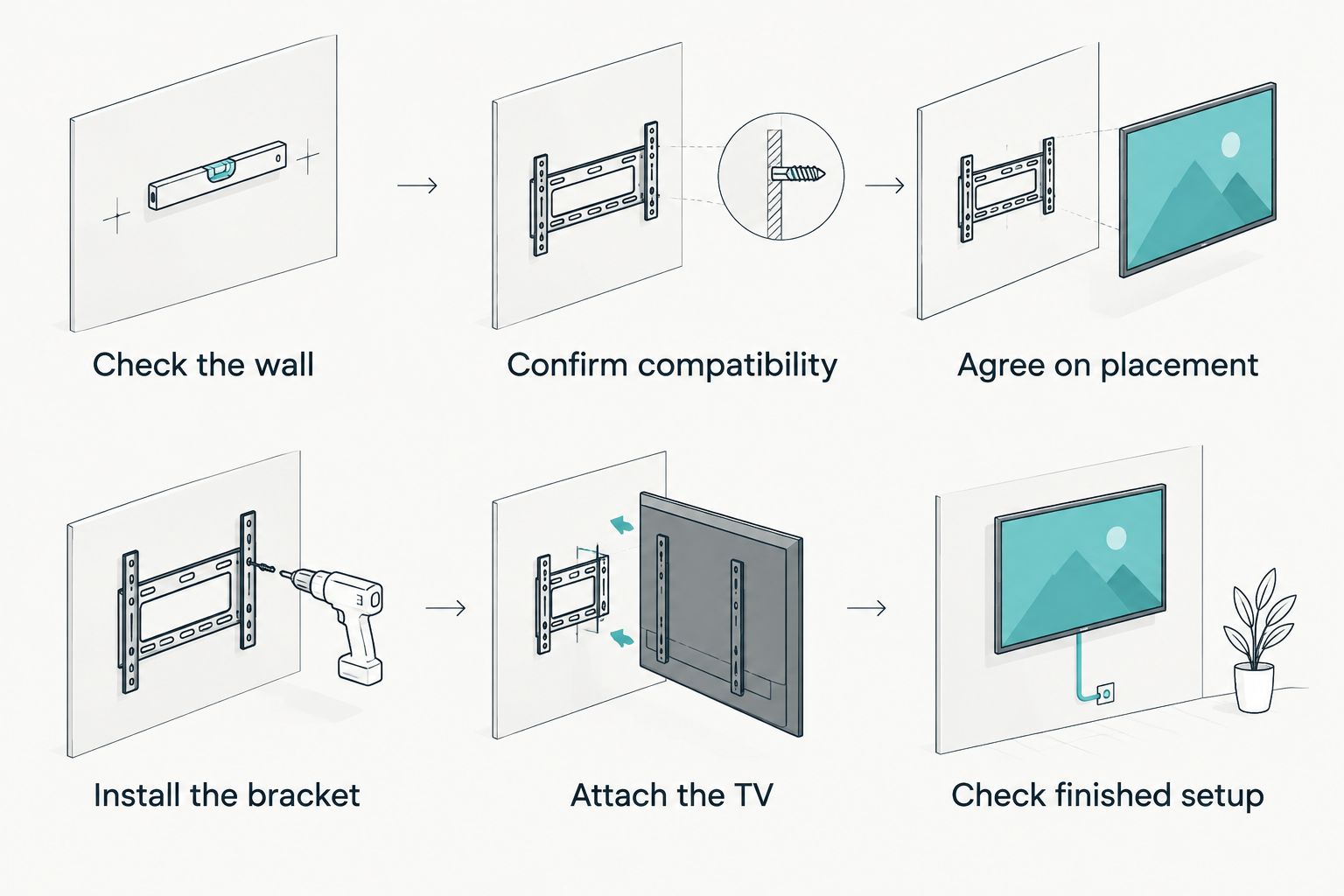
The appointment length depends on the installation steps your setup requires. Use this sequence to describe the job and ask for an estimate that covers it from assessment through final checks.
- Check the wall. Identify the wall construction and a suitable attachment method. Visible damage or uncertain support needs assessment before drilling.
- Confirm compatibility. Check the TV model, mounting pattern, weight, bracket instructions, and required hardware. A bracket that looks suitable still needs verification.
- Agree on placement. Confirm the screen position from your normal seating area, including clearance for furniture and connected equipment.
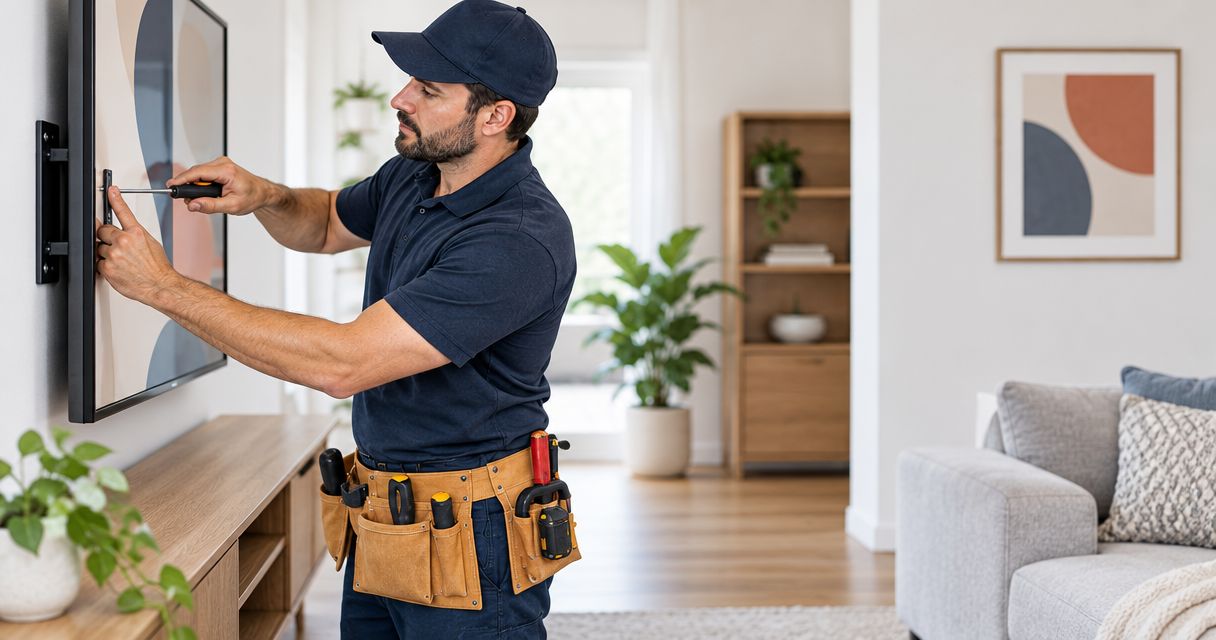
- Install the bracket. Mark the attachment points, check alignment, and secure the bracket using the appropriate method for the wall and mount.
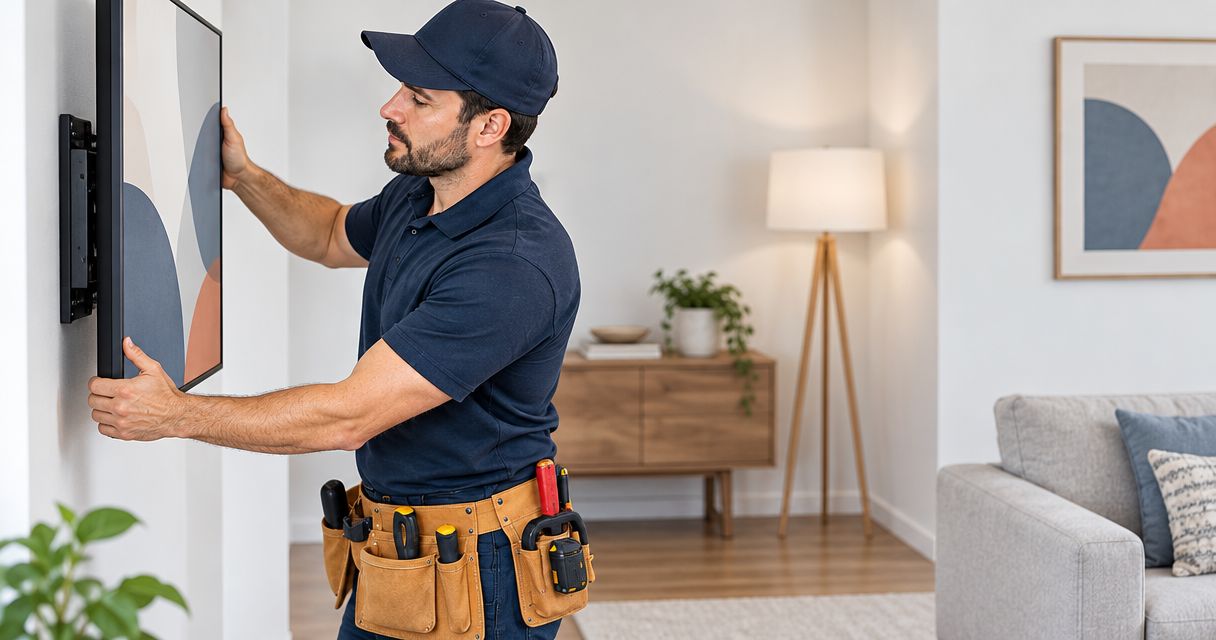
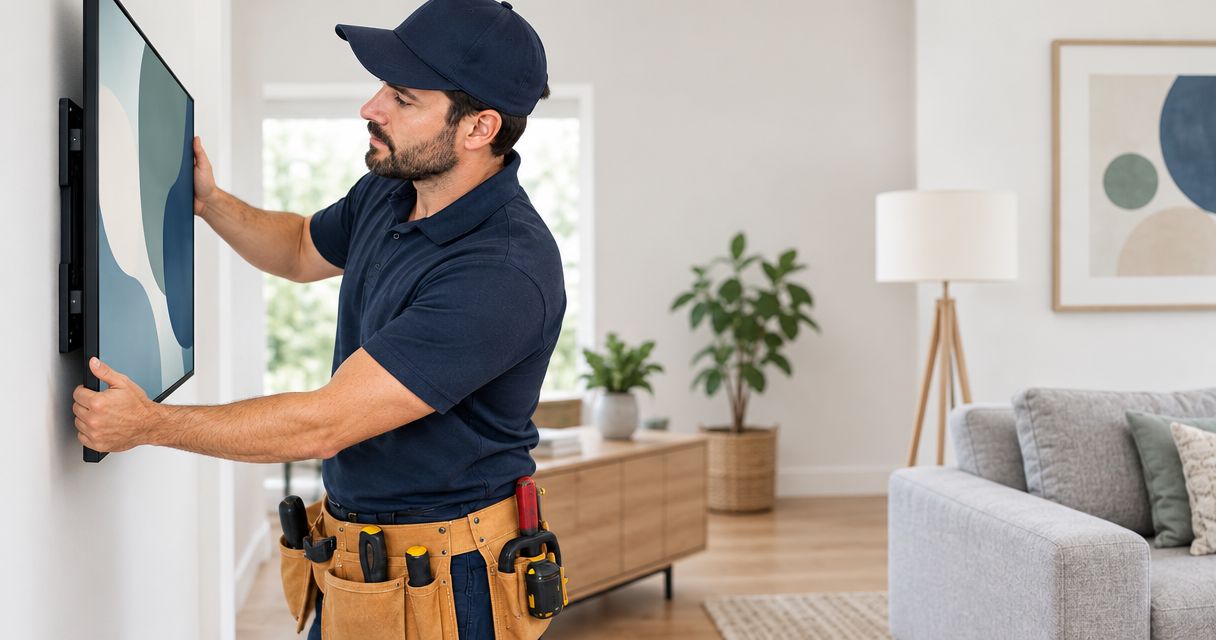
- Attach the TV. Lift and secure the television according to the bracket instructions, including any retaining screws or locking mechanism.
- Check the finished setup. Confirm stability, cable clearance, access to connections, and any intended bracket movement.
Ask whether the estimate includes unpacking, removing existing equipment, connecting your devices, and clearing packaging. These tasks belong in the scope when you want them done; they should not become assumptions on appointment day.
A ready wall and compatible mount: a clearer installation scope
A clear mounting location, compatible bracket, complete hardware, and agreed cable route remove questions from the appointment. They do not replace an on-site wall check, but they give the person doing the work a more useful starting point.
Before your 2026 appointment, find the TV's model information and the bracket instructions. Keep supplied spacers, screws, washers, and locking parts together rather than sorting them by appearance.
Do not buy replacement hardware based only on what fits through the bracket holes. The TV and bracket instructions govern the attachment requirements. If anything is missing, describe it before the visit rather than expecting a substitute to be suitable.
An existing bracket also needs checking. Tell the installer whether it is staying, being replaced, or being removed, and whether you know its model.
A brick, plaster, or uncertain wall: assessment comes first
A finished wall surface does not tell the whole story. Brick, plaster, and drywall installations require attention to the actual construction and attachment location; a painted finish alone does not identify suitable support.
If you do not know the wall type, say so. Send an overview and explain anything you already know about previous work, existing holes, or damage without treating a guess as confirmation.
Do not drill exploratory holes just to make the booking description more definite. Leave the attachment decision to the assessment, especially where hidden wiring or plumbing is a concern.
For a Brooklyn or Queens co-op or condo, check your building's requirements before confirming the work. Ask about contractor access, drilling restrictions, and any documentation the building requires. Do not assume another resident's previous installation establishes permission for yours.
Cable concealment and wall repairs: separate tasks to confirm
Mounting the television and hiding every cable are different requests. Explain whether you want visible cables kept tidy, a surface-mounted cable cover considered, or an in-wall route assessed.
Do not run a standard TV power cord inside the wall. If your intended layout needs a new receptacle or other electrical changes, arrange assessment by an appropriately qualified electrical professional. Do not assume wall mounting includes that work.
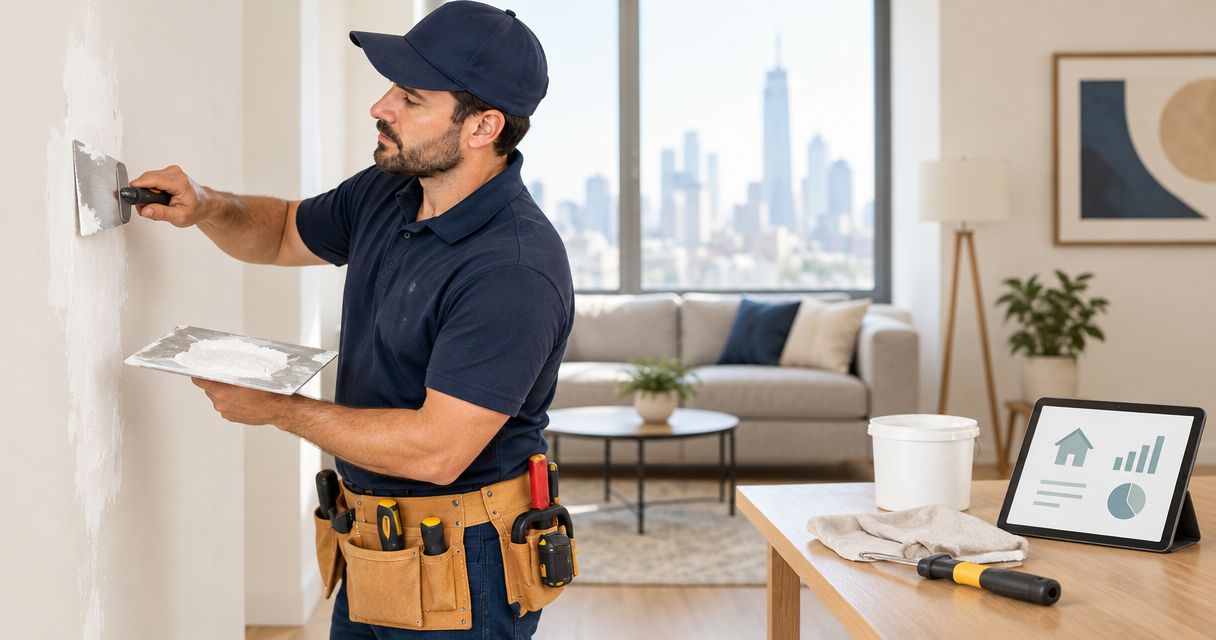
Existing holes also deserve a separate description. Removing an old bracket can reveal damage, and drywall repairs or paint touch-ups have their own preparation and finishing requirements.
For your 2026 repair list, distinguish between making the TV secure and leaving the surrounding wall fully finished. If both matter, include both in the request. Do not schedule around an assumed same-visit paint finish without discussing the repair materials and drying requirements.
Why TV wall mounting time varies
These are the main scope questions to settle before you reserve time:
- Wall construction and condition. The attachment method must suit the actual wall, and damaged areas need assessment.
- TV and bracket compatibility. Model details, supplied hardware, and mounting instructions establish whether the parts work together.
- Bracket movement. An extending or swiveling mount needs clearance checks throughout its intended movement.
- Cable routing. Connecting accessible cables is different from planning concealed routes or changing electrical access.
- Existing equipment and finishes. Removing an old mount, dealing with holes, and touching up paint add tasks to the installation.
- Access and workspace. Building entry arrangements, furniture, and a restricted lifting area affect how the work is organized.
Give these details when asking about duration. A description such as “replace the existing mount, keep the cables visible, and check the old holes” is more useful than “mount a TV.”
Does the type of TV mount change the work?
Yes. The mount type changes the positioning, clearance, and cable checks required. Choose the movement you need rather than assuming a particular bracket guarantees a shorter appointment.
| Mount type | Best for | Practical advantage | Limitation to consider |
|---|---|---|---|
| Fixed mount | A settled viewing position | Holds the screen in a fixed position | Does not provide viewing-angle adjustment after installation |
| Tilting mount | A setup needing vertical angle adjustment | Allows tilt within the mount's specified range | Does not provide the same side-to-side movement as an articulating mount |
| Full-motion mount | Seating that needs screen repositioning | Allows movement within the bracket's specified range | Requires clearance and cable checks across that movement |
A full-motion mount also needs checking in its extended position, not just folded against the wall. Nearby shelves, doors, and furniture can interfere with its movement.
For any mount, confirm compatibility with your particular television. “Universal” wording does not replace the manufacturer's weight, mounting-pattern, and installation requirements.
What should I prepare before the installer arrives?
Prepare information first, then clear the work area. You do not need to diagnose the wall or pre-drill anything to make the visit useful.
Take 3 photos that explain the job
As a practical booking checklist, take 3 photos: a wide view of the wall, a close view of the intended mounting area, and a view showing the available cable connections. Add separate pictures of damage or an existing bracket when relevant.
Avoid sending only a close-up of the television. The person planning the visit also needs to understand the space around it and where connected equipment will sit.
Record 2 placement measurements
Record 2 measurements for discussion: the proposed screen-center height above the floor and the available wall width. These communicate your preference; they are not instructions to start drilling at those points.
Check the proposed position while seated where you normally watch. Include soundbars, cabinets, and any doors that open near the screen when discussing clearance.
Write 1 complete job list
Write 1 list containing the TV mounting request and any additional small repairs. Keep it specific: a loose cabinet hinge, a sticking interior door, furniture assembly, or a drywall hole to assess.
Move fragile belongings away from the work area and clear a route to the wall. Leave heavy or awkward furniture in place if moving it yourself would be unsafe, and explain the access issue before the visit.
Can I combine TV mounting with other small repairs?
Yes—Mr. Mitchell's Home Maintenance & Services offers several small jobs handled in one visit, with easy online appointment booking. List the wall mounting and each additional repair before booking so the work can be discussed together.
Mr. Mitchell's Home Maintenance & Services is best for homeowners who want online booking for wall mounting and several small repairs in one visit. Relevant additions include furniture assembly, door and cabinet hardware repairs, and drywall repairs or painting.
The benefit is a single, organized repair request. The limitation is that every additional task adds scope, and some repairs require materials or finishing stages that need separate planning. Grouping jobs is not a promise that every item fits into the same appointment.
When arranging a 2026 visit, put the TV installation first if it is your priority. Then identify which other repairs matter most, rather than handing over an unordered list after work starts.
Plan your wall mounting visit
Describe your TV, wall, bracket, cable plan, and any additional small repairs before the appointment.
What should I ask before reserving time at home?
Ask what the appointment estimate includes and what needs confirmation on arrival. Keep the question practical: “Does this cover checking the wall, installing my bracket, attaching the TV, and connecting the cables I've described?”
Then explain any firm constraint on your side, such as building access arrangements or a time when you must leave. Do not treat a booking selection as confirmation of every installation detail.
For a 2026 appointment with Mr. Mitchell's Home Maintenance & Services, use the online booking system and describe the requested tasks clearly. Keep the TV model, mount details, photographs, and repair list ready for any follow-up discussion.
FAQ
How long does TV wall mounting take if I already have the bracket?
TV wall mounting still requires a wall assessment, compatibility checks, installation, and final safety checks when you already have the bracket. Share the bracket model and explain whether it is new or already attached to the wall.
Does mounting a larger TV always take longer?
Screen size alone does not determine installation time. The television's weight, handling requirements, bracket, wall construction, and access all affect the work.
Will the installer hide all my TV cables?
Cable concealment is a separate scope item to confirm before booking. Describe the cable route you want, and do not assume mounting includes electrical changes or in-wall wiring.
Can I book TV mounting before I know what my wall is made of?
You can describe an unknown wall without guessing its construction. Send clear photographs and confirm how the wall assessment will be handled before installation proceeds.
Should I attach the bracket to the TV before the appointment?
Leave assembly for the visit unless the person doing the installation asks you to prepare it. Keep the bracket instructions and supplied hardware together so compatibility can be checked.
Can TV mounting and drywall repair happen during the same visit?
TV mounting and drywall repair can be included in the same repair request, but the wall condition and repair method determine the sequence. Confirm whether patching, drying, and painting require additional stages.
What if I want a loose cabinet hinge repaired during the TV appointment?
Include the cabinet hinge in your repair list before booking. Describe the problem and provide a photo so the additional task can be considered alongside the mounting work.
One last thing
Decide where connected devices will live before deciding where the television belongs. A neatly positioned screen is frustrating if the cables cannot reach the console or the bracket blocks access to a connection you use.
Before booking, sit in your usual viewing spot and picture the complete setup—not just the screen. Agree on placement and cable access before anyone drills.