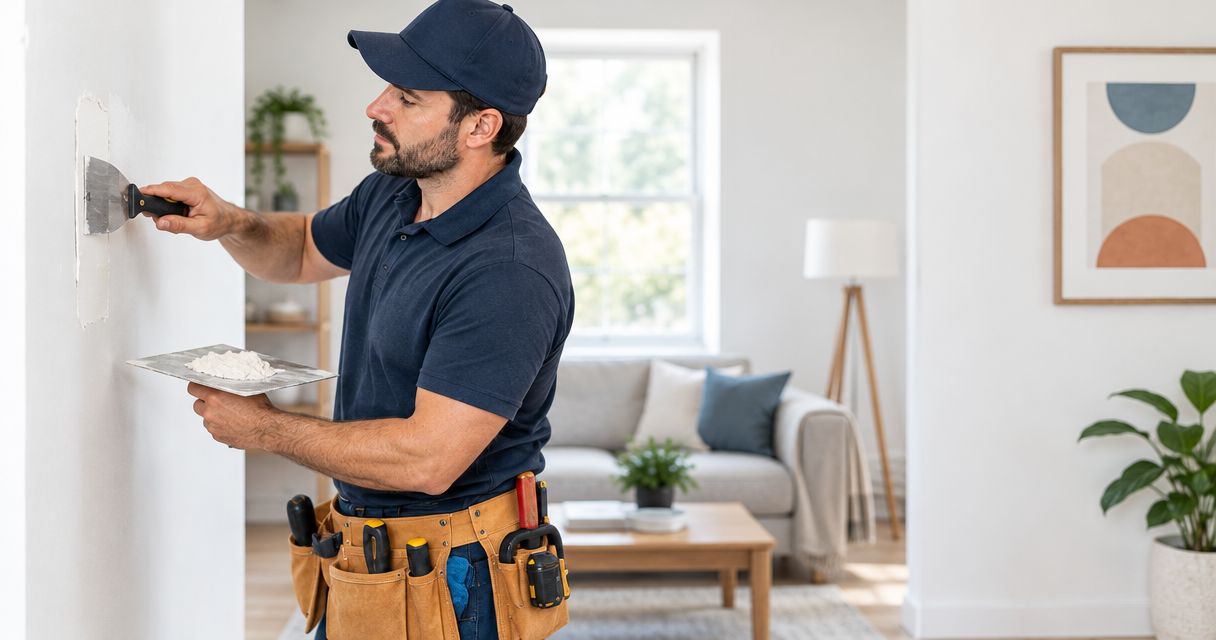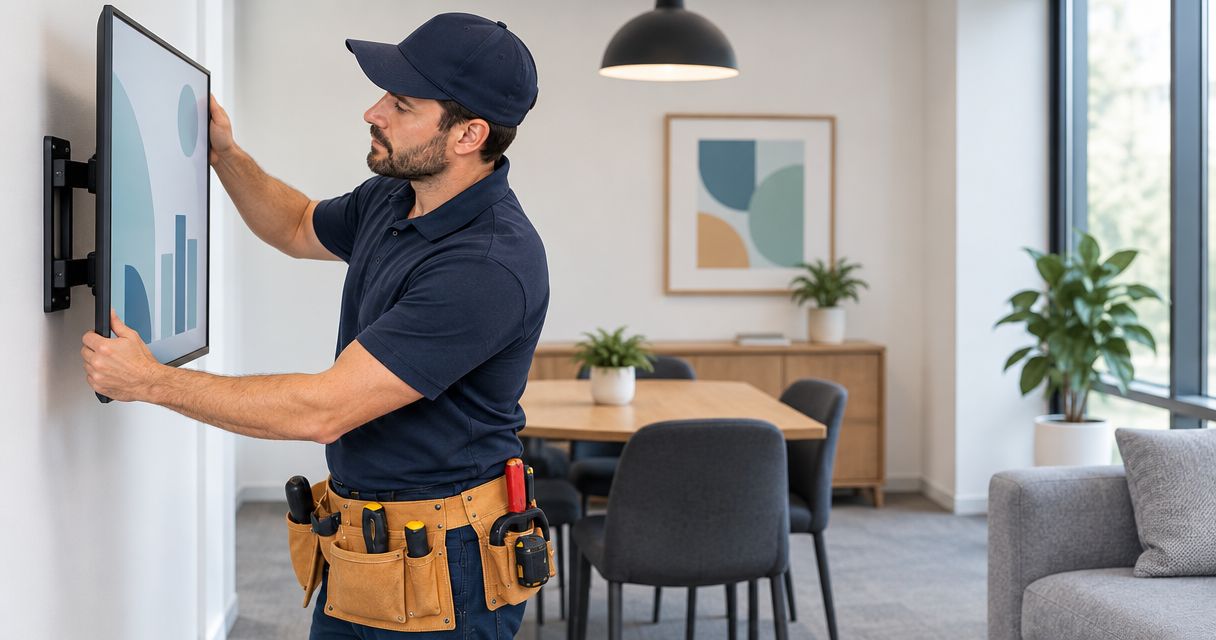
Instead of tracking loose hinges, wall damage, and unfinished assembly in separate reminders, use a home repair checklist before booking to create one clear appointment request. Mr. Mitchell's Home Maintenance & Services offers easy online appointment booking and several small jobs handled in one visit; this guide shows you how to prepare the list, photos, materials questions, and access details.
- Use a home repair checklist before booking to group small repairs by location, preparation needs, and priority.
- Mr. Mitchell's Home Maintenance & Services suits homeowners seeking online booking for several small repair jobs in one visit.
- Include drywall repairs, painting, furniture assembly, wall mounting, and door or cabinet hardware in your repair list.
- Confirm the proposed scope before treating every checklist item as part of one appointment.
Why this matters
A useful repair checklist describes the work, not just the room. A note saying the kitchen needs attention leaves unanswered questions; a note identifying a loose cabinet hinge gives the repair professional something specific to assess.
Mr. Mitchell's Home Maintenance & Services is best for homeowners seeking online booking for several small home repair jobs in one visit. Grouping work creates one coordinated request, but it does not establish that every task fits the same appointment or that grouping reduces the cost.
For your 2026 repair list, separate what needs doing from what needs confirming. That distinction helps you request a realistic visit without overlooking materials, building access, or unfinished preparation.
Before you start
- Gather your list and reference materials. Have room names, photos, furniture instructions, and any existing hardware or paint information ready. Keep a phone or computer available for online booking.
- Check building access and permissions. For a Brooklyn or Queens apartment, ask your building contact about any applicable work rules, entry arrangements, elevator procedures, or approval requirements before choosing an appointment.
- Flag work that depends on another step. A damp wall needs the moisture problem addressed before cosmetic repair. Drywall patching and painting can also involve drying stages, so do not assume both will be finished during one visit.
You do not need to diagnose a repair yourself. Describe what you see and what happens when you use the affected item; leave hidden causes and repair methods for assessment.
Repair list setup
- Create one working document. Title it something recognizable, such as Apartment repairs — 2026. Use a phone note, document, or sheet of paper that you can update without creating competing versions.
- Give each job its own line. Write the room, item, visible problem, and desired result. Replace fix bedroom with bedroom door rubs against the frame when closing.
- Add useful photos. Take 2 photos per issue as a starting point: one showing the surrounding area and one showing the detail. Add another angle when the first images do not explain the problem.
- Record measurements where relevant. Note dimensions in inches for visible wall damage or the intended location of a mounted item. Copy furniture dimensions and mounting information from the manufacturer's materials rather than guessing.
- Mark your priority. Use 3 priority levels: needed first, wanted this visit, and optional. These are planning categories, not promises about the work sequence.
Expected result: You have one list in which each repair can be understood without a separate explanation from memory.
Use a simple line format: location; problem; desired result; photos; materials questions; priority. Keep the original photos together so you can provide them through whatever communication method is offered.
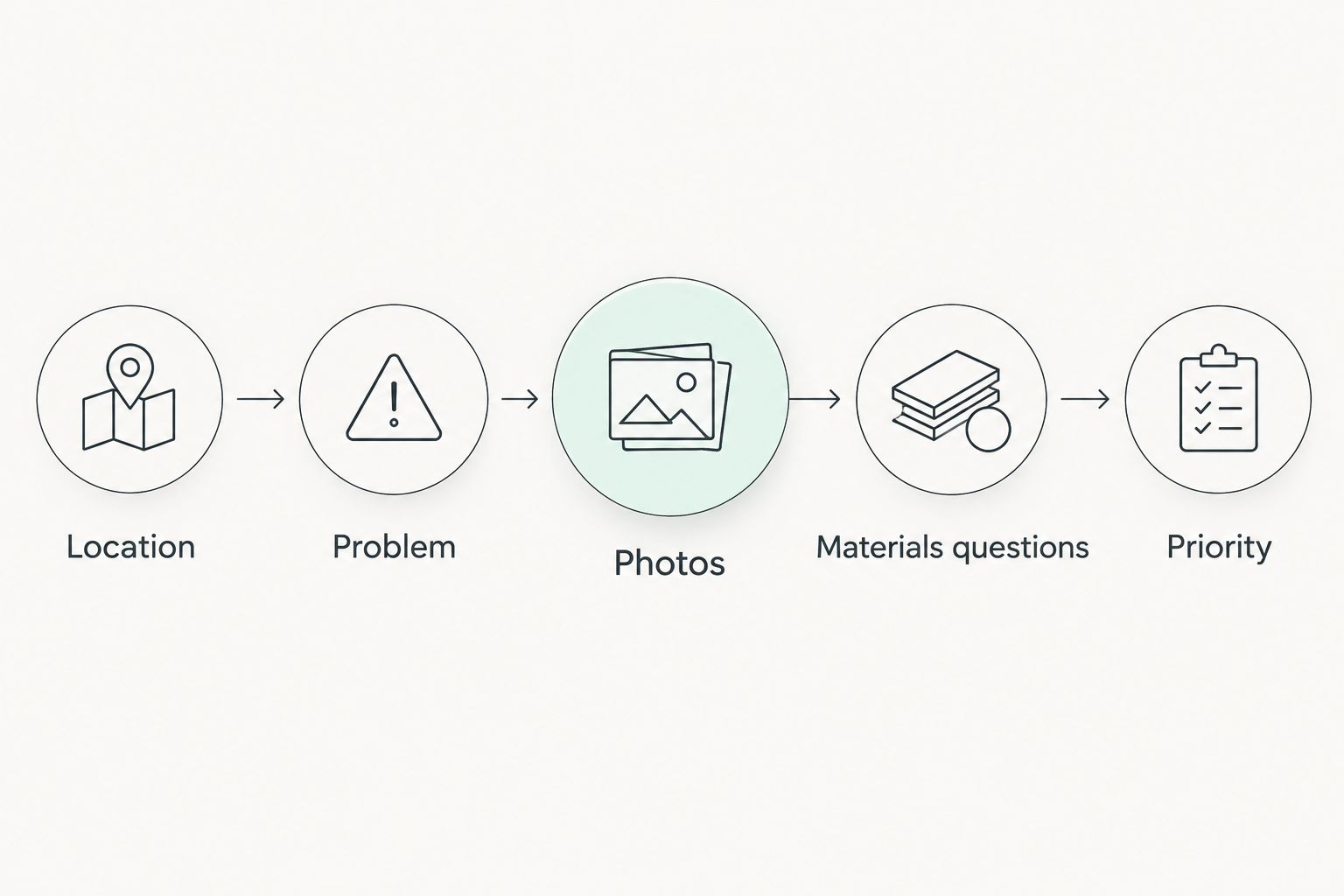
What a useful repair entry looks like
For a cabinet, record which door is affected, whether it hangs unevenly, and whether any visible screws or parts are missing. Photograph the hinge and the closed door. Do not label the problem as a hinge replacement unless that repair has been confirmed.
For wall damage, show the affected area and the surrounding finish. Note any known leak history, recurring staining, or peeling. For furniture assembly, record the item name from its packaging or instructions and whether assembly has already started.
These details explain the task without prescribing an unsuitable fix. They also distinguish a small adjustment from work that needs additional materials or assessment.
Scope and materials plan
- Group related tasks. Put drywall and painting together, furniture assembly and wall mounting together, and door and cabinet hardware together. Keep room locations visible within each group.
- Identify dependencies. Mark wall painting that follows patching, mounting that depends on wall assessment, and assembly that depends on having all the parts.
- List what you already have. Record existing paint labels, replacement hardware, mounting brackets, and assembly instructions. Do not assume those materials are suitable simply because they are on hand.
- Ask what needs confirming. Request clarification about required materials, preparation, finishing stages, and which jobs can share the visit before buying anything specifically for the work.
Expected result: Your request separates ready-to-assess jobs from jobs with unresolved prerequisites.
Compare the preparation each task needs
| Task group | Best for | Advantage of including it | Limit or preparation issue |
|---|---|---|---|
| Drywall repairs and painting | Visible interior wall damage and finish repairs | Keeps the patch and desired finish in the same request | Drying stages and unresolved moisture can prevent same-visit completion |
| Furniture assembly | Unassembled furniture with its instructions and components | Makes the item and intended location clear before work starts | Missing parts or insufficient workspace interrupt assembly |
| Wall mounting | Items with a defined location and mounting information | Lets you discuss placement alongside nearby repairs | Wall construction and suitable fixing methods need assessment |
| Door and cabinet hardware repairs | Loose, sticking, or misaligned hardware | Groups everyday usability problems into one list | Similar symptoms can have different causes; matching parts need confirmation |
For a 2026 repair plan, the important comparison is readiness, not how short each task sounds. A small wall mark with an unresolved moisture source is less ready for cosmetic work than a clearly documented loose cabinet handle.
Use the guide to grouped small-repair visits to organize the request around related jobs. Grouping is a planning method, not a guarantee that every item will be completed together.
Access and workspace preparation
- Write down entry arrangements. Include the apartment location, the appropriate entry contact, and any building instructions relevant to the visit. Share access details privately, not in a publicly accessible document.
- Check work-area access. Identify furniture, stored belongings, or cabinet contents that block the repair. Arrange a clear route without moving heavy items beyond your ability.
- Keep relevant materials together. Put assembly instructions, loose hardware, and packaging information somewhere easy to identify. Keep paint containers closed and labels readable.
- Record building restrictions. Note any applicable work-hour rules or approval steps. Confirm them with the building rather than relying on a neighbor's past appointment.
Expected result: You know what must be ready at home and which access questions need resolving before the visit.
In Brooklyn and Queens, the useful detail is your actual building arrangement, not a general assumption about the neighborhood. If someone else controls entry, agree who will coordinate it and how they will receive the appointment information.
Add an access checked field to your 2026 checklist. Treat an unanswered building question as an open task, not as a detail to remember on appointment day.
Online appointment request
- Open the online booking page. Follow the appointment choices and instructions displayed there. Match the request to the work you actually need rather than assuming a particular service label or booking field exists.
- Provide the repair summary where requested. Lead with the highest-priority task, then name the additional jobs you want considered for the same visit. Keep the detailed checklist ready if there is no suitable place to submit it during booking.
- Distinguish requested work from agreed work. Ask how to share the full list and photos when the booking process does not provide that option. Do not treat an appointment selection as confirmation that every listed repair is included.
- Review the appointment information. Check the details provided and retain the booking record. Resolve scope, materials, and access questions through the communication method supplied.
Expected result: You have a booking record and a clear distinction between the appointment itself and any repair details still awaiting agreement.
A practical summary names the main problem, the additional tasks, and the preparation status. For example, describe a loose kitchen cabinet door, a bedroom wall patch, and furniture assembly, then note that photos and assembly instructions are ready.
Submit a clear request, not an unlimited task list. Mr. Mitchell's Home Maintenance & Services offers online appointment booking for home repairs, but the scope still needs to match the visit.
Book your repair appointment
Prepare your repair list, then use online booking to arrange the appointment.
Update the checklist when another repair appears
Use the same workflow when you notice another small problem before the appointment. Update the existing list rather than starting a separate message thread for every addition.
- Before the scope is agreed: Add the location, photos, and priority, then identify the item as newly added.
- After the scope is agreed: Ask whether the additional work can be included. Do not silently expand the appointment.
- After the visit: Separate completed items from remaining work, then prepare a fresh request for anything unresolved.
For recurring maintenance in 2026, keep a dated copy of the list after each visit. That creates a useful record of what was requested and completed without turning an old checklist into an automatic new booking.
Troubleshooting
The list says only fix the wall
Replace the vague description with the room, visible damage, approximate dimensions, and photos. Include known moisture history. Describe the condition rather than deciding in advance that patching and paint are the complete solution.
The booking process has no photo upload
Keep the photos ready and ask how to provide them using the communication details supplied. Do not assume an upload button or attachment field exists, and do not paste sensitive access information into an unsuitable field.
A required part is missing
Identify the furniture item or hardware and record what is missing. Ask how the missing component affects the planned work before the appointment; do not assume a similar-looking substitute will fit.
Everything is marked urgent
Choose the task that most affects normal use, then separate the remaining jobs into wanted and optional work. If a condition appears unsafe, stop using the affected item and seek appropriate assessment rather than treating it as routine cosmetic maintenance.
The building has not approved access
Contact the person responsible for the building's work arrangements before relying on the appointment plan. Clarify entry, permitted work periods, and any required paperwork instead of assuming the repair professional can resolve building permission on arrival.
Customize your workflow
Make your checklist match the home. A furniture-heavy list needs instructions, component checks, and assembly space; a wall-repair list needs clear photos, finish information, and questions about preparation and drying stages.
For a mixed visit, keep one main priority and label the other tasks as requested additions. That preserves the benefit of grouping small jobs while making it clear which repair matters most if the proposed scope needs adjustment.
FAQ
What should a home repair checklist before booking include?
Include each repair's location, visible problem, desired result, photos, materials questions, and priority. Add building access details and identify tasks that depend on another repair or approval.
Can I book several small repairs for one visit?
Mr. Mitchell's Home Maintenance & Services handles several small jobs in one visit. Submit the full list and confirm which tasks belong in the appointment rather than assuming every item is included.
Do I need to buy materials before booking home repairs?
Confirm material requirements before buying supplies specifically for the visit. List what you already have, including paint information, furniture instructions, and hardware, so suitability can be discussed.
Can drywall repair and painting be completed in one appointment?
Do not assume drywall repair and painting will be completed in one appointment. Patching and finishing can involve drying stages, and any moisture problem needs attention before cosmetic repair.
How do I prepare for furniture assembly and wall mounting?
Keep furniture instructions and components together, clear the intended workspace, and record the desired mounting location. Provide mounting information and ask what wall details need assessment before the visit.
What should Brooklyn and Queens homeowners check with their building?
Check applicable work rules, entry arrangements, elevator procedures, and approval requirements with your building contact. Record the arrangements that apply to your building rather than assuming another property's rules are the same.
What if I discover another repair after booking?
Update your existing checklist and ask whether the additional task can be included. Keep the original agreed work clear until the change is confirmed.
One last thing
Photograph how the item behaves, not just how it looks. For a sticking door, record where it catches; for a loose cabinet door, show its alignment when closed. A useful description of the symptom is more valuable than an unsupported diagnosis.
Keep that habit throughout your 2026 checklist. It gives the repair request a clear starting point while leaving the repair method open to assessment.