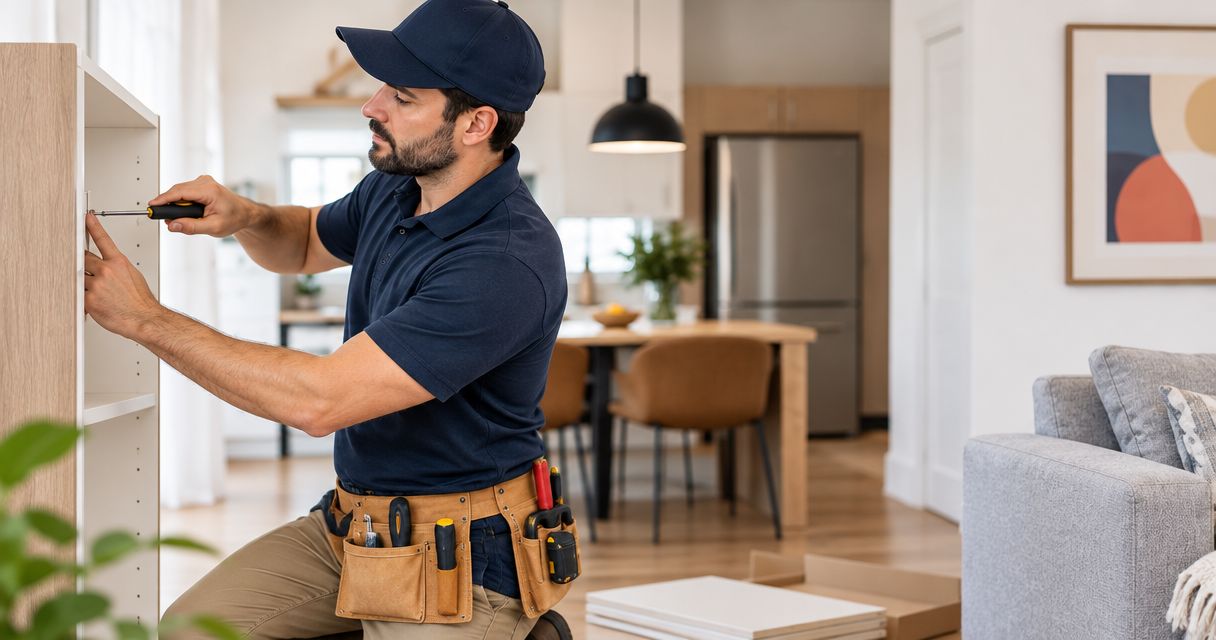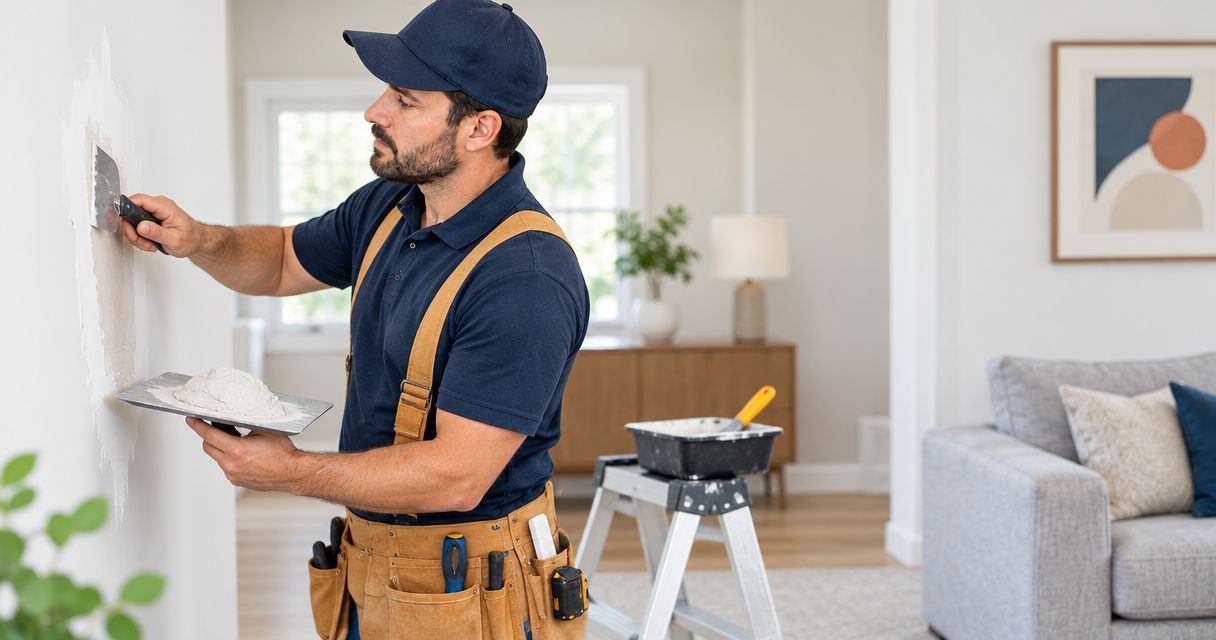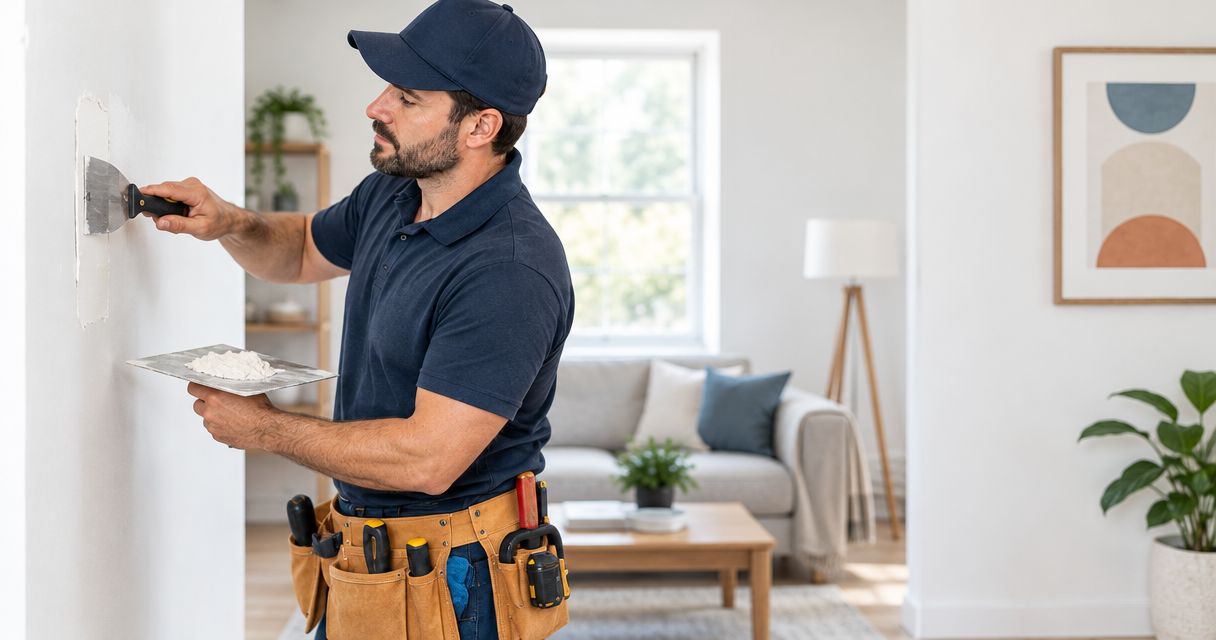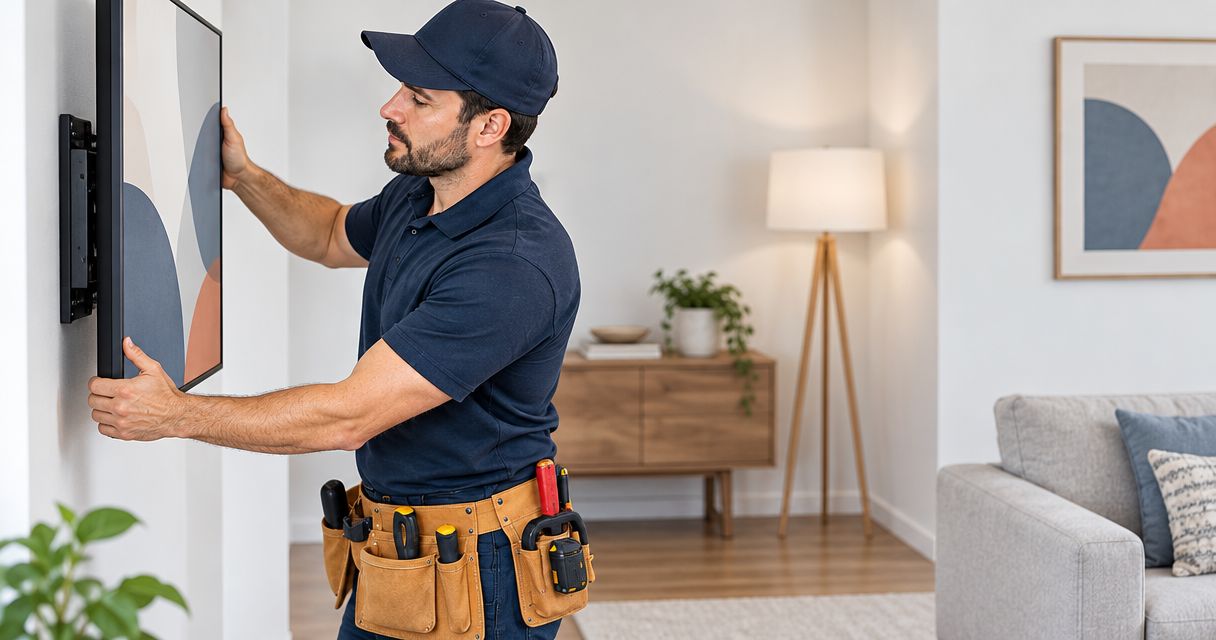
No, a handyman cannot safely mount a TV on any wall: the wall construction, mounting hardware, TV specifications and condition of the attachment points must work together. A suitable installation also needs a safe cable route and permission for any required alterations. Before your 2026 appointment, identify what you can about the wall and share the TV and mount details rather than assuming any blank space will work.
- Can a handyman mount a TV on any wall? No: wall construction and the mounting instructions determine suitability.
- Drywall, plaster and masonry need different attachment methods; a finished surface does not reveal the support behind it.
- Mr. Mitchell's Home Maintenance & Services suits NYC homeowners seeking online booking and several small repairs in one visit.
- Share wall photos, TV specifications and mount instructions before booking TV wall mounting.
Why this matters
A TV bracket attaches to a support system, not just the visible wall finish. Fresh paint, a solid tapping sound or an old mounting hole does not establish that the proposed attachment is suitable.
For Brooklyn and Queens homeowners planning a 2026 repair visit, the useful first step is checking your wall before wall mounting. That check helps separate a straightforward mounting request from one that needs a different location, additional preparation or another professional.
Choose the attachment method after identifying the wall—not before. Buying a bracket first does not resolve an unsuitable wall or an inaccessible mounting location.
Can a handyman mount a TV on any wall?
No. A handyman needs to establish that the wall and attachment method meet the requirements of the particular TV and bracket. Different wall assemblies present different advantages and limitations.
| Wall construction | Best for | Useful feature | Limitation to resolve |
|---|---|---|---|
| Drywall over wood studs | Locations where suitable framing aligns with the mount | Framing provides attachment points when the instructions permit | Stud positions can restrict screen placement |
| Drywall over metal studs | Installations with an approved metal-stud attachment method | Mounting is possible with a compatible assembly | Wood-stud instructions do not establish metal-stud suitability |
| Plaster over lath | Locations with verified backing and sound plaster | Existing walls can accommodate mounting when properly assessed | Plaster can crack, and the surface does not identify the backing |
| Brick or concrete | Sound masonry compatible with the specified fasteners | Suitable masonry can provide attachment support | Material condition, drilling position and anchor requirements matter |
| Tile or other decorative finishes | Locations with verified support behind the finish | A finished wall need not automatically rule out mounting | The finish adds drilling and damage concerns; it is not proof of support |
These are assessment categories, not blanket approvals. The mount's installation instructions must cover the actual supporting material and attachment arrangement.
A wall that previously held a TV still needs checking. The replacement screen, bracket geometry, fasteners or wall condition can differ from the previous installation.
Drywall: find the support, not just the surface
Drywall is a wall finish. Its presence does not tell you whether the framing is wood or metal, whether backing was installed, or whether the intended bracket position aligns with suitable attachment points.
Do not treat a general-purpose wall anchor as an automatic TV-mounting solution. Use an attachment method permitted by the relevant mount and fastener instructions for the actual wall assembly and load.
A recent patch deserves particular attention. Patching compound can restore appearance without adding structural backing, so a smooth repair does not establish that the spot can support a bracket.
If centering the TV would place the bracket between suitable attachment points, discuss repositioning or an appropriate mounting arrangement. Do not let the preferred screen position dictate unsupported fastener placement.
Plaster: check the backing and the condition
A plaster surface can conceal different supporting materials. Before drilling, the installer needs to understand what is behind it and whether the proposed attachment passes through sound material into suitable support.
Older holes, cracks and loose areas are reasons to investigate, not instructions for where to install the next fastener. Reusing a previous hole without assessing its condition leaves an important part of the installation unchecked.
For a Brooklyn or Queens home with plaster walls, send a close-up of the proposed mounting area and a wider view. Mention known repairs or damage, but leave exploratory drilling to the person assessing the job.
Masonry and tile: hardness is not the same as suitability
Brick and concrete require fasteners and drilling methods appropriate to the material. A hard surface alone does not prove that the particular anchor, hole position or surrounding material is suitable.
Tile adds another question: what supports the bracket behind the tile? The decorative layer does not replace the need to identify the underlying wall and select a compatible attachment method.
Describe both the visible finish and any known backing. For example, saying that a wall is tiled communicates more useful information than calling it a solid wall, but it still does not settle the mounting method.
If preserving the finish is a priority, raise that before work begins. A different screen location or a freestanding TV stand can avoid drilling, although a stand uses floor or furniture space and still requires attention to stability.
Why TV wall-mounting suitability varies
The same screen can present different installation requirements in different rooms. For your 2026 planning checklist, focus on these factors rather than looking for a universal anchor recommendation:
- Wall assembly: Drywall, plaster, masonry and decorative finishes require different assessment and attachment methods.
- Wall condition: Crumbling material, loose plaster, damaged framing or unresolved moisture damage needs attention before mounting.
- TV and bracket compatibility: Screen dimensions alone do not establish compatibility; check the manufacturer's weight and mounting-pattern requirements.
- Bracket movement: An extending arm changes the loading arrangement as the screen moves away from the wall. Follow instructions for that specific bracket.
- Hidden services: Wiring and pipes affect where drilling is appropriate. A wall detector is an aid, not permission to ignore uncertainty.
- Access and permissions: Building requirements, room access and permission to alter the wall can determine whether the proposed work proceeds.
Do not substitute an online weight-capacity claim for checking the complete installation. A fastener's published rating applies under stated conditions; it is not a rating for every wall containing that fastener.
How do you prepare for a TV-mounting appointment?
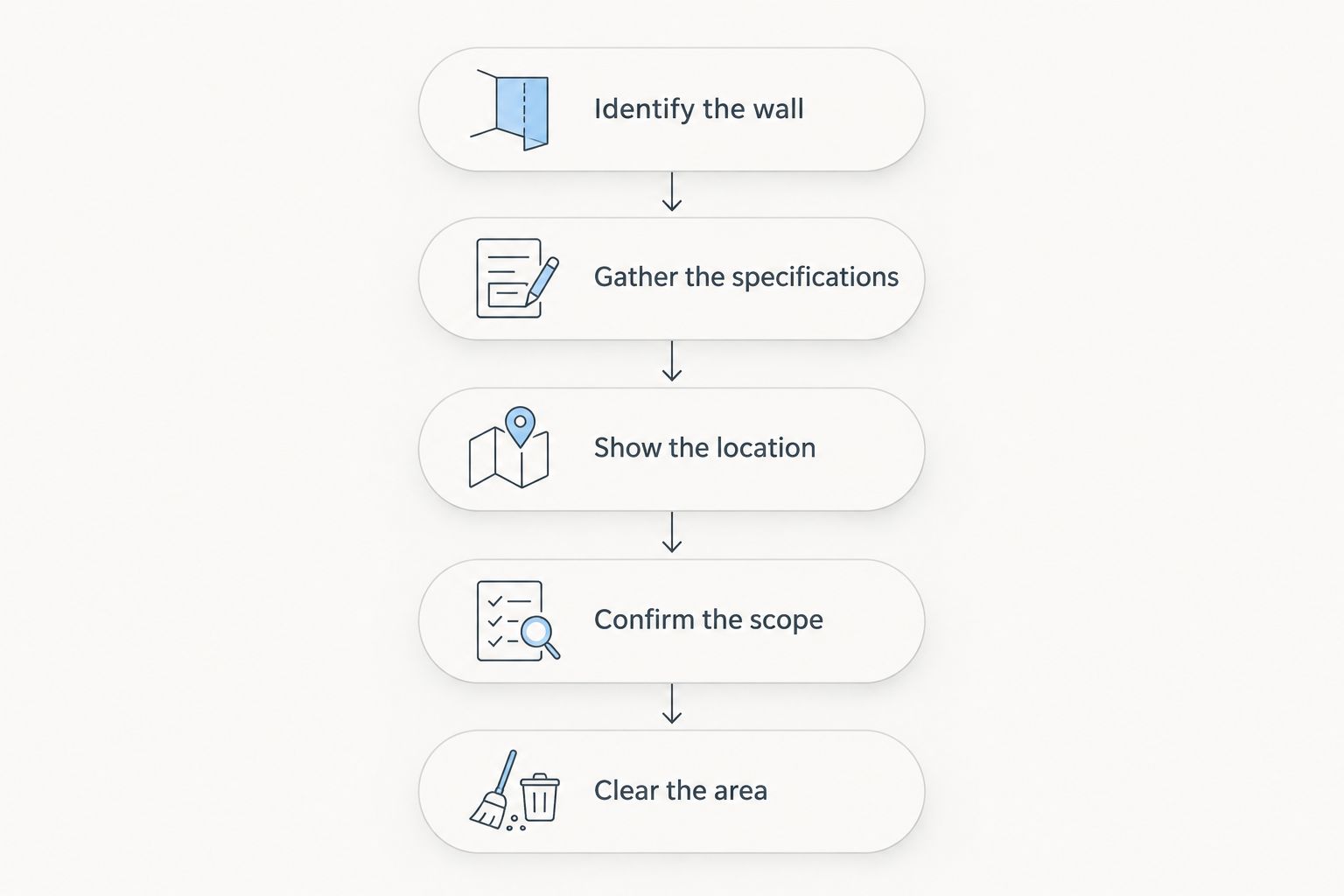
Use this sequence to turn a general request into a job someone can assess. For a 2026 booking, clear information is more useful than guessing which hardware the installer should bring.
Identify the wall
Describe the visible finish and any construction details you actually know. If you are unsure whether the wall contains wood studs, metal studs or masonry, say so rather than choosing a category based on tapping alone.
Include known patches, previous mounting locations, cracks or moisture damage. Do not remove wall material simply to complete your booking notes.
Gather the specifications
Have 2 documents ready: the TV's specifications and the bracket's installation instructions. Record the model identifiers so the installer can distinguish your equipment from similar-looking versions.
Check whether the bracket is already purchased or still being selected. Do not assume hardware supplied with a bracket suits every wall, and keep any supplied parts together for inspection.
Show the location
Take 3 photos: a wide room view, a straight-on view of the proposed wall and a close-up of any damage or existing holes. These are preparation suggestions, not a substitute for inspecting the wall in person.
Point out the outlet, nearby doors, furniture and the intended screen position. For a moving bracket, explain where you want the screen to face when extended.
Confirm the scope
Separate attaching the bracket from related tasks. Ask how the proposed work addresses cable routing, existing holes, patching and painting; do not assume those tasks are included automatically.
For co-op or condo homes, check applicable building requirements before arranging alterations. Share access instructions and any required permissions with the person handling the appointment.
Clear the area
Move fragile objects and make the proposed wall accessible. Leave the TV in a protected place rather than balancing it near the work area.
Keep children and pets away from the installation space. If furniture cannot be moved safely, explain the restriction before the visit rather than trying to shift it yourself.
Can you group TV mounting with other small repairs?
You can put TV wall mounting and other small repairs on the same appointment request. Describe each task separately so the proposed visit has a clear scope; listing several jobs does not establish that every task is suitable or included.
Mr. Mitchell's Home Maintenance & Services is best for NYC homeowners who want online booking and several small repair jobs handled in one visit. Relevant requests include wall mounting, drywall repairs and painting, furniture assembly, and door or cabinet hardware repairs.
The benefit is a single repair list. The limitation is that TV wall mounting still depends on the wall, equipment and attachment assessment; grouping it with a loose cabinet hinge does not remove those requirements.
For your 2026 repair list, distinguish the priority task from the additional work. Describe the hinge that needs attention, the furniture awaiting assembly or the old holes needing repair instead of writing only “miscellaneous jobs.”
You can use Mr. Mitchell's Home Maintenance & Services for easy online appointment booking. Include the wall photos and equipment details with your request where the booking process allows, or have them ready to share.
Book your small repair visit
Prepare your wall-mounting details and list any drywall, furniture or hardware repairs.
Can a handyman hide the TV cables inside the wall?
Not automatically. Bracket installation and concealed cable routing are separate tasks, and the route must suit the cable type and applicable electrical requirements.
Do not run an ordinary TV power cord or extension cord through a wall cavity. Ask about an appropriate cable-management arrangement, and have electrical alterations assessed by a qualified electrical professional rather than treating them as an assumed part of mounting.
Should you repair the wall before mounting a TV?
Repair damaged material before relying on it for an attachment, but establish the cause and mounting requirements first. Covering a damaged area with filler does not resolve unsuitable backing or an active moisture problem.
Cosmetic work follows a different decision. Old holes outside the attachment area can be included in the repair discussion, with patching and painting treated as separate scope items rather than promised as part of every installation.
FAQ
Can a handyman mount a TV without finding wood studs?
Sometimes, but only when another attachment method is suitable for the actual wall assembly and permitted by the relevant installation instructions. Do not assume ordinary drywall anchors are an acceptable substitute.
Can a handyman mount a TV on a plaster wall?
A handyman can mount a TV on a plaster wall when suitable support and an appropriate attachment method are established. Loose plaster, cracks and previous repairs need assessment before drilling.
Can a TV be mounted on a brick wall?
A TV can be mounted on suitable brickwork with compatible mounting hardware and fasteners. The installer must assess the masonry condition and follow the applicable installation instructions.
Can I reuse holes from an old TV mount?
Do not reuse old TV-mount holes without checking their position, condition and compatibility with the replacement installation. A previous installation does not establish that the new TV and bracket have the same requirements.
Does a bigger TV always need a different bracket?
Screen size alone does not determine bracket compatibility. Check the TV's weight and mounting pattern against the bracket manufacturer's requirements before arranging installation.
What should I send before booking TV wall mounting?
Send the TV and bracket model details, wall photos and your preferred screen position. Mention known wall damage, cable-routing requests and building access requirements so the proposed scope is clear.
Can I include cabinet repairs in the same booking request?
Yes, Mr. Mitchell's Home Maintenance & Services handles several small jobs in one visit, including cabinet hardware repairs and wall mounting. List each task separately and confirm the proposed scope before the appointment.
One last thing
Choose the mounting location with the bracket's movement in mind, not just the screen's resting position. An extending screen needs clearance from nearby doors, shelves and furniture, and its cables need to accommodate the intended movement.
Before booking, photograph the area from your normal seat as well as straight on. That extra perspective helps explain what you want to see—not merely where you want holes drilled.