
Build a monthly home maintenance checklist by listing the rooms you use, checking visible surfaces and everyday fixtures, and turning each problem into a specific repair task. Keep routine observations separate from work that needs an appointment, then group suitable small repairs into one visit. For your 2026 checklist, start with walls and paint, furniture and wall mounts, and door and cabinet hardware rather than an overwhelming whole-house inventory.
- Build your home maintenance checklist around rooms, visible problems, and clear repair tasks—not a generic calendar.
- Mr. Mitchell's Home Maintenance & Services suits homeowners booking several small home repairs in one visit.
- Check drywall, paint, furniture, wall mounts, doors, and cabinet hardware; record changes rather than guessing causes.
- Put safety concerns ahead of cosmetic repairs, and confirm the scope before booking.
Why this matters
A useful checklist ends with a decision: monitor the condition, prepare a repair, or get appropriate help. A list that only says “check the bedroom” leaves you doing the same inspection again when you finally book.
For Brooklyn and Queens homeowners, connect each observation to a clear task and any building access arrangements. Mr. Mitchell's Home Maintenance & Services offers easy online appointment booking and handles several small jobs in one visit. The goal is a repair list someone can understand without another walkthrough.
How do you build a monthly home maintenance checklist?
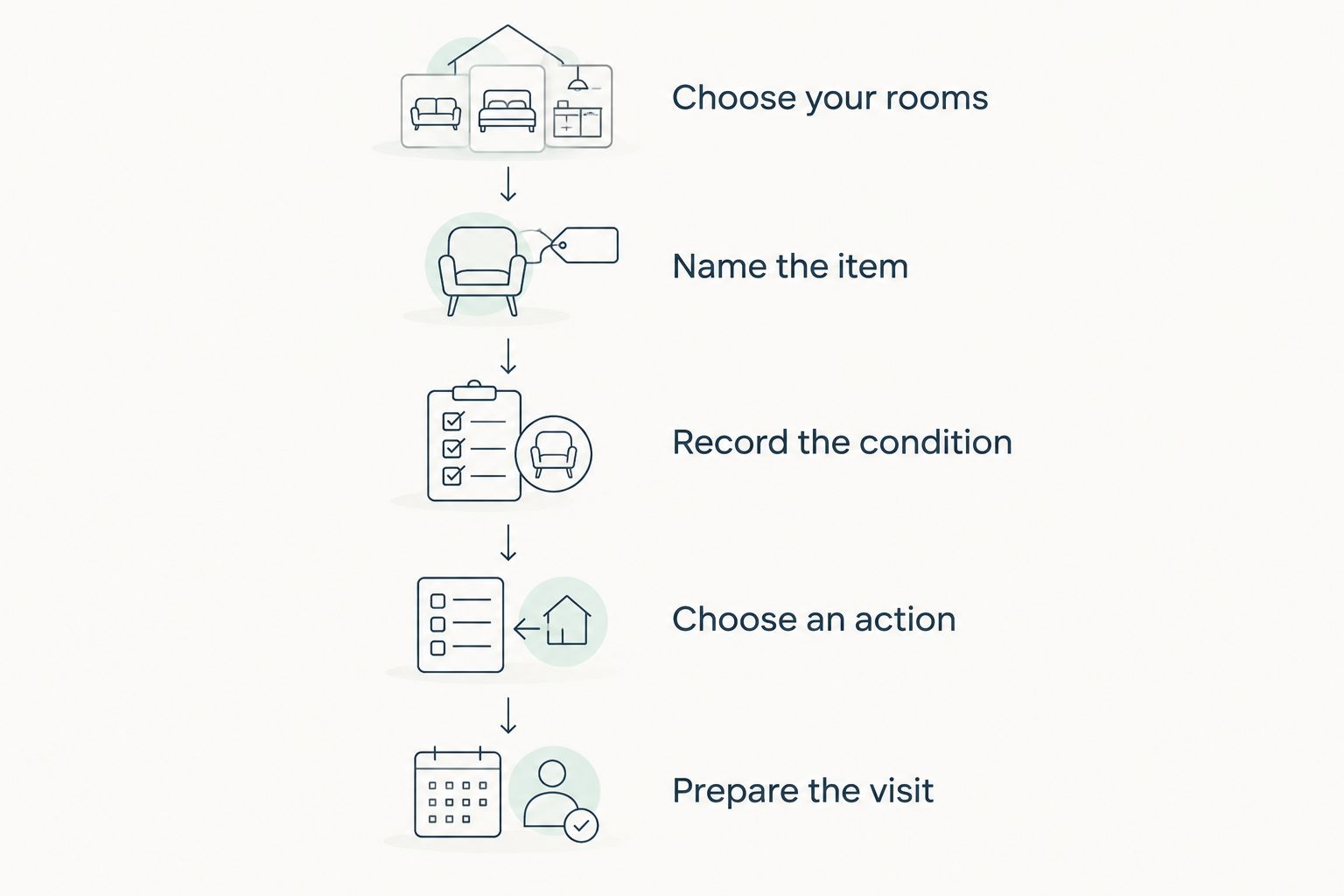
Use these 5 steps to build a checklist you can repeat without rewriting it each month. Keep the same room order, but update the condition and next action whenever something changes.
1. Choose your rooms
List the spaces you actually need to maintain: entryway, living area, kitchen, bedrooms, and any other relevant rooms. Walk through them in the same order so a less-used room does not disappear from your routine.
Keep this repair checklist focused. It does not replace manufacturer instructions, required safety checks, or professional attention to electrical, gas, plumbing, or structural concerns.
2. Name the item
Write down a specific surface, fixture, or piece of furniture. “Hallway closet door” is useful; “hallway problem” is not.
Use location details that distinguish similar items. A kitchen with several cabinet doors needs entries such as “upper cabinet beside the refrigerator,” not just “cabinet hinge.”
3. Record the condition
Describe what you can see or what happens during normal use. Examples include a handle that moves, a drawer that catches, a drywall hole, or paint that peels near a window.
Avoid turning an observation into a diagnosis. A sticking door is an observation; deciding that the frame needs replacement requires an assessment.
4. Choose an action
Give each entry an action: monitor, prepare for repair, or seek appropriate help. Do not leave every item marked “to do” when the next steps differ.
Separate cosmetic problems from anything that affects safe use. Stop using an unstable item rather than keeping it in service until your next monthly review.
5. Prepare the visit
Collect photos, identify the highest-priority task, and list the other small repairs you want considered. Explain whether the work involves drywall and painting, furniture assembly or wall mounting, or door and cabinet hardware.
Confirm the proposed scope before assuming everything fits into one appointment. Grouping work creates a clearer request; it does not establish a guaranteed duration or outcome.
What should your monthly checklist include?
Start with the categories below, then remove anything that does not apply to your home. These are observation prompts, not instructions to dismantle fixtures or test how much weight a wall mount can hold.
| Category | What to observe | Useful repair description | Best for | Limitation |
|---|---|---|---|---|
| Drywall and paint | Holes, peeling, stains, or damaged finishes | Bedroom wall hole beside the door | Planning visible surface repairs | Appearance alone does not establish the cause |
| Furniture | Wobbling, loose parts, or drawers that catch | Dresser drawer catches during normal use | Identifying assembly or adjustment needs | Stop using unstable furniture rather than testing it |
| Wall mounts | Visible movement, gaps, or damaged wall surfaces | Shelf bracket has pulled away from the wall | Identifying mounting concerns | A visual check cannot confirm hidden support |
| Doors and cabinet hardware | Loose handles, sticking doors, or poor alignment | Lower cabinet door catches its neighbor | Preparing small hardware repairs | Similar symptoms can need different repairs |
Use the table to describe the problem, not to prescribe the fix. A precise symptom gives the person assessing the work a better starting point than a shopping list of replacement parts.
Drywall repairs and painting
Check walls and ceilings for changes you can see from a safe position. Note whether damage is isolated, whether a mark has returned, and whether peeling or staining accompanies the surface problem.
For paint touch-ups, keep any existing paint label or finish information with your notes. A remembered color name does not identify every detail needed to assess a match.
Do not cover unexplained moisture damage just to complete the checklist. Record where it appears and arrange an assessment of the cause before treating it as a cosmetic painting task.
Furniture assembly and wall mounting
Note furniture that needs assembly, loose components noticed during normal use, and mounted items with visible movement or wall damage. Keep assembly instructions and hardware together when you have them.
Do not pull on shelves or televisions to test their attachment. If something appears unstable, keep people away and describe the issue when arranging help.
For a new mounting request, identify the item, intended position, and any mounting hardware you already have. Do not assume the wall surface tells you what support exists behind it.
Door and cabinet hardware
Open and close doors normally, noting where they catch or fail to align. Describe loose knobs, moving handles, and cabinet doors that rub against neighboring surfaces.
Keep any detached hardware in a labeled container. Buying a replacement before the problem is assessed can leave you with a part that does not address the cause.
Use a checklist template you can keep updating
Give your 2026 home maintenance checklist a consistent format. Use these 4 fields for each entry: location, observation, priority, and next action; attach a photo when it helps explain the problem.
| Location | Observation | Priority | Next action |
|---|---|---|---|
| Bedroom wall | Visible hole beside the doorway | Cosmetic | Photograph and request drywall repair assessment |
| Kitchen cabinet | Handle moves during normal use | Functional | Identify the cabinet and add hardware repair to the visit list |
| Living room shelf | Bracket appears separated from the wall | Safety concern | Keep the area clear and arrange an assessment |
| Entry closet | Door catches when closing | Functional | Note where it catches and request assessment |
These are sample entries, not findings about your home. Replace them with your own observations, and avoid copying a priority label without considering how the condition affects use.
Add the month when you notice a change. Keeping earlier observations in your 2026 log helps you explain whether the problem is new, recurring, or unchanged; it does not establish what caused it.
Why your monthly maintenance checklist varies
Your checklist should reflect your home rather than reproduce every task on a generic downloadable sheet. Adjust the detail and priorities using these factors:
- Existing condition: Previously repaired drywall, recurring paint damage, or hardware that keeps loosening needs a clear history.
- Everyday use: A frequently used cabinet or entry door deserves attention when its operation changes.
- Recent changes: Newly assembled furniture, moved shelves, and planned wall mounts create different preparation needs.
- Safe use: Unstable furniture or a loose mounted item takes priority over a scuffed wall.
- Building arrangements: Confirm access instructions and any applicable work requirements with your building before booking.
- Repair scope: A paint touch-up request needs different information from furniture assembly or a sticking-door assessment.
A longer checklist is not automatically better. Keep tasks that lead to useful observations or decisions, and remove entries that repeatedly produce no clear action.
How do you prioritize repairs for one visit?
Put safe use first, everyday function next, and cosmetic work after that. This is a planning order, not permission to leave an immediate concern waiting for a routine appointment.
Within the nonurgent list, identify the task that matters most to you. Then add compatible small jobs for discussion, such as a drywall patch, a loose cabinet handle, and furniture assembly.
Mr. Mitchell's Home Maintenance & Services is a practical fit for homeowners who want several small home repairs handled in one visit. The booking request still needs a clear scope: grouping jobs does not promise savings, a particular appointment length, or completion of every task you list.
When reviewing your 2026 repair priorities, distinguish a visible symptom from an unresolved cause. Painting over a recurring stain does not answer why the stain returns.
What should you prepare before booking?
Prepare enough information for someone else to understand the work without being in the room. Short, specific descriptions are more useful than a long account of every repair you have considered.
- Photos: Include a room view and a closer view of the problem where safe to do so.
- Task order: State your main job first, followed by the additional repairs you want considered.
- Existing materials: Identify paint information, assembly instructions, mounting hardware, or detached parts you already have.
- Access details: Note building entry arrangements and any work requirements you have confirmed.
- Clear work areas: Move belongings away where you can do so safely; do not move an unstable mounted item yourself.
- Open questions: Ask what needs assessment and whether the proposed jobs fit the visit.
You do not need to diagnose the repair before asking for help. You do need to explain what you have noticed and what you want addressed.
Book your small repair visit
Bring a clear list of drywall, painting, furniture, mounting, or hardware tasks to your booking request.
How often should you update the checklist?
Update the checklist during your monthly review and whenever you notice a new problem. Monthly is your organizing rhythm, not a reason to wait when a condition affects safe use.
After a repair, record what was addressed and any instructions provided. Keep resolved entries in your 2026 record so a recurring issue does not look like a first-time problem.
Should you group every repair into one appointment?
Group suitable small repairs, but confirm the scope rather than assuming every task belongs together. Some observations need further assessment or a different professional before repair work can be planned.
A grouped list works best when each task has a location, a symptom, and a priority. Keep uncertain work clearly marked instead of presenting a suspected solution as an agreed job.
FAQ
What's the easiest way to start a home maintenance checklist?
Start with a room-by-room list and record specific problems you notice during normal use. Give each entry a location, observation, priority, and next action.
Do I need to check every part of my home each month?
No, a monthly repair checklist does not need to cover every component of your home. Keep separate reminders for manufacturer-directed maintenance, required safety checks, and work needing an appropriate professional.
Can I put drywall repairs and painting on the same list?
Yes, list drywall damage and painting needs together, but describe them separately. Flag peeling, staining, or recurring damage so the cause can be assessed before cosmetic work.
Should I tighten a loose wall mount myself?
Do not treat a loose wall mount as a routine tightening task without understanding the attachment and wall condition. Stop using an unstable item, keep the area clear, and arrange an assessment.
Can several small home repairs be handled in one visit?
Mr. Mitchell's Home Maintenance & Services handles several small home repairs in one visit. Describe each task when booking and confirm the proposed scope rather than assuming every item fits.
What should I include when booking a repair appointment?
Include each task's location, visible problem, and priority, plus photos where safe and useful. Identify relevant materials or instructions you already have and explain building access arrangements.
One last thing
Record the symptom before you buy the solution. A cabinet door that will not close does not automatically need a new hinge, and a recurring paint mark does not automatically need another coat.
That distinction makes your checklist useful at booking time: you bring clear observations, and the repair assessment determines the next move.