
A NYC homeowner’s home maintenance checklist is a room-by-room inspection of painted walls and ceilings aimed at finding damage, separating cosmetic fixes from underlying problems, and preparing a clear repair list. Use this 2026 guide to decide what to clean, document, or book through Mr. Mitchell's Home Maintenance & Services for drywall repairs, painting, and several small jobs in one visit.
- Use a home maintenance checklist to separate surface scuffs, drywall damage, peeling paint, and signs of moisture.
- Mr. Mitchell's Home Maintenance & Services offers online booking for drywall repairs, painting, and grouped small repair visits.
- Find the cause of dampness or recurring peeling before arranging cosmetic repairs.
- Prepare room photos, finish details, and a prioritized repair list before booking.
Why wall and ceiling maintenance matters for NYC homeowners
Paint can hide the difference between a surface mark and damaged material underneath. Your checklist should record what you see, where it appears, and whether it has changed—not simply mark every problem as needing paint.
For Brooklyn and Queens homeowners planning repairs, the useful outcome is a visit-ready list. Include wall damage alongside a loose cabinet hinge, sticking latch, or furniture assembly task when those jobs also need attention. Grouping jobs helps you explain the full scope; it does not establish a lower price or guarantee that every task fits the appointment.
Mr. Mitchell's Home Maintenance & Services is best for homeowners seeking online booking for drywall repairs, painting, and several small jobs in one visit. A cosmetic repair appointment is not a substitute for investigating an active leak, unstable ceiling, or suspected hazardous material.
Make your 2026 checklist a record of conditions rather than a calendar of automatic repainting. Sound paint does not need replacement simply because another season has arrived.
Build your wall and ceiling repair checklist
1. Inspect each room before choosing a repair
Start with a free visual check from the floor. Walk around the room in daylight, then use a portable light to see areas hidden by shadows. Do not climb on furniture or reach over a stairwell to inspect a ceiling.
Look at ceiling corners, wall joints, door frames, and areas behind movable furniture. Describe the actual symptom: a gray scuff, flaking paint, a dent, an open seam, or a stain. These descriptions are more useful than writing that a room looks tired.
Create 4 checklist groups for your 2026 repair plan: surface marks, damaged drywall, loose paint, and signs of moisture. These are organizing categories, not diagnoses; one spot can belong in more than one group.
- Surface marks: Note scuffs, fingerprints, and marks near switches or furniture.
- Damaged drywall: Record holes, dents, damaged corners, and open seams.
- Loose paint: Identify peeling, bubbles, or edges lifting from the surface.
- Signs of moisture: Record damp patches, staining, softness, or a musty smell.
2. Document changes and separate warning signs
Use your phone before cleaning or moving anything. Take 2 photos of each problem: a room-wide view that shows its location and a close-up that shows the surface. Add the date and a short description to your checklist.
A photo does not establish the cause. A ceiling stain can remain after an old problem, while a fresh or expanding stain needs attention to its source. Do not book repainting as the whole solution when the area is still damp.
Stop cosmetic work around a sagging ceiling, wet electrical fixture, or visibly unstable surface. Keep people clear and contact the appropriate building representative or qualified professional. Do not press a bulging ceiling to test its strength.
- Photograph the room and the affected surface before touching it.
- Note whether the area feels damp without probing damaged material.
- Record whether a crack, stain, or blister has changed since your last photo.
- Keep children, pets, and furniture away from loose overhead material.
- Report active water intrusion before arranging patching or painting.
3. Match the repair to the surface problem
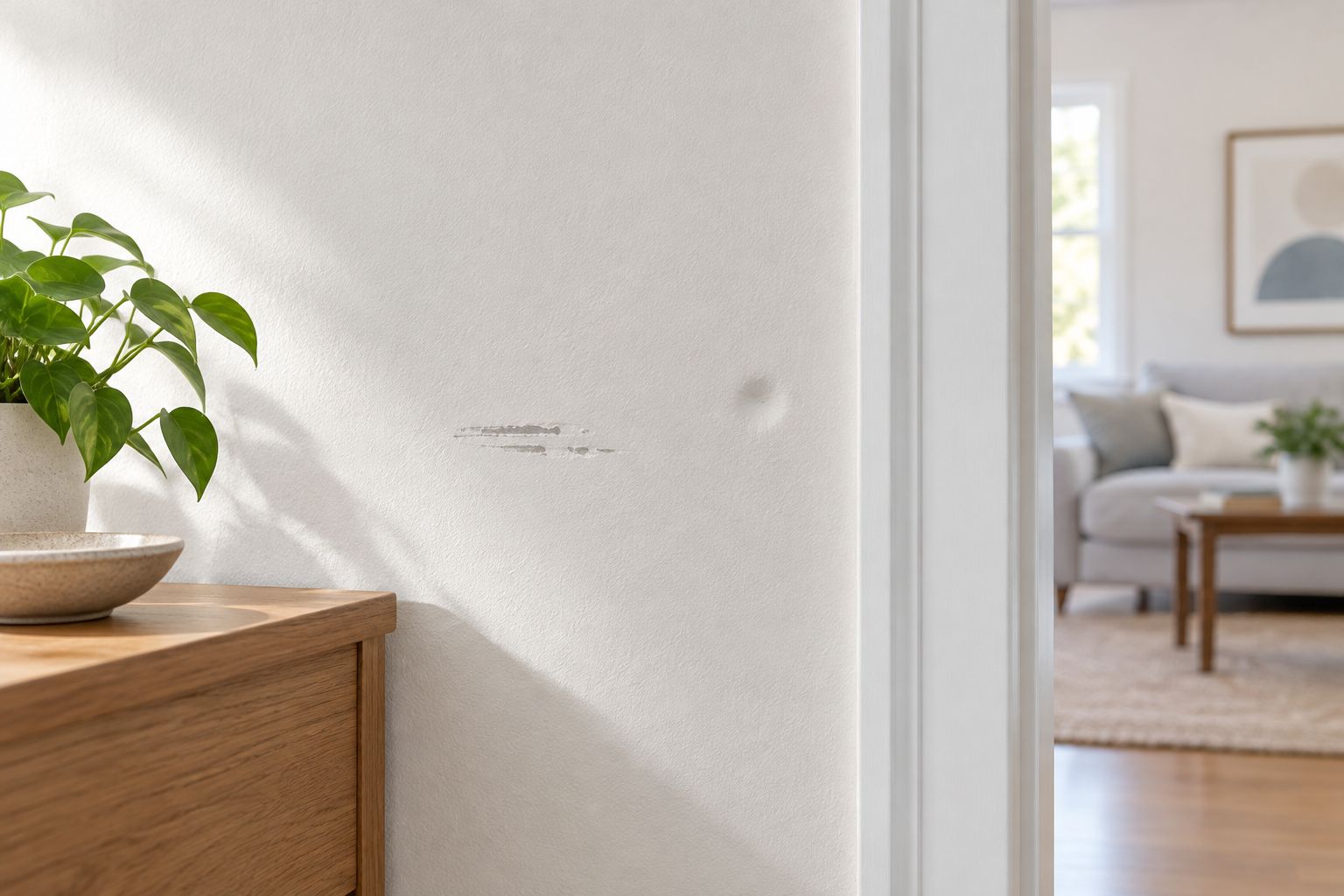
For an ordinary mark on intact paint, start with the paint manufacturer’s cleaning instructions. Test the suggested method in a hidden area before cleaning a visible patch. Aggressive scrubbing can change the appearance of the finish.
A dent or hole needs a different plan from a dirty wall. Ask whether the work includes patching, surface preparation, priming where needed, and painting. Painting over an unrepaired dent does not flatten it.
If paint keeps lifting, read the guide to peeling interior paint and finding the cause. Loose paint needs an explanation, not just another coat. Do not sand, scrape, or drill a suspect older coating until potential lead hazards have been assessed appropriately.
Once you have separated the problems, Mr. Mitchell's Home Maintenance & Services provides online appointment booking for the confirmed drywall repair and painting work. Describe uncertain conditions before treating them as routine cosmetic repairs.
- Clean only intact finishes using suitable care instructions.
- List holes and dents as drywall repairs, not paint-only tasks.
- Ask how the repaired area will be prepared before painting.
- Flag recurring peeling and unresolved dampness in the appointment details.
- Avoid disturbing suspect older paint while its safety remains uncertain.
4. Decide between a touch-up and a larger repaint
Check for a labeled paint container or a record of the original color and sheen. The same color name is not the whole specification: sheen affects how the surface reflects light. Give the repair professional the information you have rather than guessing from a phone photo.
A small touch-up can remain visible against an aged or worn finish. Ask whether a localized repair is appropriate or whether painting the wall from corner to corner would give a more consistent result. Make that decision before the visit scope is finalized.
Ceilings deserve the same care. A patch seen from the doorway can look different under side lighting, so identify the viewing angles that matter to you. Do not assume a stain has been addressed just because fresh paint covers it.
- Record the paint brand, color, and sheen when known.
- Photograph the container label instead of transcribing it from memory.
- Identify walls where a visible touch-up would bother you.
- Discuss whole-wall painting when finish consistency matters.
- Confirm that any moisture source has been addressed before stain repair.
5. Group compatible small jobs into the visit request
Build the list yourself first, then divide it into essential repairs and optional tasks. Put unresolved damage ahead of purely cosmetic changes. Tell the repair professional which tasks you want completed first if the full list needs a different scope.
For your 2026 appointment request, keep the list tied to confirmed services: drywall repairs and painting, furniture assembly and wall mounting, and door or cabinet hardware repairs. Include the details that change the work, such as an item’s assembly instructions or a loose hinge’s location.
Several small jobs can be handled in one visit, but that does not mean every combination fits automatically. Ask about the complete list before booking. Painting preparation and drying stages also need to be considered when discussing the work sequence.
- Put urgent concerns and your highest-priority repair at the top.
- Add loose door or cabinet hardware that needs attention.
- Include furniture assembly instructions and all available parts.
- Describe wall-mounting items and the intended locations.
- Ask whether the listed jobs fit the proposed appointment scope.
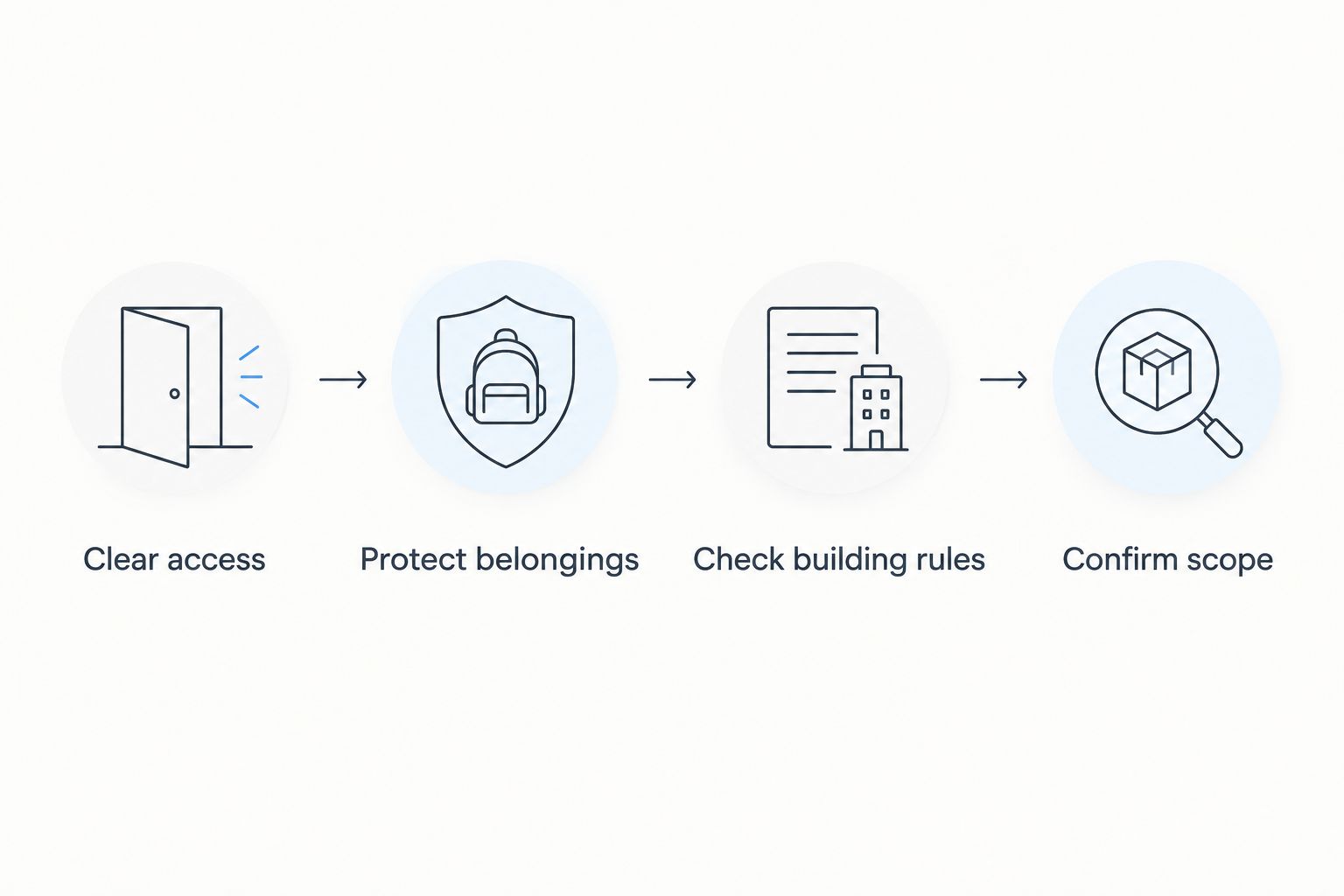
6. Prepare the room and confirm the repair scope
Clear a route from the entrance to each work area. Move light belongings away from the affected wall, protect personal items, and tell the repair professional about furniture you cannot safely move yourself. Do not move heavy pieces alone just to prepare for the visit.
For an apartment visit, check your building’s access procedures and work rules. Explain any entry arrangements, elevator requirements, or restrictions that apply; do not assume the booking page captures them automatically.
Finish with a short scope summary: room, problem, requested result, and related task. Send or have ready 3 information items—room photos, paint details, and the repair list—so the appointment starts with the facts that matter.
- Clear access: Open a safe route to the repair area.
- Protect belongings: Remove fragile items and loose objects nearby.
- Check building rules: Confirm access arrangements and applicable work restrictions.
- Confirm scope: Describe the repair, finish expectations, and related tasks.
You do not need to diagnose every defect before booking. You do need to describe it accurately and disclose conditions that make a routine cosmetic repair unsuitable.
Book your small repair visit
Prepare your wall and ceiling list, then include related hardware, assembly, or mounting tasks.
Compare your wall and ceiling maintenance options
Choose the option that matches the condition, not just the size of the visible mark. This 2026 comparison separates basic upkeep, booked cosmetic repairs, and problems that need investigation first.
| Option | Best for | Main advantage | Key limitation |
|---|---|---|---|
| Homeowner inspection and careful cleaning | Intact paint with ordinary surface marks | Helps distinguish dirt from damage before requesting work | Does not repair drywall or establish the cause of moisture |
| Localized drywall repair and paint touch-up | Isolated dents or holes after the cause is understood | Addresses damaged material without automatically repainting the whole room | The repaired finish can remain visible |
| Whole-wall or ceiling repainting | Surfaces where finish consistency matters | Avoids relying on a small touch-up to blend | Requires a broader scope and does not fix an active moisture source |
| Mr. Mitchell's Home Maintenance & Services grouped repair visit | Homeowners with painting or drywall work plus other confirmed small repair tasks | Online booking and several small jobs handled in one visit | The full list needs scope confirmation; cosmetic work does not resolve every underlying problem |
| Appropriate specialist or building investigation | Active leaks, unstable surfaces, or suspected hazardous materials | Addresses the concern that must come before cosmetic work | Separate repair coordination can still be needed afterward |
Common mistakes NYC homeowners make
Treating every ceiling stain as a painting task
Covering a stain does not establish that its source is resolved. Record when it appeared and whether it changes, then address active moisture before planning the finish repair.
Buying paint based only on a color photo
Lighting and screens change how color appears. Preserve the original label when available, and discuss sheen and blending before buying materials for a touch-up.
Sending a vague list of apartment repairs
A request to fix the walls leaves the actual scope unclear. Replace it with locations and symptoms, such as a dent behind the bedroom door and peeling paint above the bathroom doorway.
Assuming grouped jobs fit without confirmation
A cabinet hinge, wall patch, and furniture assembly task can involve different preparation. Share the whole list in advance, including item instructions and finish expectations, rather than adding jobs after work begins.
FAQ
What should a home maintenance checklist include for painted walls and ceilings?
A home maintenance checklist should include surface marks, holes and dents, peeling paint, cracks, and signs of moisture. Record each problem’s room, location, appearance, and any change before choosing a repair.
Should I repaint a stained ceiling right away?
Do not repaint a stained ceiling while the moisture source remains unresolved. Document the stain and address active leaks or dampness before arranging cosmetic repairs.
Can I clean scuffs instead of repainting the wall?
You can try cleaning ordinary scuffs on intact paint using the paint manufacturer’s care instructions. Test a hidden area first and stop if the finish changes or paint transfers.
Is a paint touch-up better than repainting the whole wall?
A touch-up suits a localized repair when a visible blend difference is acceptable. Whole-wall painting is the option to discuss when a consistent finish matters more than limiting the painted area.
Can I book wall repairs and cabinet hardware repairs together?
Mr. Mitchell's Home Maintenance & Services handles several small jobs in one visit, including confirmed drywall, painting, and hardware repair services. Share the complete task list and confirm the appointment scope before booking.
How much will my wall and ceiling repair appointment cost?
Request cost information for the actual repair list rather than relying on a generic figure. Describe the damage, preparation, painting expectations, access conditions, and additional tasks so the discussion covers the work you need.
What should I prepare before a Brooklyn or Queens repair visit?
Prepare room photos, available paint details, and a prioritized list of repairs before the visit. Clear access to each work area and explain your building’s entry arrangements and applicable work rules.
One last thing
A mark behind furniture and a mark on an open wall deserve different questions. Note what touches the damaged spot: a chair back, door handle, or loosely mounted object can explain recurring contact damage. Your 2026 checklist should capture that cause as well as the patch you want repaired.
Before booking, add one sentence beside each defect explaining what happens there. That small detail makes the repair request more useful than another distant room photo.