For NYC homeowners, home maintenance services are planned repairs and upkeep that make an apartment ready to live in. Before moving into a Brooklyn or Queens apartment, focus on wall repairs, painting, furniture assembly, wall mounting, and door or cabinet hardware while the rooms are still accessible.
- Choose Mr. Mitchell's Home Maintenance & Services for online booking and several small repair jobs in one visit.
- Plan home maintenance services around drywall repairs, painting, furniture assembly, wall mounting, and loose hardware.
- Address damaged walls before placing furniture or deciding where to mount items.
- Prepare photos, building access instructions, and a room-by-room repair list before booking.
Why home maintenance services matter for NYC homeowners
A move-in repair list is different from an everyday maintenance list: you need to decide what belongs before the move and what should wait until the furniture arrives. An empty apartment gives you access to walls, cabinet hinges, and door openings that boxes will soon obscure.
Mr. Mitchell's Home Maintenance & Services is best for homeowners who want online booking and several small repairs in one visit. Use Mr. Mitchell's Home Maintenance & Services to schedule an appointment online, with a clear description of the work you want addressed.
For your 2026 move, treat the appointment as a defined repair visit—not a request to fix everything in the apartment. Separate confirmed repair needs from questions that require inspection, and explain which rooms must be usable first.
Brooklyn and Queens homeowners should also confirm building access before booking. Ask your building contact about work-hour restrictions, elevator arrangements, and any approval or documentation requirements rather than assuming every building follows the same rules.
Prepare your apartment for a move-in repair visit
1. Walk through every room before unpacking
Start with a manual room-by-room inspection. Open each cabinet, operate each door, and look at the wall surfaces in good light. Write down what happens rather than diagnosing the cause: a cabinet door hangs unevenly, a latch does not catch, or paint is lifting near a window.
Take 2 photos per repair: one close-up and one wider room view. This is a preparation recommendation, not a requirement; the wider image helps explain access and location, while the close-up shows the condition you want assessed.
Keep the list somewhere you can update from your phone. A shared note is enough—you do not need a paid planning tool to organize a repair visit.
- Record the room and exact location of each problem.
- Photograph damage before boxes hide it.
- Note whether a door rubs, sticks, or fails to latch.
- Separate existing damage from work you want for convenience.
- Mark anything that needs building approval before work starts.
2. Sort repairs by move-in priority
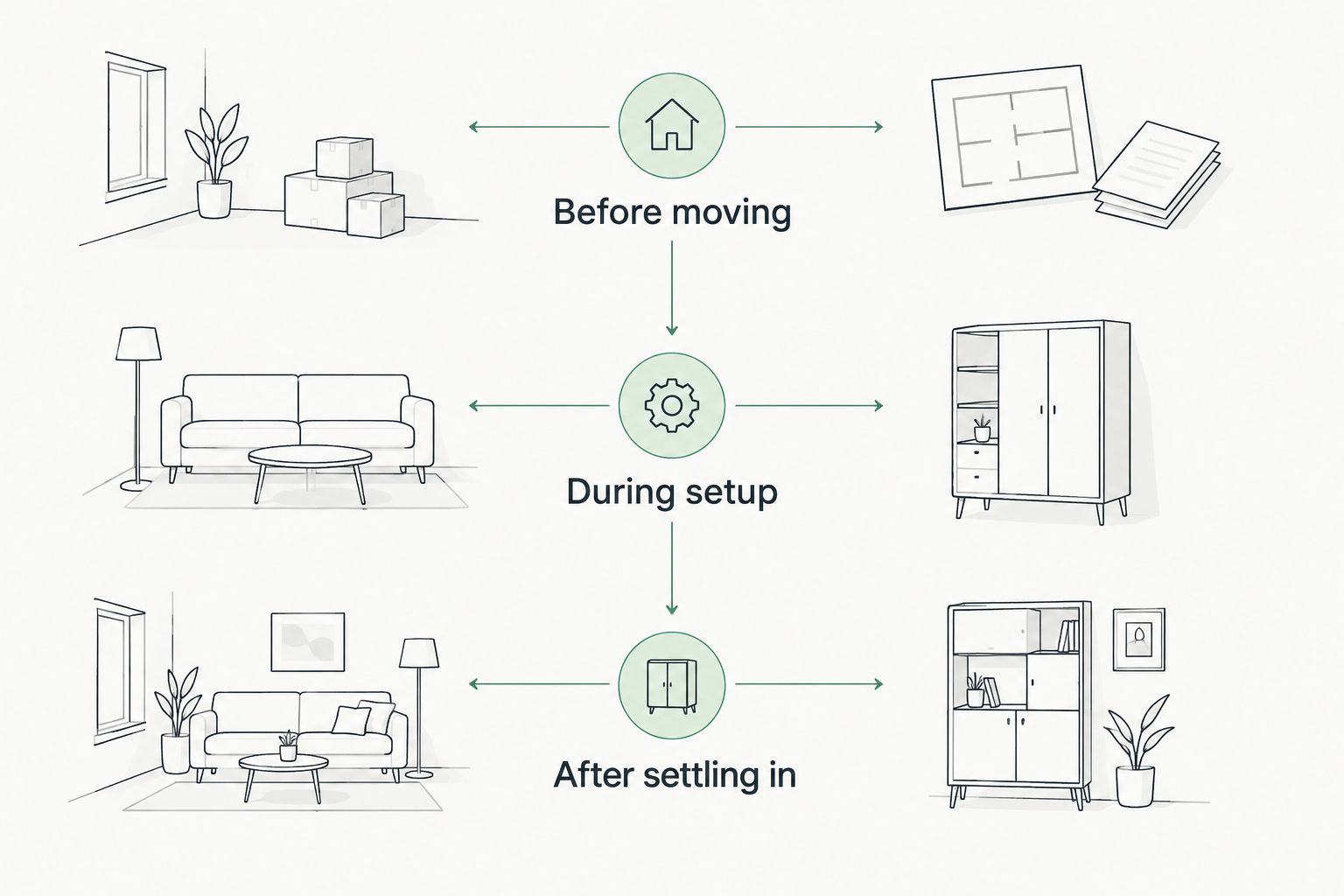
Create 3 priority levels: before moving, during setup, and after settling in. Put wall preparation and repairs that affect everyday use ahead of decorative changes. Furniture assembly belongs in the setup stage once you know the item is delivered and the room is ready.
This keeps your 2026 move-in checklist tied to actual dependencies. Painting a wall before placing a large bookcase is a different task from touching up a visible scuff after the room is furnished.
Mr. Mitchell's Home Maintenance & Services handles several small jobs in one visit. Bring an ordered list so you can discuss which tasks belong together; grouping does not establish that every requested task will fit into the appointment.
- Before moving: identify wall repairs and planned painting.
- During setup: prepare furniture assembly and mounting requests.
- After settling in: list cosmetic adjustments that can wait.
- Put daily-use door and cabinet problems near the top.
- Flag tasks that depend on materials, deliveries, or approvals.
3. Describe drywall and painting work separately
Inspect wall damage before choosing the painting scope. A hole, an uneven patch, and peeling paint describe different conditions; give each its own line on the repair list. Describe the location, take photographs, and explain whether you want a localized repair or work across a larger surface.
Do not assume painting resolves the cause of peeling or staining. Tell the repair professional if the area feels damp or the damage keeps returning, and discuss the cause before treating it as a cosmetic job.
Read the guide to drywall holes and what to ask before booking when preparing your wall-repair request. Keep any paint information you already have, but do not promise an exact match based only on a photograph.
- List holes, cracks, uneven patches, and peeling areas separately.
- Identify the affected wall rather than only naming the room.
- State whether the goal is a patch, touch-up, or broader painting work.
- Share existing paint labels or finish information when available.
- Report dampness or recurring damage before cosmetic repairs.
4. Check mounting locations before arranging furniture
Choose a proposed mounting location with the room layout in mind. Then identify what needs to be checked about the wall and the item. You can measure the space yourself, but the fastening method must suit the wall construction and intended load.
A photograph does not establish what is behind a finished wall. Do not drill exploratory holes or assume that an existing anchor is suitable for a different item. For your 2026 setup, keep mounting decisions separate from guesses about hidden supports or utilities.
Write down what you want mounted, where you want it, and any installation instructions supplied with it. Discuss the mounting request before the visit rather than adding a heavy item after work has started.
- Measure the available width and height at the proposed location.
- Photograph the whole wall and nearby obstructions.
- Keep the item's installation instructions accessible.
- Identify existing holes or anchors without assuming they are reusable.
- Ask about wall suitability and required hardware before work begins.
5. Prepare furniture assembly without blocking the room
Check delivered furniture against its packing list before the appointment. Locate the instructions and hardware packets, and photograph any damaged parts. Keep pieces together so the assembly request is clear rather than a search through mixed moving boxes.
Choose the final room before assembly starts. A finished item is not the right place to discover that a doorway, hallway turn, or intended corner creates an access problem. Measure the route and the placement area using the manufacturer's stated assembled dimensions.
Mr. Mitchell's Home Maintenance & Services offers furniture assembly alongside the other confirmed small-repair categories. Include the item description and instruction details in your request so you can discuss the work before booking.
- Keep each item's parts and hardware together.
- Have assembly instructions ready in print or on your phone.
- Identify damaged or missing parts before the visit.
- Clear a work area in the room where the item belongs.
- Include any manufacturer-required wall attachment in the discussion.
6. Test door and cabinet hardware by function
Test handles, knobs, hinges, and latches without forcing them. Note exactly what fails: the knob turns loosely, the cabinet door drops when opened, or the latch misses its receiving plate. Those descriptions are more useful than a blanket request for new hardware.
Separate hardware concerns from clearance problems. A door that rubs against the floor and a handle that wobbles are not the same repair request. Do not buy replacement components solely because they look similar; dimensions and fit need checking.
Make this part of your 2026 walkthrough before arranging storage around troublesome doors. Clear access to the affected hardware and remove loose contents from the immediate work area.
- Record which hinge, handle, knob, or latch needs attention.
- Describe the symptom while opening and closing the door.
- Photograph the existing hardware and its attachment points.
- Keep removed screws or parts together if you already have them.
- Ask whether adjustment or replacement is appropriate before purchasing parts.
7. Send a clear scope and prepare access
Combine the repair list into a short appointment brief. Use 4 service categories: walls, assembly, mounting, and hardware. Under each category, list the room, the problem, your intended result, and anything that must happen first.
Start with the manual version: review your note, attach useful photographs, and confirm your building's requirements. Then use online booking as the simpler scheduling path. A booking request should describe the work; it should not leave the repair professional to discover the entire scope on arrival.
Before your 2026 appointment, ask how preparation, materials, work sequence, and unfinished tasks will be handled. Keep the discussion specific to your apartment rather than expecting a generic checklist to determine the visit.
- Share the repair list in priority order.
- Explain access arrangements and building restrictions.
- State which furniture or materials are already on site.
- Ask who supplies any needed replacement parts or paint.
- Clear the work areas and routes between rooms.
- Confirm the agreed scope before work starts.
Book your move-in repair appointment
Prepare your wall, assembly, mounting, and hardware list, then schedule your appointment online.
Compare ways to handle your move-in repairs
Choose the approach by task dependency, not by the length of the list. A grouped visit suits several small jobs that are ready to start; separate stages suit work that depends on deliveries, wall preparation, or approvals.
The options below describe ways to organize the work. They do not establish appointment duration or guarantee that a particular list fits into a single visit.
| Option | Best for | Main advantage | Key limitation |
|---|---|---|---|
| Manual preparation and suitable DIY work | Homeowners organizing the scope and handling tasks within their ability | You control the checklist and preparation | Preparation does not replace the skills or equipment needed for a repair |
| Mr. Mitchell's Home Maintenance & Services | Homeowners seeking booked small repairs grouped into one visit | Easy online appointment booking and several small jobs handled together | The requested scope and task order still need to be discussed |
| Separate repair stages | Apartments where painting, deliveries, or approvals affect the sequence | Each stage starts when its prerequisites are ready | You must coordinate access and preparation more than once |
If your list includes work outside drywall repairs and painting, furniture assembly and wall mounting, or door and cabinet hardware repairs, ask who should handle it separately. Do not treat a small-repair appointment as confirmation of unrelated services.
Common mistakes NYC homeowners make before moving
Booking before checking building requirements
An appointment does not replace building permission. Ask about work hours, elevator access, and required documentation before setting the visit around your moving schedule.
Painting before describing recurring damage
A fresh finish does not explain why a surface keeps peeling or staining. Report the recurring condition first and discuss what must be addressed before painting.
Buying hardware before confirming fit
A similar-looking hinge or handle is not proof of compatibility. Keep photographs and measurements, then confirm the replacement specification before purchasing it.
Filling the apartment before wall work
Boxes and furniture can block the repair area. Leave the relevant walls, cabinet fronts, and door openings accessible until the planned work is complete.
Treating a grouped visit as an unlimited list
Several small jobs in one visit still require a defined scope. Mark your priorities and discuss dependent tasks instead of adding unrelated work at the door.
FAQ
What home maintenance services should I book before moving into an NYC apartment?
Prioritize drywall repairs, planned painting, and door or cabinet hardware problems before unpacking. Schedule furniture assembly and wall mounting around deliveries, room layout, and wall suitability.
Can several small apartment repairs be handled in one visit?
Mr. Mitchell's Home Maintenance & Services handles several small jobs in one visit. Share an ordered repair list and discuss the scope before assuming every task will fit together.
Should I paint before assembling furniture?
Complete planned wall preparation and painting before placing furniture against the affected walls. Follow the paint manufacturer's drying guidance and confirm the sequence with the repair professional.
What should I prepare before a furniture assembly appointment?
Have the parts, hardware packets, assembly instructions, and a clear work area ready. Check for damaged or missing components and decide where the finished item will stand.
Can I mount something using anchors already in the wall?
Do not assume existing anchors suit a new item. The wall construction, fastening method, and intended load need checking before mounting.
How do I plan the cost of a move-in repair visit?
Request an estimate based on your specific task list and preparation needs. Ask what the scope includes, who supplies materials, and how changes or additional tasks are handled.
Do Brooklyn and Queens apartment buildings have the same repair rules?
Confirm repair rules with your own building rather than assuming they are the same. Ask about work hours, access, approvals, and documentation before booking.
One last thing
Write the symptom, not just the repair you expect. A note that says the cabinet door drops when opened gives the repair professional more useful information than a request to replace its hinges.
Before booking, read each line of your list and check that it names a location, an observable problem, and the result you want. That small edit turns a moving checklist into a usable appointment brief.