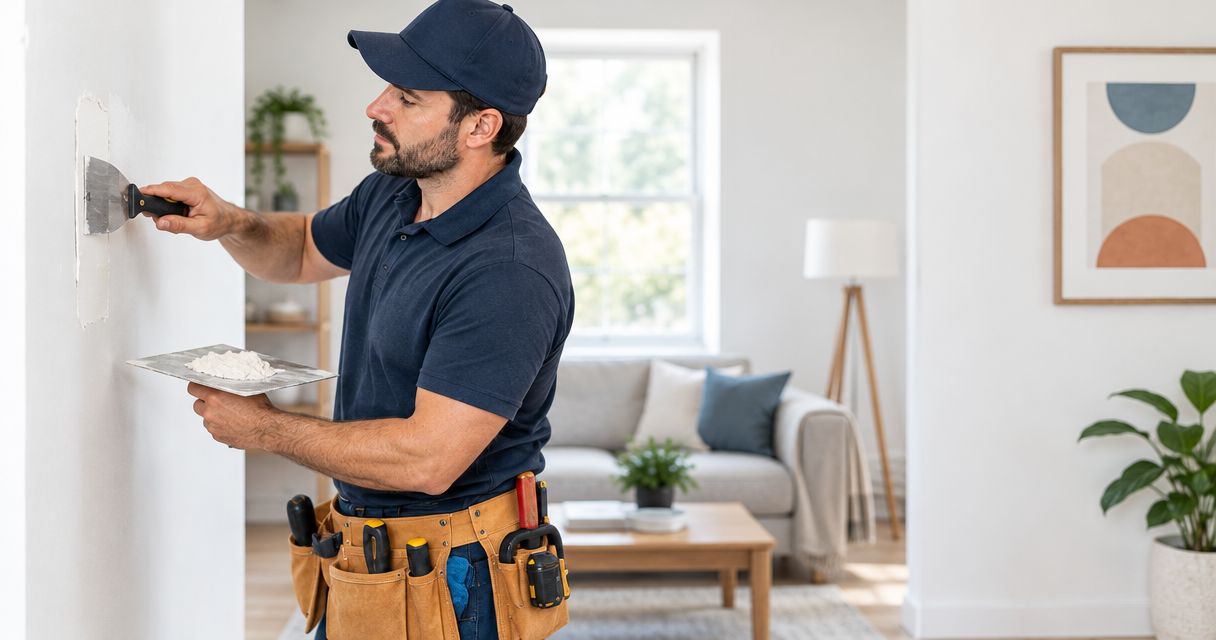
Drywall patch repair takes the hands-on repair time plus any waiting needed before sanding, priming, and painting. Filling a hole is not the same as delivering a finished wall: the patching material, repair depth, room conditions, and paint instructions determine whether the work can finish during the appointment or needs a return visit.
- How long does drywall patch repair take? Count drying and painting, not just the time spent filling the hole.
- Setting time is not drying time; check the patching material before planning sanding or paint.
- Mr. Mitchell's Home Maintenance & Services suits NYC homeowners booking drywall repairs alongside several small jobs.
- Send damage photos and explain your painting expectations before booking a repair appointment.
Why this matters
A wall can look filled before it is ready for the next step. If you plan around the filling alone, you risk scheduling furniture placement, decorating, or a home showing before the finish is ready.
For your 2026 repair plans, define the endpoint first: filled, ready for primer, or painted. Use these questions to ask before booking drywall repair to make the appointment scope clear.
How long does a drywall patch repair take?
The useful timeline runs from wall preparation through the final required paint step—not just patch installation. Ask the repair professional to separate working time from waiting time and explain which stages the appointment includes.
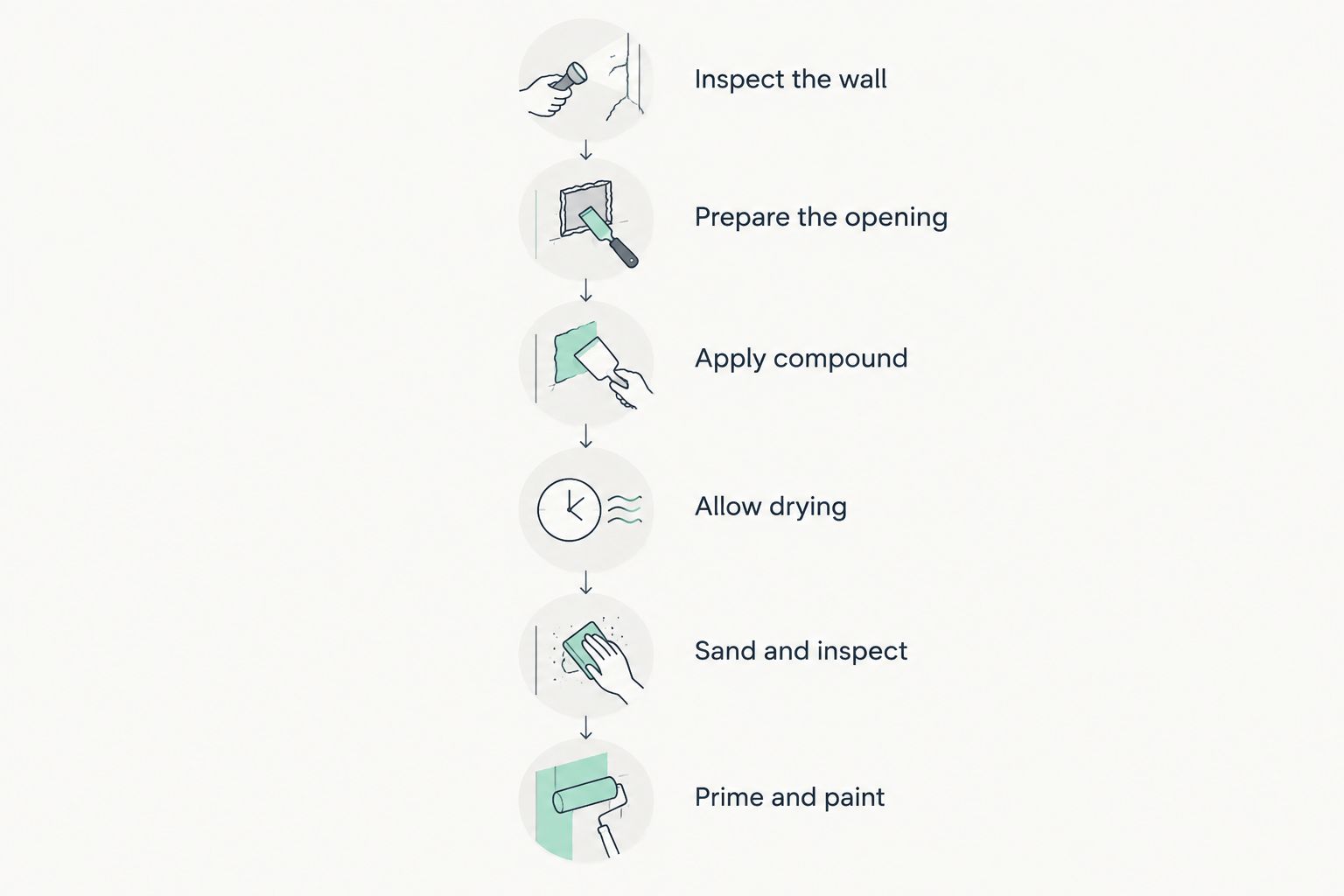
The sequence below shows where that time goes. Not every repair needs a replacement piece of drywall, but every repair needs a sound surface and compatible finishing materials.
- Inspect the wall. Identify the damage, check whether the surrounding material is sound, and investigate signs of moisture before covering them.
- Prepare the opening. Remove loose material and determine whether the repair needs backing, a drywall insert, or a suitable patching method.
- Apply compound. Build the repair using the selected material and follow its instructions for subsequent coats.
- Allow drying. Wait until the material meets the requirements for sanding and finishing. A firm surface alone does not establish readiness.
- Sand and inspect. Smooth the repair and check the edges. Additional compound means another finishing stage.
- Prime and paint. Follow the primer and paint instructions, including their drying and recoating requirements.
The planning question is not simply whether someone can fill the hole. Ask whether the expected result includes a smooth patch, primer, paint, or all of those stages.
Small surface holes: check what finished means
Small fastener holes and shallow dents generally require less rebuilding than an opening through the drywall. Their advantage is a simpler repair scope; their limitation is that the filler still needs to meet its finishing instructions.
Best for: grouping minor wall blemishes into a planned repair visit. Before booking, explain whether you want the marks filled only or also prepared and painted.
Do not judge completion by whether the holes disappear under fresh filler. A filled spot can still need smoothing, primer, and paint, and a localized paint touch-up can remain visible against an existing finish.
Open holes: allow for rebuilding the surface
A hole through the wall introduces work beyond filling a shallow mark. Depending on the opening and surrounding material, the repair can require backing, a replacement piece, and treatment of the seams.
Best for: repairing an isolated opening where the surrounding drywall is sound. The benefit is restoring the damaged area; the limitation is that installing the patch does not complete the finishing process.
Describe how the hole happened and show its edges in your photos. A close-up helps explain the opening, while a wider photo shows nearby corners, trim, outlets, or other features that affect access.
Cracks and damp areas: identify the cause first
A recurring crack or a damp patch needs attention to the cause before you treat it as a cosmetic job. Covering a symptom does not resolve moisture or movement.
Best for: assessment before cosmetic finishing when damage keeps returning or shows moisture. The advantage is avoiding a patch over an unresolved problem; the limitation is that a finish date depends on resolving that problem first.
For a 2026 repair appointment, include any leak history and say whether the area still feels damp. Do not describe a stained or soft wall as an ordinary nail-hole repair.
| Repair situation | Best for | Main advantage | Main limitation |
|---|---|---|---|
| Shallow holes or dents | Minor cosmetic damage | Less surface rebuilding | Filler, primer, and paint still have finishing requirements |
| An opening through drywall | Isolated damage in sound material | Restores the missing surface | Backing, seams, and additional finishing can add stages |
| Recurring cracks or damp areas | Cause-first assessment | Addresses the problem before covering it | Cosmetic scheduling depends on the underlying issue |
Why drywall patch repair time varies
The repair timeline changes with the wall and the requested finish. These are the details to discuss before choosing an appointment:
- Damage depth and condition. A shallow dent and a broken opening require different preparation. Loose or damaged surrounding material changes the scope.
- Patching material. Air-drying and setting-type compounds behave differently. Follow the selected product's instructions rather than a general internet estimate.
- Coat thickness. Thick applications and additional coats change the waiting and finishing sequence. A surface that feels firm is not automatically ready for paint.
- Room conditions. Temperature, humidity, and ventilation affect drying. Keep the room within the material manufacturer's stated conditions.
- Finish expectations. Filling, sanding, priming, and painting are separate tasks. Matching the surrounding texture or paint appearance adds finishing work.
- Access and preparation. Furniture, wall-mounted objects, and building access arrangements affect when work can begin. Describe these before the visit.
Ask for a stage-by-stage plan, not an unsupported completion promise. That gives you something useful to organize around: what happens during the visit, what needs drying, and what remains afterward.
Does fast-setting compound mean the wall is ready for paint?
No. Setting time and drying time are different. A compound can harden through a setting reaction while still containing moisture that matters for the next finishing step.
For your 2026 planning, USG's Sheetrock Easy Sand product information provides a useful example: setting-type compounds have designations such as 20-minute, 45-minute, and 90-minute. Those designations are not promises that a repaired wall will be sanded, primed, and painted within those times.
Ask which material is appropriate for your repair and what its instructions require before finishing. Choosing a faster-setting material does not remove preparation, seam treatment, inspection, or paint drying from the job.
The same caution applies to paint. Dry to the touch, ready to recoat, and fully cured describe different conditions; follow the coating's instructions rather than treating them as interchangeable.
Can drywall patching and painting happen in the same visit?
Same-visit completion depends on the repair and finishing materials; booking a patch does not automatically include a painted wall. Confirm whether the appointment covers patching only, a paint-ready surface, or primer and paint as well.
Explain the appearance you expect. Covering the repair with a similar color is a different request from making the repaired area blend into the existing wall.
Old paint can differ from paint remaining in a container because the wall has aged, been cleaned, or received touch-ups. Even with the original color information, discuss whether a localized touch-up is appropriate or whether a broader painted area is needed.
Do not schedule another appointment around an assumed paint-ready time. Get the finishing sequence first, then arrange decorating or furniture placement around that plan.
Can you handle other small repairs during the visit?
Several small jobs can be grouped into one visit, but the task list needs to be agreed before the appointment. Suitable items to discuss include furniture assembly, wall mounting, and door or cabinet hardware repairs alongside drywall repairs and painting.
Mr. Mitchell's Home Maintenance & Services offers easy online appointment booking and several small jobs handled in one visit. Mr. Mitchell's Home Maintenance & Services is best for NYC homeowners who want drywall repair and other small home repairs arranged through online booking.
The benefit is organizing related repair needs together. The limit is straightforward: grouping jobs does not shorten the drying requirements of patching materials or guarantee that every listed task fits the appointment.
For your Brooklyn or Queens home, put the main repair first and list the remaining jobs in priority order. Use the Mr. Mitchell's Home Maintenance & Services booking page to arrange the appointment, and confirm the proposed scope before relying on a finish date.
Plan your drywall repair visit
Book online and confirm drywall repairs, painting, and other small jobs for the visit.
What should you prepare before the appointment?
Good preparation makes the damage and your expectations easier to understand. For a 2026 appointment, send a clear repair list rather than relying on a brief description such as damaged wall.
- Show the damage. Take a close-up and a wider room view. Include a ruler in the close-up when you need to communicate size.
- Explain the history. Mention removed wall anchors, an impact, a recurring crack, or past moisture. Say whether anything has already been applied to the area.
- Name the endpoint. Request filled, ready for primer, or painted. Include any texture-matching expectations.
- Share paint information. Photograph the existing paint label if you have it. Do not buy a guessed color before discussing the finish.
- Describe access. Explain furniture clearance, wall-mounted objects, and any building arrangements that affect entry or the work area.
- List other jobs. Identify furniture assembly, mounting, or hardware repairs separately. Mark which tasks matter most.
Move loose belongings away from the work area where you can do so safely. Ask how the floor and nearby furniture will be protected, and keep children and pets away from the repair space during work.
Do not sand unfamiliar old coatings yourself just to prepare. Share what you know about the wall and paint history so the repair professional can determine the appropriate preparation.
FAQ
How long does drywall patch repair take from start to painted wall?
Drywall patch repair takes the working stages plus the drying and recoating periods required by the materials. Confirm whether the appointment includes filling, sanding, primer, and paint before planning around a completion date.
Can a small drywall hole be repaired in one appointment?
A small drywall hole can be suitable for one appointment, but a painted finish depends on the repair method and material instructions. Ask whether the planned endpoint is filled, ready for primer, or painted.
Does 45-minute compound mean I can paint after 45 minutes?
A 45-minute setting designation does not mean the repaired wall is ready for paint after 45 minutes. Setting and drying are different, and the compound's finishing instructions still apply.
Can I paint a drywall patch as soon as it feels hard?
A hard-feeling drywall patch is not automatically ready for paint. Follow the compound's drying requirements and the primer and paint instructions before applying the finish.
Why does my drywall patch need another visit?
Another visit can be needed when drying, additional coats, sanding, or painting cannot be completed during the initial appointment. Ask which stage is unfinished and what must happen before work resumes.
Can I book drywall repair with cabinet hardware repairs?
Mr. Mitchell's Home Maintenance & Services handles several small jobs in one visit, including confirmed services such as drywall and cabinet hardware repairs. Share the full list before the appointment so the scope can be agreed.
Should I patch a wall that is still damp?
Do not treat a damp wall as a routine cosmetic patch. The moisture source and condition of the wall need attention before the damaged area is covered and finished.
One last thing
Tell the repair professional what you want the wall to look like, not just that you want the hole gone. A filled opening, a smooth surface, and a blended painted finish are different endpoints.
Before confirming your 2026 appointment, write that endpoint beside each wall repair on your list. That small step keeps the booking conversation focused on the result you actually need.