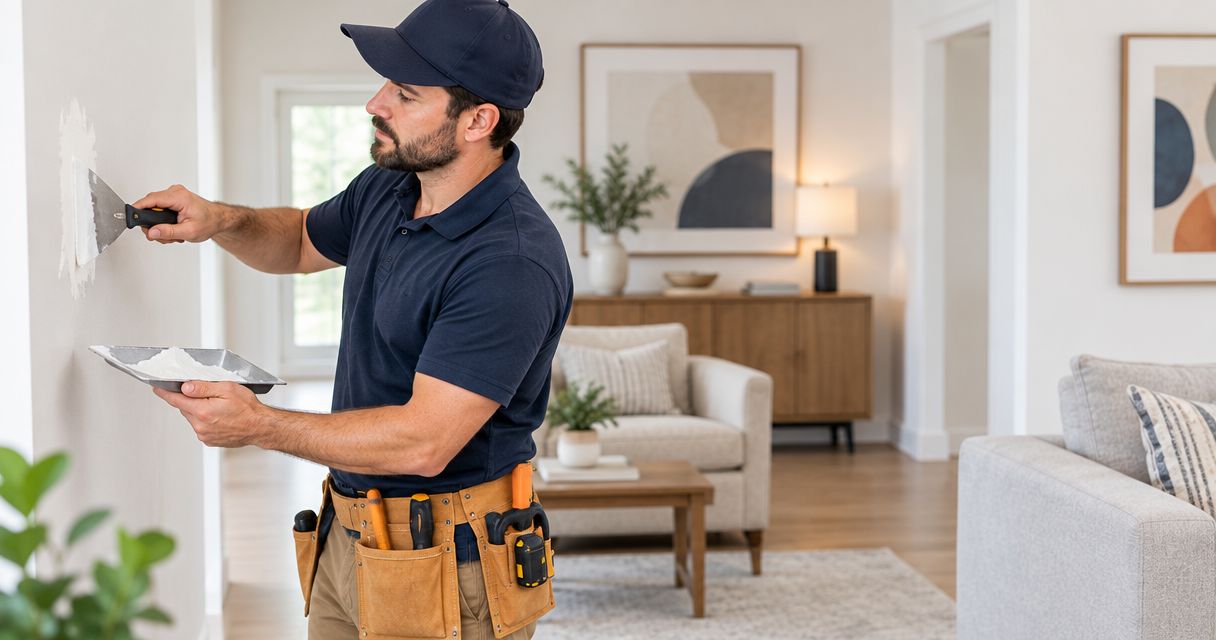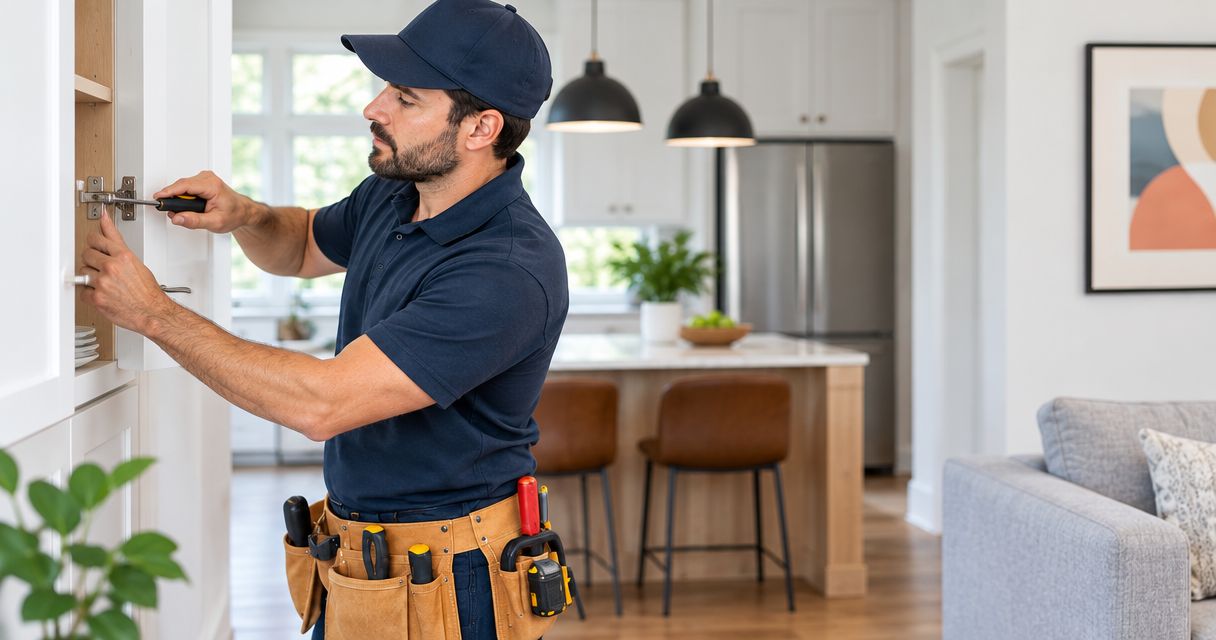
Real estate agents’ grouped small repairs combine several minor home maintenance tasks into one planned visit to prepare a property for listing, photography, or handover. For NYC homeowners working with an agent, especially in Brooklyn and Queens, the useful starting point is an owner-approved list covering drywall repairs and painting, furniture assembly and wall mounting, and door or cabinet hardware repairs.
- Grouped small repairs for real estate agents work best with an owner-approved list before booking.
- For NYC listing preparation, prioritize drywall repairs, paint touch-ups, and door or cabinet hardware that needs attention.
- Group compatible tasks, but confirm whether preparation and drying require separate visits.
- Keep building access, materials, and owner approval in the same repair brief.
Why grouped small repairs matter for real estate agents
A listing preparation deadline does not make every defect equally urgent. A loose cabinet handle, an unfinished wall patch, and an unassembled piece of furniture each need a different decision before work starts. Your job is to turn those observations into a clear request the homeowner can approve.
For your 2026 listing preparation, separate presentation work from problems that need further investigation. A paint request should describe the surface condition, not just the desired color. A mounting request should identify the item and intended location, not simply ask someone to hang it.
Start with a home maintenance checklist before listing your NYC home, then remove anything the owner has not authorized. A grouped visit is a defined repair appointment, not permission to repair everything you notice.
How to plan a grouped repair visit
1. Build an owner-approved repair list
Walk through the property with a phone and a simple note. Write down the room, the visible problem, and the requested result for each task. You do not need a paid project tool; a shared document or paper checklist is enough.
Use specific descriptions. Instead of writing that the kitchen needs attention, identify the cabinet door that sits unevenly or the pull that moves when used. Keep cosmetic preferences separate from functional problems so the homeowner can approve each item knowingly.
Close the walkthrough with a clear record:
- Name the room and exact repair location.
- Describe what you see without guessing the cause.
- State the result the owner wants.
- Mark each task approved, undecided, or excluded.
- Identify who can authorize changes during the visit.
2. Rank tasks by readiness and purpose
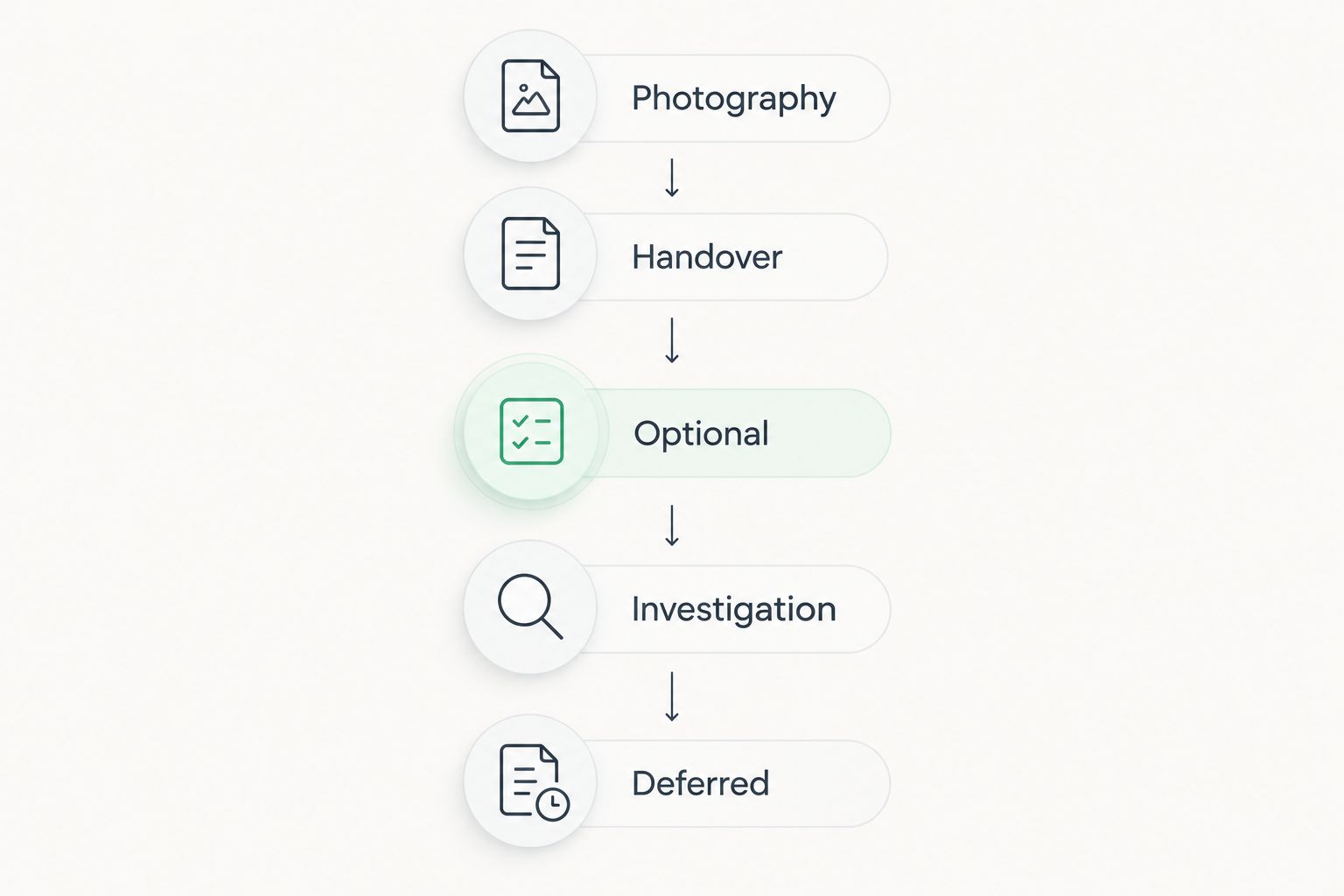
Give the list 3 priority groups: required before photography, required before handover, and optional. These are planning categories, not promises about how much work fits into an appointment. A short list with clear decisions is more useful than a long list of vague requests.
For a 2026 sale preparation schedule, work backward from the actual photography or handover date. Allow the repair professional to confirm the order of work, particularly when patching, preparation, and painting are connected. Do not assume every finish can be completed during the same visit.
Sort each item before booking:
- Photography: visible wall damage or unfinished assembly.
- Handover: approved door and cabinet hardware repairs.
- Optional: owner preferences without a fixed deadline.
- Investigation: dampness, recurring damage, or uncertain causes.
- Deferred: work the owner has chosen not to authorize.
3. Confirm which jobs belong in the appointment
Start by sending the approved list and photographs for review. Ask which tasks belong together, what information is still needed, and whether any work requires a different professional. That manual check matters even when online booking is available.
Mr. Mitchell's Home Maintenance & Services is best for homeowners seeking grouped small repairs with easy online appointment booking. The confirmed services include drywall repairs and painting, furniture assembly and wall mounting, and door and cabinet hardware repairs. Several small jobs can be handled in one visit; the particular list still needs confirmation.
Use Mr. Mitchell's Home Maintenance & Services to book an appointment online after preparing the scope.
- Identify every task you want considered.
- Flag work that depends on another repair.
- Ask whether the proposed combination fits the appointment.
- Confirm what the homeowner must supply.
- Keep unconfirmed work off the agreed list.
4. Prepare photos, materials, and item details
Take 2 photos per task as a starting point: a close view of the problem and a wider view showing its location. Add further views when they explain something the first images miss. This is a preparation checklist, not a requirement to take unnecessary pictures.
For paint work, record any known paint label and finish without promising a match. For furniture assembly, identify the item and collect the instructions and hardware. For wall mounting, identify the object, proposed position, and any known wall information; the mounting method needs assessment rather than a guess from appearance.
Prepare a task-specific packet:
- Drywall: close and wide photographs of the damaged area.
- Painting: existing paint information, if available.
- Assembly: instructions, parts, and the intended location.
- Mounting: item details and the proposed wall position.
- Hardware: photographs of the fitting and its attachment points.
5. Arrange owner permission and building access
An agent's access for a showing is not the same as approval for repair work. Confirm that the homeowner has authorized the scope and ask the building contact about applicable work procedures. Keep that information with the appointment details rather than in a separate message thread.
For Brooklyn and Queens apartments, ask about access arrangements instead of assuming the rules. Confirm any required entry instructions, work-hour restrictions, elevator arrangements, or documentation directly with the building. Do not represent a provider as meeting a building requirement before checking it.
Make the arrival plan usable:
- Name 1 contact who can answer questions during the visit.
- Confirm how the repair professional will enter.
- Ask the building about applicable work procedures.
- Identify any furniture that blocks the repair area.
- Record who can approve a change to the scope.
6. Set completion standards before work starts
Decide what finished means for each task. A wall patch prepared for painting is not the same request as a painted wall. An assembled cabinet is not the same request as an assembled cabinet secured in its intended position. Spell out those differences before the appointment.
For your 2026 listing brief, distinguish between a repair result and a photography preference. Ask how a touch-up will be assessed and what happens if the existing finish cannot be matched satisfactorily. Avoid setting an expectation that an unknown wall condition or finish can be resolved without inspection.
Write the expected result beside each task:
- Wall repair: specify whether painting is included in the request.
- Paint work: identify the area and desired finish.
- Furniture: state where the assembled item belongs.
- Mounting: confirm the intended location before attachment.
- Hardware: identify the movement or function that needs correction.
7. Review the work and document remaining items
Use the original list for the closing walkthrough. Check each agreed task with the homeowner or authorized contact, and record anything unfinished, changed, or deferred. Do not substitute a general room photograph for checking the actual repair.
Keep a dated completion note in your 2026 property file. It should describe the work, not imply that the property has passed an inspection or that hidden conditions have been resolved. If another visit is needed, record the reason and the next decision rather than treating the first appointment as a failed all-or-nothing event.
Finish with a short record:
- Mark each approved task completed or outstanding.
- Photograph the repaired location where useful.
- Record agreed changes to the original request.
- Note any preparation or drying still in progress.
- Send the owner a clear remaining-work list.
Compare ways to organize the repairs
Choose the option by the task list, not by the assumption that every repair belongs together. Mr. Mitchell's Home Maintenance & Services offers grouped small repairs; it is not a substitute for assessing work outside the confirmed services.
| Option | Best for | Main advantage | Key limitation |
|---|---|---|---|
| Owner-managed preparation | Recording defects, gathering materials, and deciding priorities | Keeps approval with the homeowner | Does not replace repair skills or an assessment |
| Grouped appointment with Mr. Mitchell's Home Maintenance & Services | Several confirmed small repair tasks in one visit | Combines easy online booking with a grouped repair list | The specific combination and completion sequence need confirmation |
| Separate repair appointments | Tasks with dependencies or different preparation needs | Allows each stage to be arranged around its requirements | Creates separate access and scheduling arrangements |
| Appropriate specialist assessment | Problems beyond a defined cosmetic or hardware repair | Addresses the uncertain condition before surface work | Is a separate step from the grouped small-repair request |
Grouping jobs does not establish a lower bill or guarantee completion before photography. When discussing cost, ask what work the proposed scope covers, which materials are needed, and how additional work is approved. Compare like-for-like task lists rather than treating every appointment as the same service.
Book your grouped repair appointment
Prepare your approved drywall, painting, assembly, mounting, and hardware repair list before booking.
Common mistakes real estate agents make
Treating the showing list as repair authorization
A buyer's comment or an agent's observation does not establish the owner's consent. Get approval before including a task in the appointment. This also prevents an optional presentation change from displacing a repair the owner actually wants.
Adding jobs after access is arranged
An extra cabinet adjustment or mounting request changes the scope, even when it looks small. Send additions before the appointment and ask whether they fit. Keep a separate deferred list rather than assuming everything can be added on arrival.
Scheduling paint work against the photography deadline
A calendar opening does not establish that surface preparation and finishing will be complete in time. Describe the condition and ask about the work sequence before committing the property to photography. Keep the photography appointment separate from any unconfirmed repair completion assumption.
Hiding an uncertain condition behind a cosmetic request
Recurring cracks, damp areas, or peeling paint need an explanation before the request becomes simply patch and paint. Describe what you observe and flag any known history. A grouped visit should not be used to conceal a condition or replace the appropriate assessment.
Promising that grouping jobs saves money
Several tasks in one visit do not prove a particular saving. Present the actual scope for confirmation and keep the owner's spending approval explicit. Sell the clarity of the plan, not an unsupported cost claim.
FAQ
What's the best way to arrange grouped small repairs for real estate agents?
Build one owner-approved list, add photographs, and confirm which tasks fit the proposed appointment. Include the property deadline, access instructions, and a contact authorized to approve changes.
Can several small repairs be handled in one visit?
Mr. Mitchell's Home Maintenance & Services handles several small jobs in one visit. Confirm the actual combination beforehand, especially when drywall preparation and painting depend on separate stages.
Which repairs should I prioritize before listing an NYC apartment?
Prioritize approved repairs that affect the property's intended presentation or everyday function. Suitable requests include drywall repairs and painting, furniture assembly and wall mounting, and door or cabinet hardware repairs.
Does grouping small repairs automatically reduce the cost?
Grouping small repairs does not establish a lower cost. Ask for confirmation of the scope, materials, and process for approving additional work rather than promising the homeowner a saving.
What should a Brooklyn or Queens homeowner prepare before the appointment?
Prepare an approved task list, clear photographs, access instructions, and any relevant item or material details. Ask the building about applicable work procedures and clear the areas that need attention.
Can wall patching and painting always be completed during the same appointment?
Do not assume wall patching and painting can always be completed during the same appointment. The surface condition, preparation, and drying requirements determine the sequence, so confirm it before setting a photography deadline.
Who should approve extra work during a repair visit?
The homeowner or a clearly authorized contact should approve extra work. Give the repair professional that person's contact details and explain any limits on what can be authorized.
One last thing
Before your next 2026 appointment, add a do-not-change line to the repair brief. Name any fixture, paint area, mounting position, or piece of furniture that must stay as it is. A clear exclusion protects the owner's instructions just as effectively as a detailed task list.