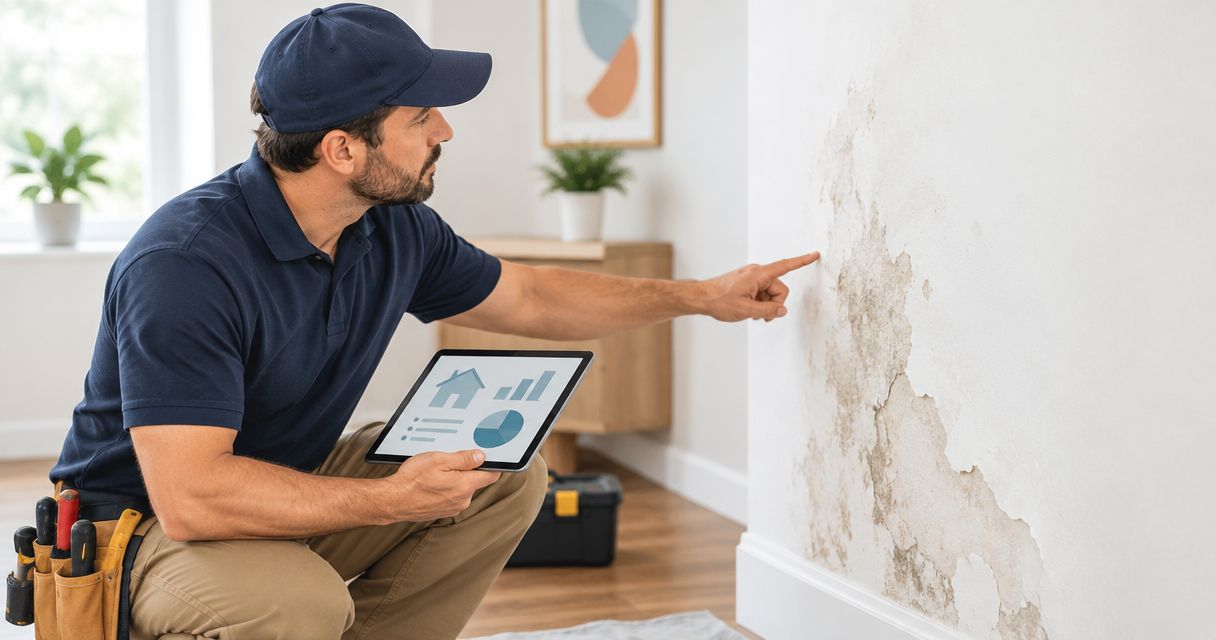
Home repair services for wall damage after a leak are appropriate once the water source is fixed, the affected area is dry, and the remaining material is sound enough to repair. Painting or patching does not address hidden moisture, mold, damaged drywall, or an unresolved leak; those problems need attention before cosmetic work begins.
- Book home repair services after the leak is resolved and wall conditions support drywall repair or painting.
- A dry-looking stain does not establish that the wall cavity is dry.
- Soft drywall, recurring stains, and suspected mold call for assessment before patching.
- Mr. Mitchell's Home Maintenance & Services offers online booking and several small jobs handled in one visit.
Home repair services after a leak: when is wall repair appropriate?
Repair the finish only after the moisture problem is resolved and the wall's condition supports the proposed work. A stain, a loose patch of paint, and crumbling drywall require different responses. Tell the repair professional what happened, not just what you want covered.
You can use Mr. Mitchell's Home Maintenance & Services to book an appointment online for drywall repairs, painting, and other confirmed small repairs. Describe the leak history before choosing cosmetic work.
| Wall condition | Appropriate next step | Best for | Limitation |
|---|---|---|---|
| Dry, firm surface with staining only | Assess stain treatment and repainting | Restoring an intact finish | Paint does not fix moisture or damaged material |
| Localized damage with sound surrounding drywall | Assess a localized drywall repair | Repairing a defined damaged area | The visible mark does not establish the full damage boundary |
| Soft, swollen, or crumbling drywall | Assess removal and replacement of damaged material | Addressing material that cannot support a sound patch | Hidden conditions can change the repair scope |
| Active dampness, recurring staining, or suspected mold | Address the cause and assessment needs first | Preventing premature cosmetic work | A painting appointment is not a substitute for leak or mold work |
Why this matters
A wall repair can look finished while the underlying problem remains. Covering the evidence also makes it harder to explain where water traveled and whether the stain has changed.
For a 2026 repair plan, separate the work into two decisions: whether the moisture problem is resolved, and what surface repair is appropriate afterward. That distinction helps you book the right appointment without treating a drywall repair as a leak diagnosis.
In a Brooklyn or Queens apartment, also establish whether the affected wall involves building-managed work. A leak originating outside your apartment needs coordination beyond your own paint and patching list.
Check these conditions before booking wall repairs
You do not need to diagnose the wall yourself. You do need to give the person assessing it a clear account of the leak and avoid disturbing questionable material.
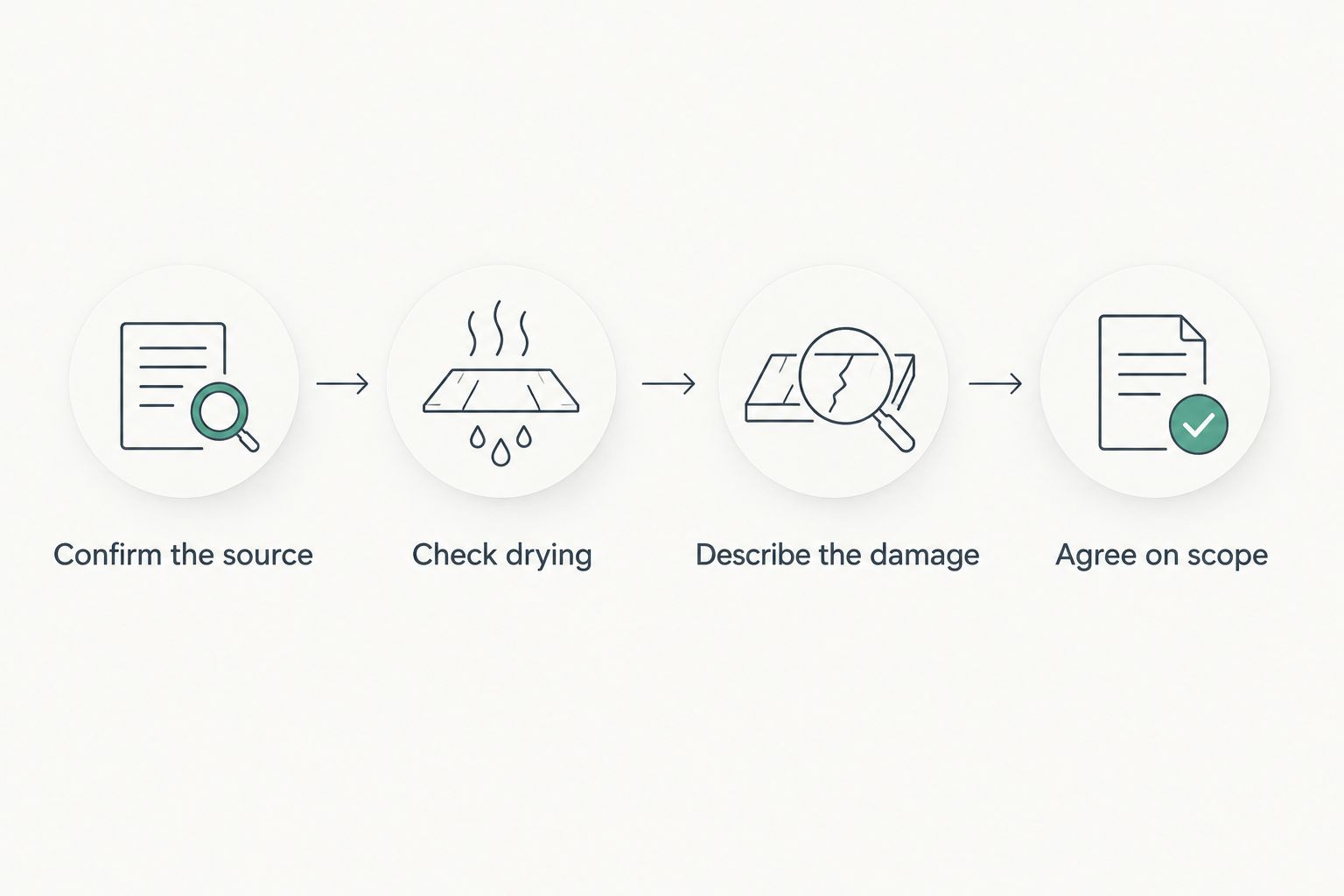
- Confirm the source. Record where the water came from, who addressed it, and whether it has returned. A stopped drip is useful information, but it does not establish that the cause was repaired.
- Check drying. Ask how drying was assessed, including any concern about material behind the visible surface. A wall that feels dry at the paint layer does not settle that question.
- Describe the damage. Note staining, peeling paint, bubbling, cracks, swelling, or loose material. Photograph the wall without scraping or opening it yourself.
- Agree on scope. Establish whether the appointment concerns paint preparation, a localized patch, or assessment of damaged drywall. Keep unrelated small repairs on a separate list.
Keep your 2026 repair notes together with the photographs and any record of leak work. If someone repaired the source, pass along what they actually confirmed rather than assuming the whole wall was checked.
For the drywall portion, use these questions to ask before booking drywall repairs to make the requested work clearer.
When does water damage need urgent attention?
Water near electrical equipment, a bulging ceiling, or falling material takes priority over finish repairs. Keep away from the affected area and contact building management or the appropriate qualified professional; do not touch wet switches or fixtures.
The U.S. Environmental Protection Agency's household mold guidance recommends drying water-damaged materials within 24–48 hours to help prevent mold growth. That is a prompt-action guideline, not a declaration that a wall becomes ready for paint after a fixed waiting period.
Do not wait until 48 hours have passed to seek help with wet materials. Conversely, the passage of 24 hours does not prove that concealed material is dry.
Staining on a dry, firm wall: assess the finish
A remaining water stain does not automatically mean the entire wall needs replacement. If the cause is resolved and the material is dry and sound, surface preparation, suitable stain treatment, and painting can be appropriate.
Best for: an intact wall with a cosmetic mark after the underlying problem has been addressed. The advantage is keeping sound material; the limitation is that painting cannot strengthen damaged drywall or resolve hidden moisture.
Tell the repair professional whether the stain has grown, darkened, or returned. Share a photograph of the whole wall as well as a close-up, because the surrounding area provides useful context.
Also discuss the intended finish. A small paint touch-up can remain visible against existing paint, so ask whether the proposed work covers the damaged spot or a broader wall area. Do not assume an exact match from an old paint label alone.
Localized drywall damage: assess a patch
A localized repair is appropriate only when the damaged area can be addressed and the surrounding material provides a sound base. The size of the visible stain alone does not determine that boundary.
Best for: a defined damaged area with suitable surrounding drywall. A patch addresses the damaged section, but it still needs preparation and finishing; it is not simply a cover placed over weakened material.
Before booking, describe whether the surface is cracked, blistered, or already missing material. Do not press into a soft area to test it or enlarge an opening for a better photograph.
Ask what the proposed repair includes and what finishing remains afterward. Patching, drying between finishing stages, and painting are distinct parts of the job, so a request to group small tasks does not establish that every wall repair can be completed in one visit.
Soft or crumbling drywall: assess replacement needs
Drywall that has lost its integrity needs a different assessment from a wall with staining alone. Painting over soft material or spreading compound across it does not restore a sound base.
Best for: replacement assessment when material is swollen, crumbling, or otherwise unable to support the intended repair. Removing damaged material can expose the affected area, but concealed conditions can also change the work required.
Tell the professional about loose trim, separated seams, or damage near an outlet without handling the affected components. These details help explain the location and condition; they are not instructions to investigate behind the wall yourself.
Do not treat wall opening, electrical work, leak repair, and cosmetic finishing as interchangeable services. Confirm who is responsible for each part before agreeing to the appointment scope.
Suspected mold or recurring moisture: pause cosmetic work
Do not book paint as the solution to recurring dampness or suspected mold. A recurring stain needs its cause investigated, and suspected mold needs an appropriate assessment before the surface is covered.
The EPA's household mold guidance uses 10 square feet as a reference point when discussing small mold cleanup areas and when to consult its broader remediation guidance. That reference is not a handyman service limit, a guarantee of safe cleanup, or permission to ignore hidden damage.
The source of the water also matters. Tell the assessor if the damage involved sewage or other contaminated water; do not describe it merely as a paint problem.
Keep cosmetic repairs separate from this work until the relevant conditions have been addressed. Drywall repair and painting do not, by themselves, establish mold-remediation capability.
Why the wall repair scope varies
The same-looking stain can lead to different repair plans. The decision depends on the wall and the leak history, not just the appearance of the paint.
- Source resolution: an unresolved leak must be addressed before the finish is restored.
- Drying condition: surface dryness does not establish the condition of concealed materials.
- Material condition: firm drywall and crumbling drywall cannot support the same repair approach.
- Damage extent: affected material can extend beyond the visible stain.
- Finish expectations: a localized touch-up and repainting a broader area involve different preparation and coverage.
- Access and coordination: building responsibilities and access to the affected area need to be settled before work starts.
When describing your project, separate what you know from what you observed. For example, report that a stain returned after rain rather than declaring that a particular pipe caused it.
Can I paint over a water stain once it feels dry?
A dry-feeling surface is not enough to establish readiness for paint. Confirm that the source is resolved and that the affected materials are dry and sound before discussing stain treatment and repainting.
Paint addresses the finish. It does not answer whether moisture remains behind it.
Can I group wall repairs with other small jobs?
Several small jobs can be planned together, but wall conditions determine whether the wall repair belongs in that visit. Furniture assembly, door and cabinet hardware repairs, and appropriate wall mounting are useful tasks to list separately from the leak damage.
Do not plan a mounting location on damaged wall material before its condition and suitability have been assessed. Keep the repair decision ahead of the installation decision.
Prepare your 2026 booking checklist
Mr. Mitchell's Home Maintenance & Services is best for homeowners seeking booked drywall repairs, painting, and several small jobs in one visit. Easy online appointment booking helps you arrange the visit; a clear task list helps explain what you need.
Before booking, prepare:
- Leak history: what happened, where water appeared, and what work addressed the source.
- Current condition: whether the area is still changing, damp, stained, peeling, or visibly damaged.
- Photographs: one wider view and close-ups taken without disturbing the wall.
- Finish information: existing paint details, if you have them, and whether you want a touch-up or broader repainting discussed.
- Other tasks: loose cabinet hardware, a door-hardware repair, furniture assembly, or a separate wall-mounting request.
- Building arrangements: access instructions and any approval requirements you have confirmed with management.
Do not include assumptions about plumbing, electrical repair, mold treatment, or other unconfirmed services. Ask about the specific drywall and painting work you want assessed, and keep specialist or building-managed work clearly identified.
Book your small repair appointment
Describe the wall damage and list the other small jobs you want handled during the visit.
FAQ
How do I know when a wall is ready for repair after a leak?
A wall is ready for repair when the leak source is resolved, the affected materials are dry, and the remaining material supports the proposed repair. A dry-looking stain alone does not establish those conditions.
How long should I wait before painting after water damage?
There is no fixed waiting period that establishes readiness for painting. The EPA's 24–48 hours guidance concerns prompt drying to help prevent mold growth, not an automatic painting deadline.
Does every water-stained wall need new drywall?
Not every water-stained wall needs new drywall. Dry, sound material can be assessed for surface preparation and repainting, while soft or crumbling material needs a different repair assessment.
Should I book home repair services if the stain keeps coming back?
A recurring stain needs its moisture source investigated before cosmetic home repair services begin. Covering it with paint does not resolve the cause.
Can wall mounting go ahead on a previously wet wall?
Wall mounting should wait until the wall's condition and suitability for the intended installation have been assessed. A completed paint repair does not establish that the underlying material can support a mounting.
Can I book drywall repairs and cabinet hardware repairs together?
Mr. Mitchell's Home Maintenance & Services handles several small jobs in one visit, including confirmed drywall and hardware repair services. Describe each task when booking, and establish whether the wall is ready for the requested work.
What should I include in a 2026 wall repair appointment request?
Include the leak history, what addressed the source, current wall conditions, photographs, and your requested finish. List other small repairs separately so the appointment request is clear.
One last thing
Take the wider photograph before the close-up. A close-up shows peeling paint; the wider view records its position relative to the ceiling, trim, window, and nearby fixtures.
For your 2026 home-maintenance list, record both the cause-related work and the finish repair. Keeping those as separate entries prevents a freshly painted wall from becoming your only record of what happened.