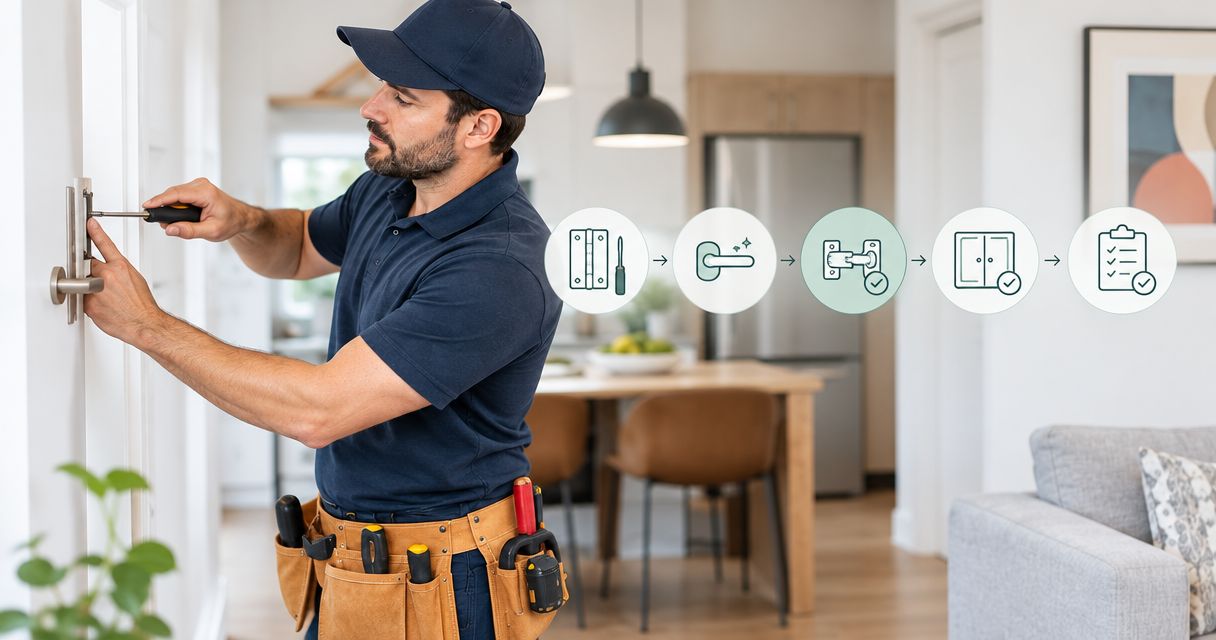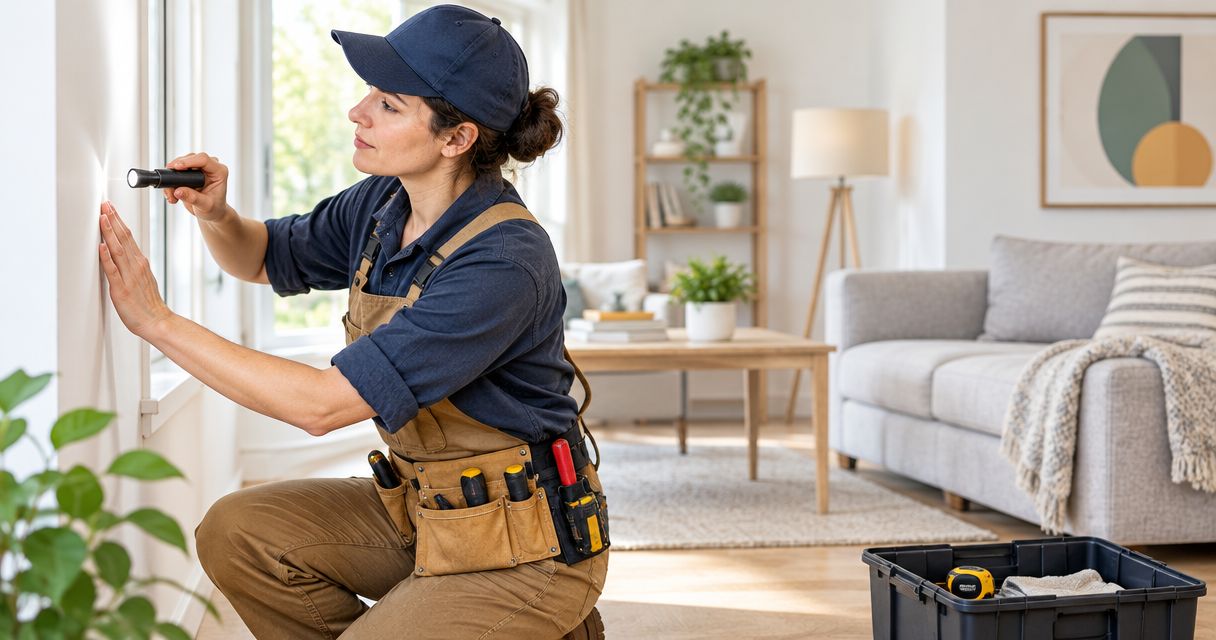
NYC homeowners’ fall interior maintenance is a room-by-room check of walls, furniture, mounted items, doors, and cabinets aimed at keeping everyday spaces usable and ready for repairs. This home maintenance checklist helps you separate simple observations from repair work and prepare several small jobs for one appointment, especially in Brooklyn and Queens.
- Use this home maintenance checklist to organize fall interior repairs before booking, not to start every repair yourself.
- Mr. Mitchell's Home Maintenance & Services suits NYC homeowners booking several small interior repairs in one visit.
- Check drywall, paint, furniture assembly, wall mounting, and door and cabinet hardware before choosing your appointment scope.
- Investigate dampness before painting, and stop using unstable mounted items until their attachment is assessed.
Why interior maintenance matters for NYC homeowners
A loose cabinet hinge, an unfinished furniture assembly, and a damaged wall need different preparation. Putting them on the same list helps you explain the work clearly without treating every problem as a separate booking.
For your fall 2026 checklist, focus on repairs you can describe and show. In a Brooklyn or Queens apartment, preparation also includes access instructions, building requirements, and enough clear space to reach the affected area.
Mr. Mitchell's Home Maintenance & Services offers easy online appointment booking and several small jobs handled in one visit. Use Mr. Mitchell's Home Maintenance & Services to arrange an appointment after identifying the work you want addressed. Grouping jobs does not establish a lower price or guarantee that every task can be completed together.
Build your fall interior repair checklist
Walk through each room before choosing repairs
Start with observation, not tools. Check one room at a time so you can record small problems without jumping straight to the most visible paint mark. Open and close doors and cabinet fronts normally; look at wall damage and furniture connections without forcing anything that catches or moves unexpectedly.
Keep your fall 2026 notes specific. Instead of writing that a bedroom needs attention, identify the closet door that rubs near the top or the wall dent beside the desk. Clear descriptions help distinguish hardware work from surface repairs.
Use 2 photos per repair as a documentation target: one showing the surrounding area and one showing the detail. This is a preparation suggestion, not a service requirement.
- Record the room and exact location of each issue.
- Describe what happens during normal use.
- Photograph visible damage and the surrounding space.
- Note whether the problem is new, recurring, or changing.
- List building access or work-approval requirements you need to confirm.
Sort repairs by safety, function, and appearance
Inspecting a problem does not mean you should attempt to fix it. If a shelf or other mounted item shifts, stop loading or using it until its attachment can be assessed. Keep people away from furniture that tips or has an unstable connection.
Next, distinguish functional problems from cosmetic ones. A door that will not close deserves a different priority from a scuff behind a chair. An active damp patch also needs investigation before you schedule paint work over it.
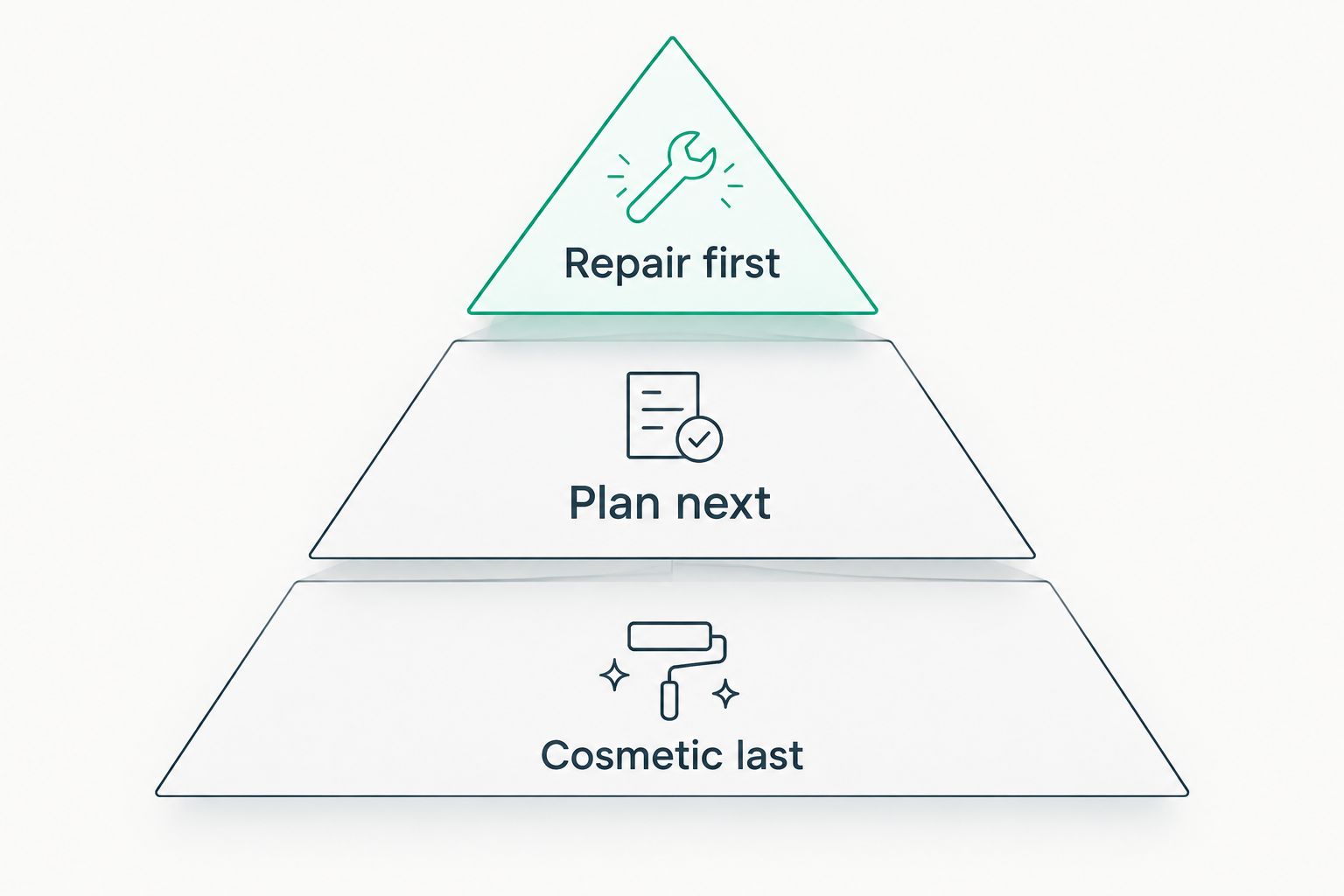
Use 3 priority labels to organize the list. These labels describe your planning order; they do not replace a professional assessment of the cause or severity.
- Repair first: unstable items or problems that interfere with safe use.
- Plan next: sticking doors, loose cabinet hardware, or incomplete assembly.
- Cosmetic last: dry wall dents, scuffs, and surface touch-ups.
- Separate active dampness or unexplained damage from routine cosmetic work.
- Note any item you have stopped using while awaiting assessment.
Document drywall and paint problems before booking
Look closely at the surface without scraping or opening it. A shallow dent, a hole, peeling paint, and a damp stain are different repair descriptions. Note the location and visible condition rather than diagnosing the cause yourself.
Find the cause of dampness before covering the mark. New paint is not a remedy for an unresolved source of moisture. The guide to peeling interior paint and finding the cause helps you frame that distinction before booking.
For Mr. Mitchell's Home Maintenance & Services drywall repairs and painting appointments, explain whether you want a localized repair, a touch-up, or discussion of a larger painted area. Matching an existing finish requires more information than a photo alone.
- Photograph holes, dents, peeling areas, and stains separately.
- Note whether the surface feels damp without disturbing it.
- Gather any existing paint containers or finish information.
- Explain whether the damage has returned after an earlier repair.
- Ask whether preparation, drying, or painting requires another visit.
Check furniture and wall-mounted items without guessing
Furniture assembly and wall mounting need details about the object as well as the room. Gather assembly instructions, unopened hardware packets, and the parts you already have. If assembly is partly finished, explain where you stopped and whether anything feels unstable.
For wall mounting, identify the intended position and the item to be mounted. Do not assume that an anchor already in the wall suits a different object, or that the wall surface reveals everything behind it. Attachment choices depend on the item, wall construction, and suitable hardware.
Add new furniture or mounting plans to your fall 2026 checklist before moving everything into place. Keeping the work area accessible makes assessment and preparation easier.
- Locate the assembly instructions and all supplied parts.
- Describe any incomplete or damaged connections.
- Record the intended mounting location and object details.
- Ask what hardware or wall information is needed before the visit.
- Clear the assembly area and the route to it.
Describe door and cabinet hardware problems precisely
A sticking door does not automatically need replacement. It also does not automatically need trimming. Describe where the door catches, whether it closes, and whether the latch meets the strike plate; those observations are more useful than choosing the repair yourself.
For cabinets, identify the affected hinge, handle, or drawer connection. Stop forcing a cabinet front that hangs unevenly or feels insecure. A missing screw and a damaged screw hole require different attention even when both appear to be loose hardware.
Check 1 door or cabinet front at a time and record the result immediately. This prevents a broad note such as “kitchen hardware” from hiding several distinct issues.
- Note where each door rubs or catches.
- Record whether the latch engages during normal closing.
- Photograph loose handles, hinges, and attachment points.
- Keep any detached hardware together and identify its location.
- Explain whether the issue affects use or only appearance.
Group compatible small jobs and confirm the scope
Build one repair list, then ask which jobs fit the same appointment. A cabinet handle, an assembly task, and a wall repair can belong on the same request, but their preparation and completion needs differ. Grouping is a way to communicate the work, not a promise of a particular schedule or cost.
Put your highest-priority repair first. If the list grows, distinguish the essential work from items you would like addressed if the agreed appointment scope allows. Do not hide extra tasks inside a general request for small repairs.
Agree on the work before assuming everything belongs in one visit. Drywall preparation and painting, for example, need a discussion of the surface condition and the sequence of work.
- Submit the full list rather than only the first repair.
- Identify the essential job and the optional items.
- Attach photos and any assembly or hardware information.
- Ask which materials you need to have ready.
- Confirm what is included and what needs separate assessment.
Prepare access and book the appointment
An organized checklist becomes useful when someone can reach the work. Move fragile belongings away from the repair area, clear furniture assembly space, and explain any access restrictions. Keep pets and household traffic away from the workspace during the visit.
For a fall 2026 appointment, confirm your building’s requirements rather than assuming the same arrangements apply everywhere. Ask management about access, permitted work hours, and any approval needed for the proposed work.
Keep your photos and repair list available when booking. If the condition changes before the appointment, update the description instead of leaving the original request unchanged.
- Provide clear entry and apartment access instructions.
- Check building rules relevant to the proposed work.
- Clear the floor and surfaces around each repair.
- Set aside labeled parts, instructions, and existing paint information.
- Review the appointment scope and any preparation instructions.
Book your small-repair appointment
Prepare your repair list, photos, and access details before arranging several small jobs in one visit.
Compare your repair options
Choose the route by the condition and scope, not simply by how small the damage looks. Observation and documentation are useful do-it-yourself tasks; repair decisions require a clear understanding of the material and cause.
| Option | Best for | Main benefit | Key limitation |
|---|---|---|---|
| DIY inspection and preparation | Homeowners documenting visible problems | Creates a clear repair list before booking | Does not establish the cause or a safe repair method |
| Mr. Mitchell's Home Maintenance & Services | NYC homeowners booking several small interior jobs | Online booking and several small jobs handled in one visit | Grouping does not guarantee every task can be completed together |
| Separate specialist assessment | Problems beyond routine interior repair or with an unresolved cause | Addresses the underlying issue before cosmetic work | Does not replace arranging the remaining small repairs |
Ask about scope, materials, and follow-up work before choosing. A grouped appointment suits a defined small-repair list; an unresolved source of damage needs attention before the cosmetic finish.
Common mistakes NYC homeowners make
- Painting over an unexplained stain. Record the condition and investigate the cause before planning a finish repair. A cleaner-looking wall does not establish that the underlying issue is resolved.
- Booking one vague task and adding several later. Share the complete list up front, including assembly and mounting work. Additional tasks need their own scope discussion.
- Choosing mounting hardware from appearance alone. Describe the object and intended wall location. Do not reuse an attachment simply because it is already there.
- Buying replacement doors before describing the fault. Record rubbing, latch alignment, and hardware movement first. Ask whether repair or replacement is appropriate after assessment.
- Leaving building access until appointment day. Confirm entry procedures and work requirements in advance. A clear repair list is not a substitute for access to the workspace.
FAQ
What should I put on a fall home maintenance checklist in NYC?
Include drywall damage, paint problems, furniture assembly, wall mounting, and door and cabinet hardware issues. Record the location, visible condition, and effect on everyday use before booking interior repairs.
Can several small home repairs be handled in one appointment?
Mr. Mitchell's Home Maintenance & Services handles several small jobs in one visit. Share the complete list before booking and confirm which tasks fit the appointment; grouping does not guarantee every repair can be finished together.
Should I paint over a stain or peeling interior paint?
Do not cover an unexplained stain or peeling paint before investigating the cause. If dampness is present, address its source before arranging cosmetic repairs.
What should I prepare for a furniture assembly appointment?
Gather the instructions, supplied parts, and hardware, and clear the assembly area. Explain whether assembly has already started and identify any missing parts or unstable connections.
Does a sticking interior door need to be replaced?
A sticking interior door does not automatically need replacement. Describe where it catches and whether the latch engages so the repair approach can be assessed before you buy a new door.
How do I compare the cost of small repair appointments?
Compare the same written repair scope and ask what materials, preparation, and follow-up work are included. Do not assume grouping several jobs creates a discount or that a wall repair includes the final paint finish.
What should Brooklyn and Queens homeowners check before booking?
Check building access, permitted work hours, and approval requirements for the proposed repair. Prepare photos, a prioritized job list, and a clear workspace before the appointment.
One last thing
Photograph the repair area before you move the furniture. The wider view shows where the problem sits, while the close-up shows its condition. Keep both with your fall 2026 checklist, then clear the area for the appointment.