Door lock replacement takes less work when the new lock fits the existing door openings and the door already closes correctly; fitting changes and alignment repairs add work. Plan around the condition of your door, not a generic stopwatch estimate. For a 2026 appointment, describe the lock, the symptoms and any other door repairs before asking how much time to set aside.
- How long does door lock replacement take? Hardware fit and door alignment determine the work involved.
- A sticking door needs diagnosis before you assume a new lock will solve the problem.
- Mr. Mitchell's Home Maintenance & Services is best for homeowners grouping small home repairs into one booked visit.
- Confirm the proposed lock replacement scope before booking; door hardware repair does not establish every lock installation capability.
Why this matters
A lock that turns with the door open but catches when the door closes presents a different problem from a broken handle. Booking both as a simple replacement leaves an important question unanswered: is the trouble inside the hardware, or where the door meets the frame?
Mr. Mitchell's Home Maintenance & Services offers easy online appointment booking for home maintenance and repair services. For Brooklyn and Queens homeowners planning door hardware repairs, the useful starting point is a clear description of what happens—not an assumed appointment length.
How long does a door lock replacement take?
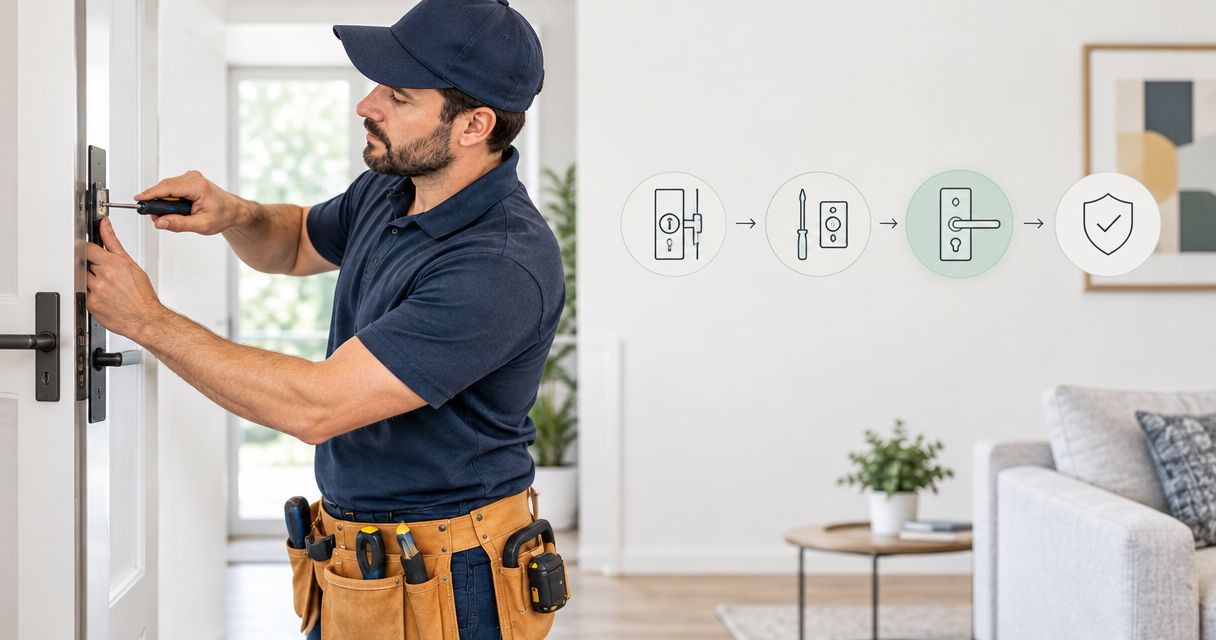
The replacement time depends on whether the job is a matching hardware swap, an installation requiring changes, or a door repair followed by replacement. These are different scopes, so an estimate should identify which one applies to your door.
| Door condition | What the work involves | Best for | Main limitation |
|---|---|---|---|
| Existing openings match the replacement hardware | Remove the old hardware, fit the replacement and test operation | A worn or damaged lock on an otherwise working door | Matching appearance does not establish matching dimensions |
| Replacement hardware needs different openings | Assess the door and determine what fitting changes are appropriate | A planned hardware change after compatibility review | Additional fitting needs assessment before scheduling |
| Door rubs, sags or meets the strike incorrectly | Diagnose the door and frame before deciding on replacement | A lock that catches mainly when the door is closed | New hardware alone does not correct the underlying alignment |
Ask for an estimate covering the entire task, including removal, fitting, adjustment and testing. Time spent handling the lock is not the same as the full appointment.
For your 2026 repair list, record the symptom beside the task. Write that the bolt catches unless you lift the handle, rather than simply writing that the lock needs replacing.
Matching replacement: check fit before booking
A matching replacement avoids changing the door openings. That makes compatibility the first thing to establish, not something to discover after the old hardware comes off.
Photograph the inside and outside of the lock, the narrow edge of the door and the plate on the frame where the latch or bolt enters. Include any visible manufacturer or model information in your appointment request, without dismantling the lock to find it.
Hardware measurements also matter. The backset is the distance from the door edge to the center of the lock opening; door thickness and the existing holes affect compatibility too. Use the replacement manufacturer's instructions rather than assuming that similar-looking locks are interchangeable.
Best for: replacing damaged hardware while keeping an otherwise functional door setup. The limitation is that a matching finish or handle shape tells you little about whether the internal parts fit.
Fitting changes: review the door before choosing hardware
A different lock design can require a different opening or mounting arrangement. Do not assume an existing door is suitable for that change just because the replacement is sold for residential use.
Send the proposed hardware details before committing to an installation. Ask whether the existing preparation suits the replacement and whether any door or frame work falls within the appointment's agreed scope.
For an apartment entrance, also check applicable building requirements before altering hardware. Ask the managing agent or board what approval is needed; do not treat a general repair booking as permission to modify the entrance door.
Best for: a planned change reviewed before installation. The trade-off is more preparation: the person doing the work needs to understand both the door and the proposed hardware, rather than arriving to an unopened box and an assumed fit.
Alignment problems: diagnose the door before replacing the lock
If the key turns with the door open but resists when closed, describe that difference. It points the repair discussion toward how the bolt, strike and frame meet, rather than establishing that the lock itself needs replacing.
Other useful observations include rubbing along the frame, a loose handle, visible hinge movement or a door that needs lifting to latch. These are observations to report, not instructions to force the mechanism or alter the frame yourself.
For a closer look at the distinction, read the guide to sticking doors: repair or replace.
Best for: diagnosing a door that does not close or latch normally. The limitation is that the final repair scope depends on the cause; buying a replacement lock first does not settle that question.
Why door lock replacement time varies
The useful factors are physical conditions and agreed tasks, not broad promises about speed. Include these details in a 2026 booking request:
- Hardware compatibility: Does the replacement match the existing openings and door thickness? An incompatible lock changes the work required.
- Door alignment: Does the door close without rubbing, lifting or pushing? Alignment trouble belongs in the initial description.
- Existing damage: Are there loose mounting points, damaged screw holes or visible damage around the hardware? Photograph these areas.
- Replacement scope: Are you replacing a handle assembly, a deadbolt or another mechanism? Name the part rather than using lock as a catch-all.
- Testing requirements: The finished hardware needs checking with the door open and closed. Include final operation in the scope discussion.
- Other booked repairs: A visit that includes cabinet hardware or furniture assembly has a broader scope than a door-only appointment.
Ask what the estimated appointment includes. A duration without an agreed task list does not tell you whether fitting, adjustments and final checks are covered.
How to prepare before a door hardware appointment
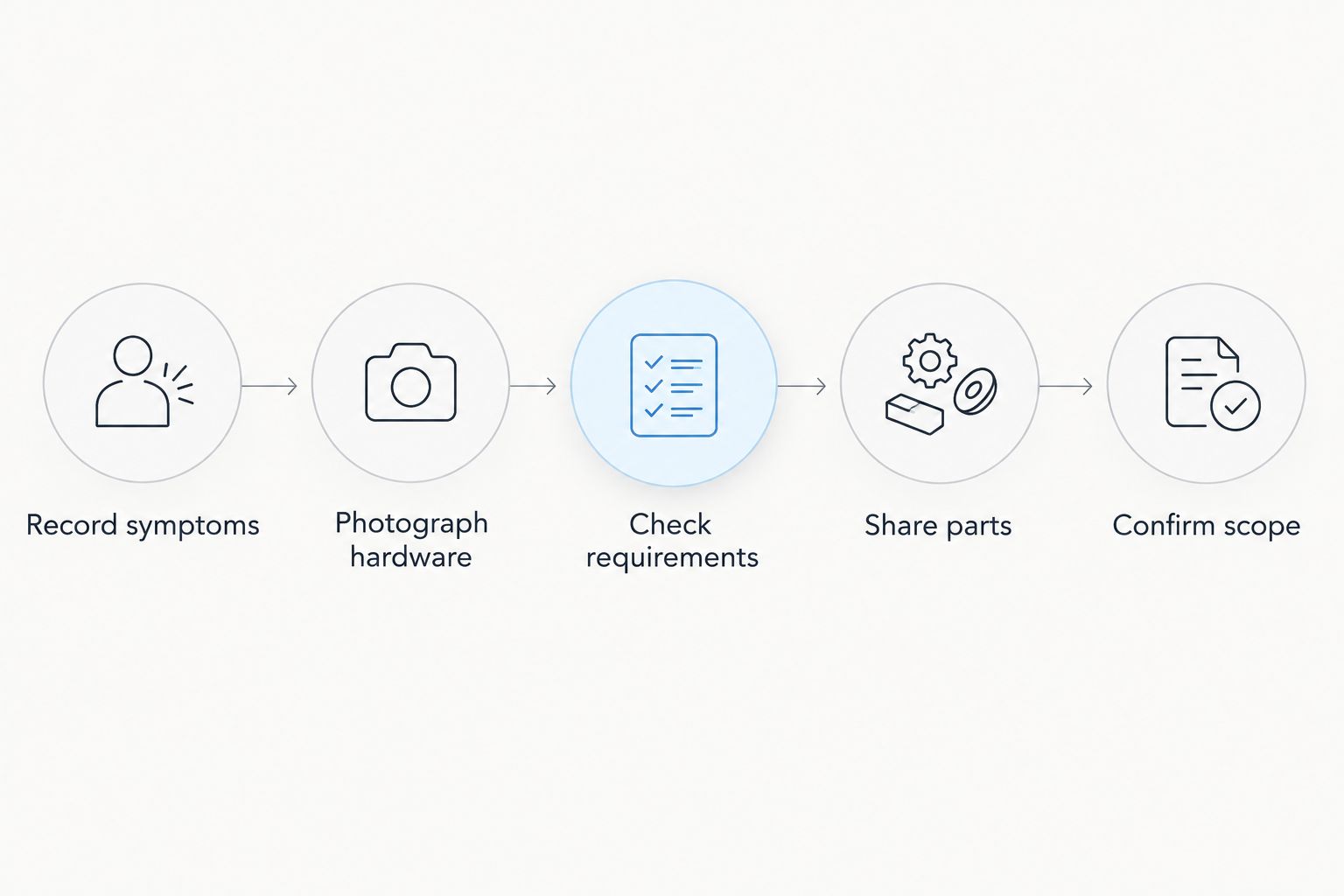
Good preparation gives the repair professional something specific to assess. Follow this sequence before your 2026 appointment request.
- Record symptoms. Describe what happens when you turn the key, move the handle and close the door. Note whether the problem changes with the door open.
- Photograph hardware. Take clear views of the inside, outside, door edge and strike plate. Show the surrounding area so the hardware's position is visible.
- Check requirements. For an apartment entrance, ask about building approval and access arrangements before requesting alterations.
- Share parts. If you already have replacement hardware, send its model information and installation instructions. Do not assume supplying it confirms compatibility.
- Confirm scope. Ask which door tasks and additional small repairs belong in the appointment, then request time guidance for that agreed list.
Clear the area around the door before the visit, keeping the entrance usable. Keep relevant keys and any supplied hardware accessible, and explain building entry arrangements without assuming the repair professional can collect them on arrival.
Avoid removing the existing lock as preparation. Leaving a functioning door assembled allows its operation to be assessed and avoids creating an unsecured opening before the replacement scope is settled.
Can I book door hardware repairs with other small jobs?
Yes—several small jobs handled in one visit is a confirmed part of Mr. Mitchell's Home Maintenance & Services' offering. It is best for homeowners who want to book a grouped small-repair visit rather than organize each task separately. Confirm the specific lock work before treating it as part of that visit.
Useful companion tasks include a loose cabinet hinge, furniture assembly, wall mounting, drywall repairs or painting. List each task separately and explain what is wrong or what needs installing; do not hide additional work inside a general request for a few fixes.
Grouping has a practical advantage: you can present the whole repair list together. Its limitation is scope. Combining tasks does not establish a shorter visit, guaranteed completion of every item or savings.
For a Brooklyn or Queens home, put the door concern first if it affects normal closing or locking. Then identify which cabinet, wall or furniture tasks you want assessed alongside it, with photographs and assembly instructions where relevant.
Plan your small-repair visit
Book online and share your door hardware concerns alongside the other small jobs on your list.
Does replacing a lock fix a sticking door?
Replacing a lock does not correct a door that rubs against its frame or hangs out of alignment. Those conditions need their own assessment, even when the lock is also worn or damaged.
Describe whether the resistance happens at the key, handle, latch or door edge. That distinction helps separate a hardware complaint from a door movement problem without assuming either diagnosis.
Should I buy a replacement lock before the appointment?
Check compatibility and the accepted repair scope before buying replacement hardware. A box labelled for a residential door does not establish that it matches your existing openings or building requirements.
If you have already purchased a lock, share the product information before the visit. Keep all components and instructions together, and ask whether that hardware is suitable rather than expecting the appointment to resolve an unreviewed mismatch.
What should a finished replacement include?
A finished lock replacement needs more than attached hardware. Ask how the installer will check the handle or thumbturn, key operation and the latch or bolt meeting the strike.
With the door open, the mechanism can be checked without the frame affecting its movement. With the door closed, the check also includes the relationship between the hardware and frame; both conditions matter.
For your 2026 appointment, agree on what to do if testing reveals a separate door problem. The next step should be discussed, not treated as an automatic extension of the original task.
FAQ
How long does door lock replacement take if the new lock fits?
A compatible replacement involves fewer fitting tasks than a lock requiring changes to the door, but its duration still depends on the existing condition. Ask for an estimate that includes removal, installation, adjustment and testing.
Will a new lock stop my door from sticking?
A new lock does not fix a door that rubs against its frame or hangs out of alignment. Describe whether the resistance occurs with the door open, closed or both before deciding on replacement.
What photos should I send before a door lock appointment?
Send photos of the inside and outside hardware, the door edge and the strike plate on the frame. Include visible damage and any readable model information without dismantling the lock.
Can I get cabinet hardware fixed during the same visit?
Several small jobs can be grouped into one visit with Mr. Mitchell's Home Maintenance & Services. List cabinet hardware repairs and the door concern separately, then confirm the accepted scope before the appointment.
Do I need building approval to change my apartment entrance lock?
Check with your managing agent or board before changing apartment entrance hardware. Ask what requirements apply to your door rather than assuming that a repair appointment provides permission for alterations.
Should I remove the old lock before the repair professional arrives?
Leave the existing lock assembled so its operation can be assessed. Share photographs and replacement details beforehand instead of leaving the entrance without working hardware.
Can I book a lockout or emergency locksmith visit here?
Do not treat a home-maintenance appointment as confirmation of emergency locksmith or lockout service. Confirm the requested door hardware task directly before booking.
One last thing
A lock that works with the door open but catches when closed gives you a useful symptom to report. You do not need to diagnose the cause yourself; that simple distinction makes the appointment request more informative than saying the lock is broken.
Before submitting your 2026 repair list, replace assumed solutions with observed problems. Describe the catching bolt, loose cabinet hinge or damaged drywall, then state the result you want. That gives each task a clear starting point without committing to parts or work that have not been assessed.