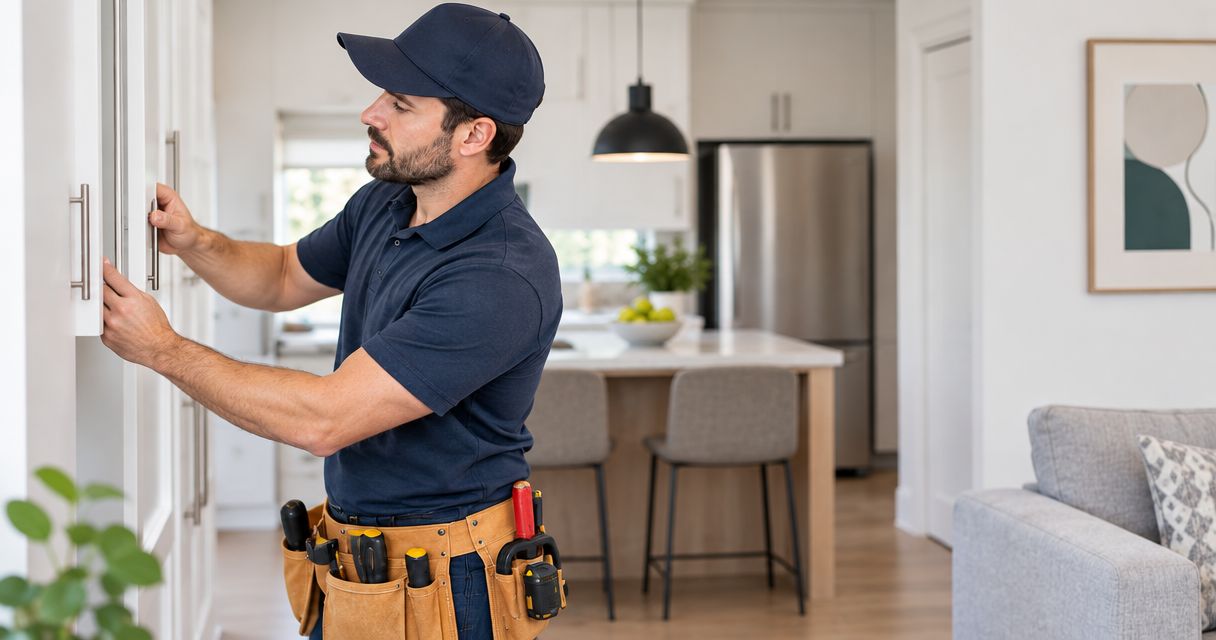
Repair a sticking cabinet door first if the door is sound and the problem is loose hardware, hinge alignment, or a localized paint buildup. Replace the door when damage prevents it from holding its shape or supporting its hinges, but check the cabinet frame first—a new door will not fix a damaged mounting point.
- To decide whether to repair or replace sticking cabinet door hardware, check alignment, screw holes, and door condition first.
- Repair sound doors; consider replacement for lasting distortion, separating panels, or damaged hinge attachment areas.
- Mr. Mitchell's Home Maintenance & Services suits NYC homeowners booking cabinet hardware repairs alongside several small jobs.
- For your 2026 repair list, photograph the contact point before buying hinges or a replacement door.
Is it better to repair or replace a sticking cabinet door?
Repair is the better starting point when the door and cabinet frame remain structurally sound. Replacement makes sense when the door itself is damaged beyond a dependable repair, not simply because it catches when you close it.
For appointment planning, you can schedule with Mr. Mitchell's Home Maintenance & Services. Describe where the door catches rather than requesting a replacement before the cause is checked.
| Approach | Best for | Main advantage | Main limitation |
|---|---|---|---|
| Adjust or repair the existing door | A sound door that rubs because of alignment or loose attachment | Keeps the existing door and finish | Does not correct lasting distortion or extensive material damage |
| Repair or replace cabinet hardware | A worn hinge, damaged mounting plate, or loose fastener connection | Addresses the part responsible for movement | New hardware still needs sound attachment points and compatible dimensions |
| Replace the cabinet door | A distorted, separating, or badly damaged door | Removes the damaged door from the repair | Requires a suitable fit and finish; does not repair the cabinet frame |
These are different scopes of work. Replacing a hinge is not the same as replacing a door, and neither automatically calls for replacing the whole cabinet.
Why this matters
A sticking door tells you where movement is being interrupted, not necessarily which part needs replacing. The cause might be visible at a hinge, along a painted edge, or where neighboring doors meet.
For a Brooklyn or Queens homeowner organizing repairs in 2026, the useful first move is to identify that contact point. That gives the person handling the repair a clearer starting point and helps you avoid ordering a part that does not address the problem.
Keep appearance and function separate, too. Wanting a different cabinet style is a valid reason to replace a door, but it is a different decision from fixing one that rubs.
Repair the existing door: best for sound material
Choose repair first when the door feels solid, its joints remain intact, and its hinge attachment areas are not breaking apart. Uneven gaps or visible movement around a hinge are reasons to inspect alignment and fastening before removing material.
Watch the door as you open and close it gently. A corner that catches against the next door suggests a different adjustment from an edge that drags against the cabinet frame. Note the exact location rather than describing the entire door as stuck.
Do not sand a rubbing edge before checking the hinges. Removing material cannot correct a loose attachment, and it changes the door permanently. It can also leave an exposed edge that needs finishing.
Repair preserves the existing appearance, but it has limits. An adjustment will not restore a door that remains twisted or repair a panel that is coming apart. Ask what caused the sticking and what the proposed repair will actually correct.
If the movement appears to start at the hinges, read the guide to loose cabinet hinges and hardware before preparing your appointment notes.
Repair or replace hardware: best for hinge-related sticking
A cabinet door can be sound while its hinge or attachment fails. Look for movement between the hinge and door, between the mounting plate and cabinet, or inside the hinge mechanism itself.
A loose screw does not automatically mean the hinge needs replacing. The screw hole, surrounding material, and hinge condition all affect the repair. Repeatedly tightening a screw that no longer grips does not restore a dependable connection.
Replace hardware only after checking compatibility and attachment points. Hinge shape alone does not establish a match. The door position, mounting arrangement, and existing hole pattern also matter.
The advantage of hardware work is its focus: it addresses the moving connection while keeping a sound door. Its limitation is equally important—a new hinge cannot compensate for crumbling material where it must attach.
Keep any loose parts in a labeled container. If the hinge has identifying markings, photograph them without taking the door apart just to find a model number.
Replace the door: best for damage the repair cannot resolve
Consider replacement when the door no longer holds its shape, its layers are separating, or its hinge attachment area cannot support a dependable repair. Those conditions need inspection; a rubbing mark alone does not establish that replacement is necessary.
A door with moisture damage needs more than a cosmetic decision. Resolve the moisture source before repairing or replacing the affected material. Otherwise, the underlying condition remains.
Replacement also introduces matching questions. Check the opening, door dimensions, hinge arrangement, and how the door sits relative to the frame. A replacement that looks similar can still fit differently.
Replacing one damaged door does not guarantee an exact match with its neighbors. Existing finishes can change with use and light exposure. Decide whether your priority is restoring function, matching the current appearance, or changing the cabinet style before selecting a replacement.
Why the repair-or-replace decision varies
The right choice depends on the condition of the whole door assembly, not just the spot that rubs. Use these factors to organize a 2026 cabinet repair request:
- Door condition: A solid door supports a repair-first approach; separating layers or lasting distortion changes the decision.
- Hinge condition: Loose attachment and a damaged hinge are different problems and need different remedies.
- Mounting material: Screws need sound material in both the door and cabinet; damaged holes require attention before alignment.
- Contact location: A neighboring door, cabinet frame, painted edge, or interior obstruction can each interrupt closing.
- Moisture and finish: Swollen material and paint buildup call for different responses; identify the cause before sanding.
- Replacement fit: Door size, hinge placement, and finish matching affect whether replacement solves the problem cleanly.
These factors also explain why a photograph is useful but not a complete diagnosis. It can show a gap or damaged edge without showing how the hinge moves under the door's weight.
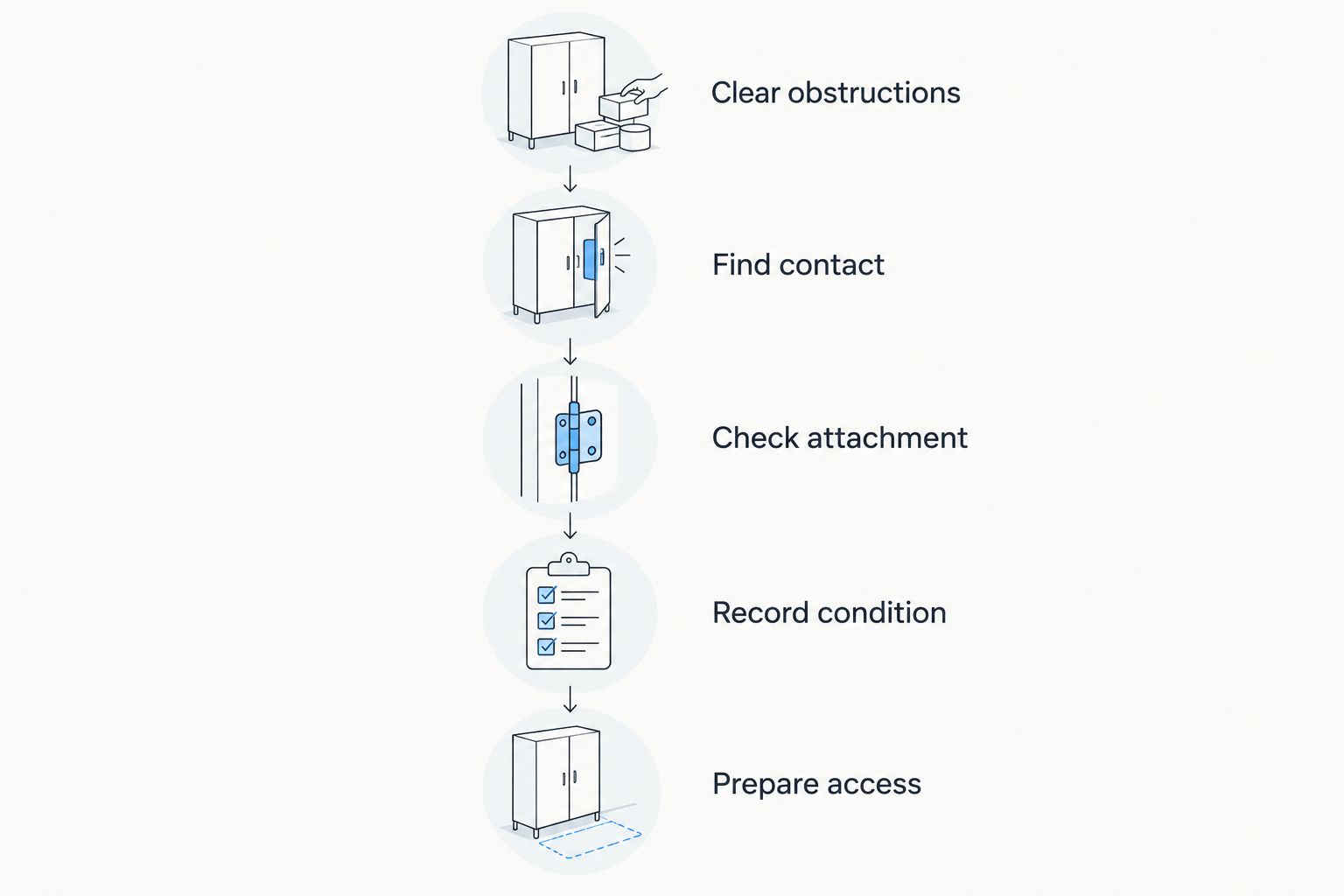
How do you check a sticking cabinet door before booking?
Start with observation, not disassembly. You do not need to remove the door to provide useful information, and you should stop moving it if a hinge is pulling away or the door feels unsupported.
- Clear obstructions. Move items that touch the door or project beyond a shelf. Check that the contents are not preventing closure.
- Find contact. Open and close the door gently. Identify whether the top, bottom, hinge side, or handle side catches.
- Check attachment. Look for loose hardware, visible gaps around mounting plates, or damaged material near screws. Avoid forcing the door to test it.
- Record condition. Photograph the rubbing point, hinge area, and surrounding cabinet. Note whether the problem is constant or intermittent.
- Prepare access. Clear the work area and make space to open the door fully. Tell the repair professional about any building access requirements.
This sequence helps you describe the symptom without committing to the wrong solution. Leave hinge removal, material removal, and unsupported-door handling out of your preparation.
What should you prepare for a cabinet repair appointment?
Prepare 3 photos: the cabinet with the door closed, the hinge area with the door open, and a close-up of the contact point. These are useful views to provide, not a substitute for checking the door in person.
Show the door in 2 positions, open and closed, so its fit and attachment are visible. Include enough of the surrounding cabinet to show whether an adjacent door or drawer is involved.
Make 1 written list that separates the cabinet issue from other requested work. For example: the cabinet door rubs at the upper handle-side corner; a bedroom door handle is loose; a small drywall patch needs attention. Describe each issue without assuming the repair method.
Mr. Mitchell's Home Maintenance & Services offers cabinet hardware repairs and several small jobs handled in one visit, with easy online appointment booking. The service is a fit for homeowners who want to organize those tasks together; grouping them does not establish the time or scope required for every item.
For a 2026 appointment request, put the sticking cabinet door first if it is your main concern. Add drywall repairs and painting, furniture assembly, wall mounting, or other door and cabinet hardware repairs as separate requests, and confirm the planned scope before the visit.
Book your cabinet repair appointment
Describe the sticking door and list other small repairs you want handled in the same visit.
Should you replace a cabinet door that sticks after painting?
Check the paint contact and hinge alignment before replacing the door. Fresh paint along meeting edges can interfere with closing, but sticking after painting does not prove paint is the only cause.
Tell the repair professional which surfaces were painted and when the sticking began. Follow the coating manufacturer's instructions for drying and use; do not force painted surfaces together or scrape away finish before identifying the contact point.
Is a sticking cabinet door always a hinge problem?
No—a sticking cabinet door is not always a hinge problem. An obstruction, paint buildup, distorted door, or damaged frame can also prevent smooth closing.
The hinge check is a starting point, not a verdict. If the attachment is sound and the door still rubs, inspect the door and opening before replacing hardware.
FAQ
What's better: repairing or replacing a sticking cabinet door?
Repair a sticking cabinet door first when the door and cabinet frame are sound and the cause is alignment or hardware. Consider replacement when lasting distortion or material damage prevents a dependable repair.
Can a handyman fix a cabinet door that won't close?
Cabinet hardware repair is appropriate when hinges, attachments, or alignment prevent a sound door from closing. The door and cabinet frame still need inspection to establish the actual repair.
Should I sand a cabinet door that rubs?
Do not sand a rubbing cabinet door before checking alignment, hardware, and the contact point. Sanding removes material permanently and does not correct loose hinge attachments.
Do I need a new cabinet if one door sticks?
A sticking door alone does not justify replacing the cabinet. Check the door, hinges, mounting points, and frame before deciding how much needs replacing.
Can I book cabinet repairs with other small home repairs?
Mr. Mitchell's Home Maintenance & Services handles several small jobs in one visit and offers online appointment booking. List cabinet hardware repairs and other requested tasks separately, then confirm the planned scope.
What photos should I take before a cabinet repair visit?
Prepare 3 photos: the closed cabinet, the open hinge area, and the rubbing point. Include the surrounding frame so the repair professional can see the door's position.
What should I include in a 2026 cabinet repair request?
For a 2026 cabinet repair request, state where the door catches, when the problem started, and whether anything changed before it began. Add photos and describe other small jobs separately rather than assuming the door needs replacement.
One last thing
Mark the problem in your notes, not by modifying the door. A clear description such as upper handle-side corner catches against neighboring door is more useful than a request to shave the edge.
The best preparation preserves the evidence: leave the rubbing area, hinge arrangement, and loose parts available for inspection. Establish the cause first, then choose the smallest repair that properly addresses it.